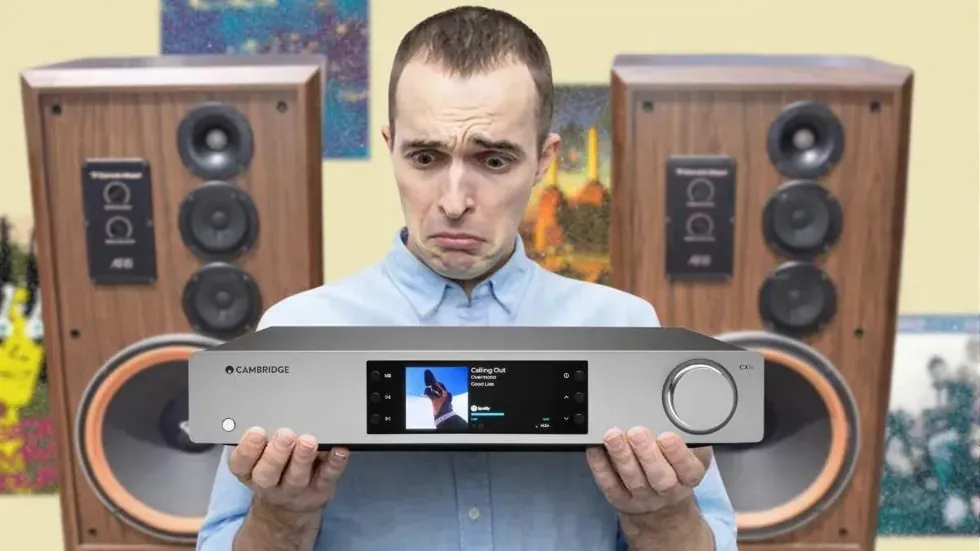
A selection of 16 albums is being used by audio enthusiasts and engineers to identify performance limitations in hi-fi streaming devices, particularly those related to buffering, file handling, and playback continuity. The list, originally compiled by Headphonesty, frames music recordings as functional stress tests for streamers, which operate as network-dependent computers rather than purely analog playback tools.
The approach reflects growing scrutiny of how streaming hardware manages real-time decoding, network variability, and digital-to-analog conversion, particularly as high-resolution audio adoption increases.
Gapless Playback Performance
Albums with continuous sequencing remain a primary test of whether a streamer can handle gapless playback—where tracks transition seamlessly without silence or artifacts.

Since I Left You by The Avalanches and Abbey Road (2019 stereo mix) by The Beatles are frequently cited due to their uninterrupted transitions. These recordings rely on precise buffering between tracks, and any failure typically results in micro-gaps, clicks, or timing disruptions that break musical continuity.
In practical testing, even sub-second interruptions—often between 10 and 500 milliseconds—are considered failures, as they disrupt rhythmic flow and indicate buffering inefficiencies.
Sample Rate Switching and DAC Behavior
Switching between audio formats, particularly between 44.1 kHz and 48 kHz sample-rate families, can expose limitations in a streamer’s coordination with a digital-to-analog converter (DAC). These transitions often require clock adjustments or hardware-level handshakes.
Recordings such as Nils Frahm’s All Melody and orchestral works like The Rite of Spring (conducted by Yannick Nézet-Séguin) are used to evaluate whether playback resumes cleanly after such switches. Engineers typically monitor for muted openings, incorrect format detection, or audible relay clicks during transitions.
High-resolution formats, such as 24-bit/96 kHz, are particularly relevant in these tests, as they increase processing demands and highlight synchronization issues between streamer and DAC.
■ Related News




Seeking Accuracy and Playback Control
Long-form tracks are used to assess how effectively a streamer handles seeking (scrubbing) and playback resumption. Pink Floyd’s Animals, particularly the track “Dogs,” is commonly used due to its extended runtime and dynamic shifts.
Similarly, Tool’s Ænima is used to test how well devices recover from rapid position changes and pause-resume commands. Failures in this category typically include delayed playback, inaccurate positioning, or audible glitches during re-entry.
Industry observers note that these issues often stem from insufficient buffer management or slow data retrieval from streaming services.
Network Stability and Buffer Management
Streaming reliability depends heavily on how devices manage network interruptions and packet delivery. High-resolution recordings with extended durations—such as Wagner’s Der Ring des Nibelungen (Solti/Vienna Philharmonic)—are used to simulate sustained data loads.
These tests can reveal memory leaks or buffer exhaustion over multi-hour sessions, which may lead to crashes or playback interruptions. In contrast, minimalist recordings like Vulfpeck’s Sleepify, composed of short silent tracks, test how efficiently devices handle repeated file requests and transitions without audio masking errors.
A well-optimized streamer is expected to maintain playback for several seconds after network disruption and remain stable during repeated command inputs.
Queue Handling and App Responsiveness
User interface responsiveness remains a critical factor in streaming system performance. Albums with numerous short tracks—such as Jack Stauber’s Micropop and The Residents’ Commercial Album—are used to stress-test queue management systems.
Rapid track-skipping and shuffle playback can expose synchronization issues between control apps and playback hardware. Failures often manifest as delayed responses, incorrect track displays, or complete system freezes.
These behaviors highlight the importance of efficient communication protocols between software interfaces and hardware playback engines.
Metadata Handling and Library Indexing
As streaming platforms integrate global catalogs, proper handling of metadata—including non-Latin scripts—has become increasingly important. Albums such as Hikaru Utada’s First Love and Sheena Ringo’s Kalk Samen Kuri no Hana are used to evaluate Unicode (UTF-8) compatibility.
Devices that fail these tests may display corrupted characters or fail to index albums correctly, affecting search functionality. Industry standards require accurate rendering of both native scripts and romanized forms to ensure usability across global catalogs.
Multiroom Synchronization and Casting
Multiroom audio systems rely on precise timing synchronization to ensure consistent playback across devices. Even minor latency differences—measured in milliseconds—can result in audible echo or phase distortion.
Albums like D’Angelo’s Voodoo, known for its intentionally delayed rhythmic feel, are used to detect timing inconsistencies across rooms. Similarly, recordings with detailed stereo imaging, such as Prefab Sprout’s Steve McQueen, can reveal degradation during device handoffs.
These tests are increasingly relevant as multi-device streaming ecosystems expand in consumer markets.
Silence Handling and Playback Algorithms
Silence within recordings presents another technical challenge. Some streamers employ auto-mute or standby features that may prematurely stop playback or truncate natural decay.
Deftones’ Around the Fur and Mark Hollis’s self-titled album are frequently used to evaluate how devices handle extended silence and low-level audio signals. Failures include unintended shutdowns or clipped reverberation tails, indicating overly aggressive power-saving algorithms.
Engineers emphasize that accurate silence reproduction is essential for preserving artistic intent, particularly in minimalist or ambient recordings.