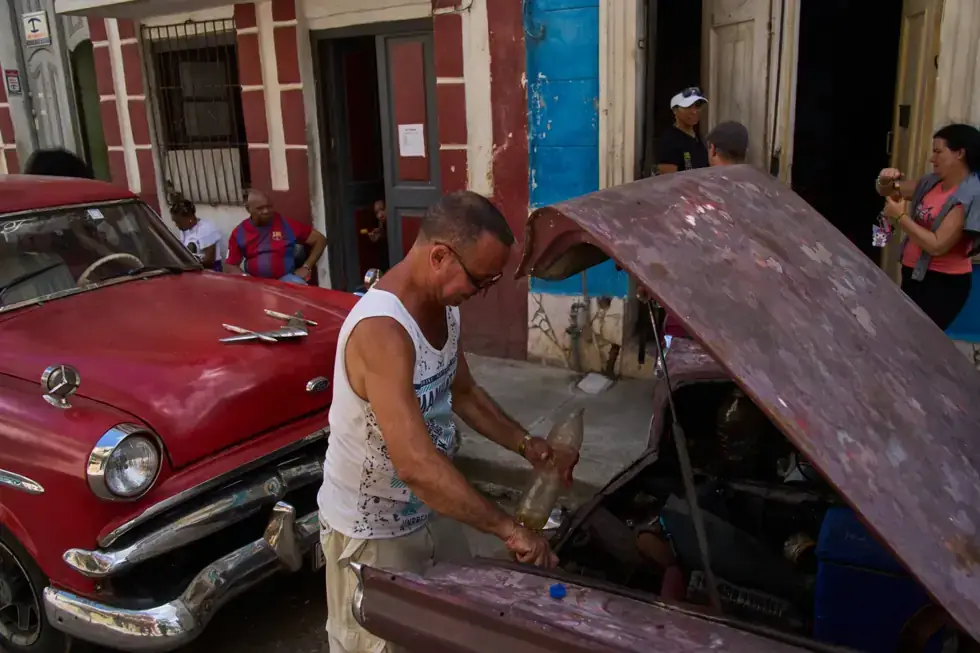
An islandwide power outage has plunged Cuba into darkness once again, exposing the fragile state of the country’s electricity system and amplifying concerns that a deepening energy crisis could trigger broader economic and social consequences.
According to reporting by the Associated Press, Cuban officials confirmed Monday that the national power grid experienced a “complete disconnection,” leaving much of the Caribbean nation’s roughly 11 million residents without electricity. The blackout marks the third major grid failure in four months, signaling growing instability in the country’s aging energy infrastructure.
The incident arrives as the government struggles to secure fuel supplies, maintain deteriorating facilities, and manage rising public frustration over frequent outages that have become part of daily life across the island.

Grid Stability Erodes Under Mounting Structural Pressure
Cuba’s national electrical network has deteriorated steadily in recent years, creating a pattern of daily outages and periodic systemwide collapses.
Authorities from the Ministry of Energy and Mines said an investigation into the blackout is ongoing, noting that none of the power-generation units operating at the time reported a direct malfunction. The ministry instead described the event as a total grid disconnection, a failure that suggests vulnerabilities in the system’s transmission stability rather than a single plant shutdown.
By Monday evening, state media reported that electricity had been restored to roughly 2% of residents in Havana, equal to about 18,000 customers. Hospitals were among the first facilities to regain service as technicians attempted to gradually rebuild small circuits in the capital.
Officials warned, however, that newly restored connections remain fragile and could fail again as engineers attempt to stabilize the wider grid.
Fuel Shortages Intensify Systemic Energy Constraints
The blackout reflects a broader energy squeeze that has constrained Cuba’s electricity generation capacity.
■ Related News



President Miguel Díaz-Canel said last week that the island had not received significant oil shipments for three months, forcing the government to rely heavily on solar generation, natural gas facilities, and aging thermoelectric plants.
Cuba produces roughly 40% of the petroleum it consumes, but that output remains insufficient to meet national demand. Limited access to imported fuel has intensified the strain on power plants already operating near the limits of their mechanical lifespan.
The shortages have also had ripple effects beyond electricity supply. Díaz-Canel acknowledged that tens of thousands of scheduled medical procedures have been postponed due to power constraints affecting hospitals and medical facilities.
External Pressures Complicate Energy Recovery
Cuban authorities have linked the worsening energy situation partly to external economic pressures.
Earlier this year, U.S. President Donald Trump warned of potential tariffs on countries supplying oil to Cuba while urging the island’s leadership to release political prisoners and pursue political and economic reforms.
In remarks cited by multiple media outlets, Trump suggested that Washington could exert significant influence over the island’s future, describing Cuba as a weakened state.
Meanwhile, the U.S. Embassy in Cuba issued an advisory Monday warning that Cuba’s national grid is increasingly unstable and that prolonged power outages could disrupt daily life for an extended period.
Infrastructure Limits Raise Risk of Prolonged Instability
Energy analysts say the root of the crisis lies in the condition of Cuba’s infrastructure.
William LeoGrande, a longtime researcher on Cuban affairs, said the country’s electrical grid has been operating far beyond its intended lifespan.
According to LeoGrande, technicians maintaining the system have managed to keep it running despite deteriorating equipment, but the margin for error has grown increasingly thin as plants age and spare parts become harder to obtain.
Heavy fuel oil used in some thermoelectric plants has also accelerated corrosion within the equipment, further complicating efforts to maintain stable generation.
Economic Strain Raises Long-Term Stability Questions
Beyond the immediate power outages, analysts warn the energy crisis could deepen Cuba’s already fragile economic outlook.
If fuel shortages persist and infrastructure upgrades remain delayed, the country may face prolonged electricity rationing that could disrupt industry, healthcare, and communications networks.
LeoGrande said that while increased solar capacity could help offset some shortages, significant expansion would require foreign partners—particularly China—to supply additional equipment at scale.
Without such investment, he said, Cuba could face a prolonged period of reduced energy consumption that risks triggering broader economic contraction and migration pressures.
Uncertain Path Toward Energy Stabilization
For now, technicians across the island are focused on gradually restoring power while preventing another systemwide collapse.
But the latest blackout underscores a deeper challenge: rebuilding an energy system strained by aging infrastructure, fuel shortages, and geopolitical pressures.
Until those structural issues are addressed, analysts warn that Cuba’s electricity network will remain vulnerable to sudden failures capable of affecting the entire nation.