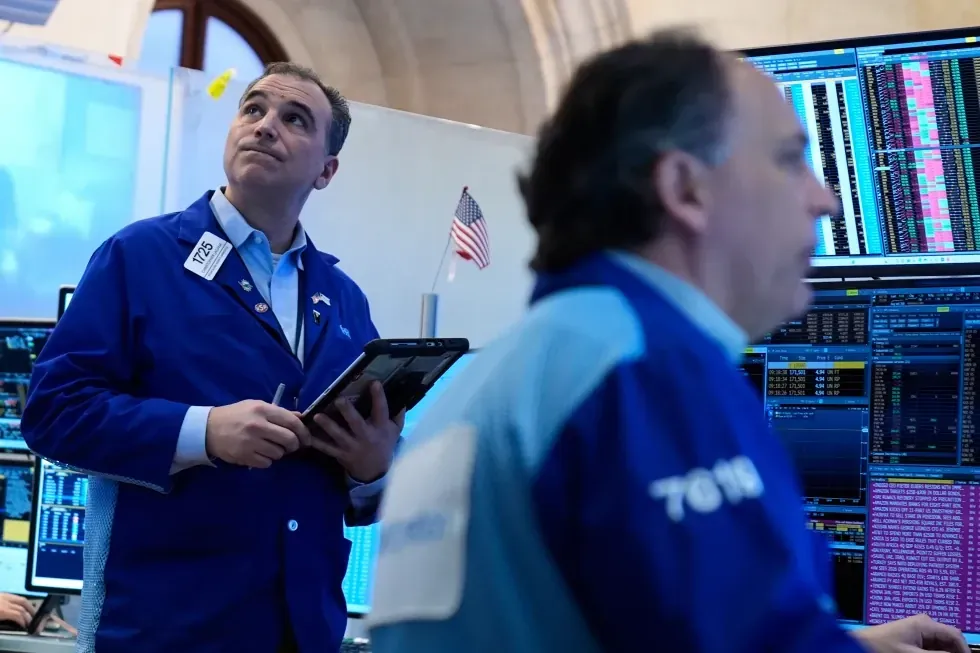
U.S. equities posted their strongest daily performance in several weeks after oil prices declined from recent highs triggered by geopolitical tensions involving Iran. The rally reflected investor relief that energy costs briefly eased, reducing pressure on inflation expectations and the broader economic outlook.
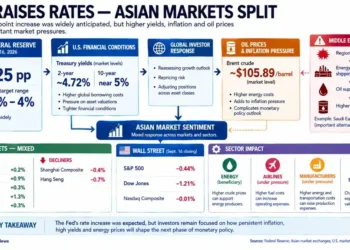
The S&P 500 Index rose 1% Monday to 6,699.38, marking its largest single-day gain in roughly five weeks. The Dow Jones Industrial Average advanced 387.94 points, or 0.8%, to close at 46,946.41, while the Nasdaq Composite climbed 1.2% to 22,374.18, according to market data reported by the Associated Press.
Oil Market Volatility Drives Equity Sentiment
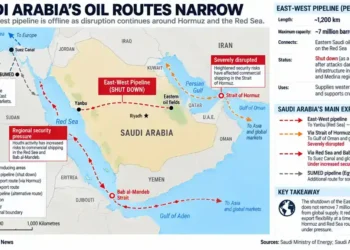
The rebound in equities followed a sharp retreat in crude prices after earlier spikes linked to disruptions around the Strait of Hormuz, a critical shipping lane for global oil supplies.

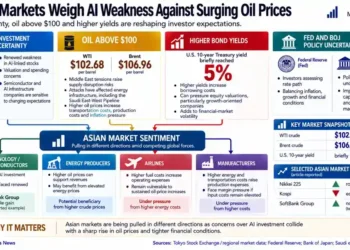
Benchmark West Texas Intermediate crude oil settled at $93.50 per barrel, down 5.3% from earlier trading levels after briefly exceeding $102 during the session. International benchmark Brent crude oil declined 2.8% to $100.21 per barrel after reaching as high as $106.50 earlier in the day.
Oil prices had surged from roughly $70 per barrel before the recent escalation involving Iran, United States, and Israel, reflecting concerns about supply disruptions in the Persian Gulf region.
Industry figures indicate that approximately one-fifth of globally traded oil typically moves through the Strait of Hormuz, making any disruption there a major risk to energy markets and inflation.
Geopolitical Risks Continue to Shape Market Expectations
Shipping activity through the strait has reportedly slowed significantly amid the conflict, raising concerns about supply constraints and potential inflationary pressure on the global economy.
Over the weekend, Donald Trump called on other nations affected by the shipping disruption to help secure the passage, indicating that the United States would support efforts to restore traffic.




European governments have sought greater clarity on Washington’s strategy regarding the conflict and its potential duration, according to international reporting.
Despite the geopolitical tension, historical market data shows that U.S. equities often recover relatively quickly from Middle East conflicts provided that oil prices stabilize.
Even after several volatile sessions since the conflict began, the S&P 500 remains about 4% below its all-time high.
Transportation and Energy-Sensitive Stocks Lead Gains
Companies with significant fuel expenses were among the session’s strongest performers as oil prices retreated.
Shares of Norwegian Cruise Line Holdings rose 5.1%, while United Airlines gained 4.2%, trimming earlier losses this year.
Real estate investment firm National Storage Affiliates Trust surged 30% after Public Storage announced plans to acquire its 69 million rentable square feet in an all-stock transaction valued at approximately $10.5 billion. Shares of Public Storage declined 1.7%.
Retailer Dollar Tree advanced 6.4% after reporting quarterly earnings that exceeded analysts’ expectations despite lower store traffic.
Artificial Intelligence Sector Continues to Support Market Momentum
Technology stocks also contributed to the market’s gains.
Shares of Nebius Group, a Dutch artificial-intelligence cloud infrastructure company listed in the United States, surged 15% after announcing a five-year infrastructure agreement with Meta Platforms potentially valued at up to $27 billion.
Meanwhile, semiconductor leader Nvidia rose 1.6%. Chief Executive Jensen Huang told attendees at an artificial-intelligence conference that demand for AI chips could reach $1 trillion by 2027.
Bond Yields Ease as Inflation Concerns Moderate
Treasury yields declined as energy prices cooled and fresh economic data pointed to slower manufacturing activity.
The yield on the U.S. 10‑Year Treasury fell to 4.22% from 4.28% late Friday. However, yields remain higher than levels recorded before the Iran conflict intensified, when the 10-year rate was closer to 3.97%.
Rising energy costs have complicated expectations for monetary policy. Traders now see little likelihood that the Federal Reserve will reduce interest rates at its next policy meeting, according to data compiled by CME Group.