High-resolution music streaming continues to expand in dedicated listening systems as enthusiasts seek stable digital playback and compatibility with external DACs and amplifiers. A survey compiled by audio publication Headphonesty examined thousands of audiophile setups to identify the Hi-Fi streamers most commonly used in real-world systems.
The resulting list shows a wide mix of hardware—from compact budget streamers to flagship digital transports—reflecting the growing role of network audio components in modern Hi-Fi systems.
Market Overview
According to the Headphonesty analysis, devices such as the Eversolo DMP‑A6, WiiM Ultra, and Bluesound Node received the highest share of votes among respondents.

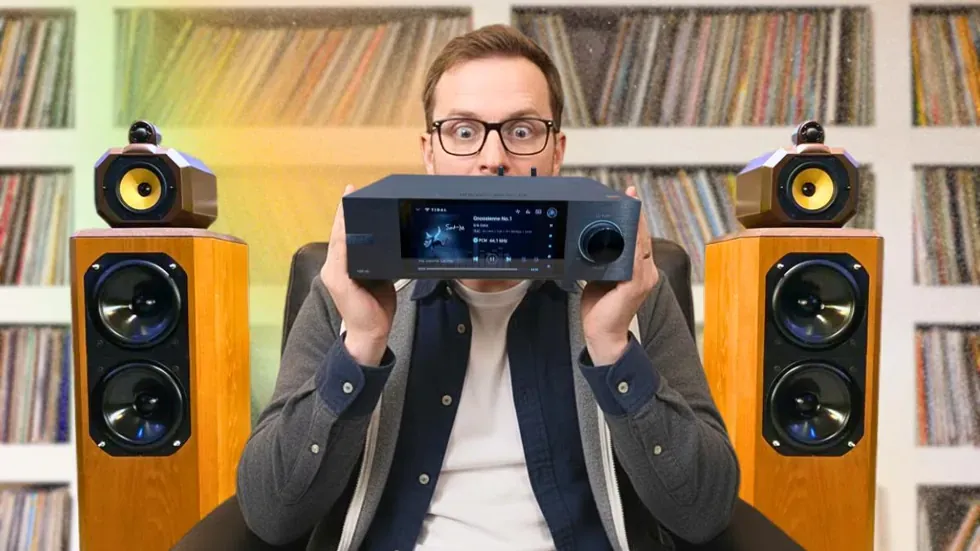
Hi-Fi streamers function as dedicated network players that retrieve audio from services such as Tidal, Qobuz, and Spotify while maintaining a stable digital signal path to downstream equipment. In many setups the streamer operates as either a digital transport feeding an external DAC or as an integrated streaming DAC component.
The survey results illustrate how network audio has evolved from a niche category into a central component of many high-end listening systems.
Leading Streamers Identified by Audiophile Survey
The Eversolo DMP‑A6 received the largest share of responses, accounting for 11.26 percent of votes in the survey. The streamer integrates dual ESS ES9038Q2M DAC chips and supports high-resolution playback formats including PCM up to 32-bit/768 kHz and native DSD512.
Second place went to the WiiM Ultra, which was cited by 9.21 percent of respondents. The device supports multiple wireless streaming protocols and allows users to bypass its internal DAC when pairing the unit with an external converter.
The Bluesound Node followed closely with 9.08 percent of votes. Its BluOS platform enables multi-room playback and integration with streaming services, while optional room-correction support via Dirac Live allows acoustic calibration in compatible systems.
■ Related News




Other highly cited models include the HiFi Rose RS130 digital transport and the reference-level Linn Klimax DSM streaming hub. Both units emphasize low-noise digital output and precision clocking—design priorities often associated with high-end network playback.
Integrated vs. Transport-Only Designs
The survey also highlights a split between integrated streamers with built-in DACs and transport-only devices designed to output a digital signal to an external converter.
Transport-focused products such as the Lumin U2 Mini and Innuos Pulse are intended to deliver a low-jitter digital signal to standalone DACs. These designs typically omit analog output stages in favor of dedicated digital connectivity such as AES/EBU, USB Audio, or S/PDIF.
Integrated units such as the Naim Uniti Nova and Cambridge Audio Evo One combine streaming functionality with onboard digital-to-analog conversion and amplification, simplifying system configuration for users seeking fewer components.
High-End Flagship Systems
Several flagship systems from established Hi-Fi manufacturers also appeared in the survey results. These include the dCS Bartók Apex, which uses the company’s proprietary Ring DAC architecture, and the Auralic Altair G2.2 network streamer.
At the upper end of the market, these devices typically support advanced digital formats such as high-sample-rate PCM and DSD playback while offering extensive clocking and power-supply isolation to minimize electrical noise.
Entry-Level and DIY Alternatives
Budget-oriented and modular solutions also featured in the survey, reflecting the accessibility of modern streaming platforms. The WiiM Pro Plus and the Raspberry Pi-based streaming builds are widely used among hobbyists seeking flexible, low-cost network audio setups.
Software platforms such as Volumio or MoOde allow small single-board computers to function as network streamers capable of bit-perfect playback when paired with compatible DAC hardware.
Industry Context
The growing popularity of Hi-Fi streamers coincides with broader changes in music distribution and listening habits. Streaming services increasingly offer high-resolution and lossless formats, which has driven demand for dedicated playback devices capable of handling large digital files and stable network delivery.
Manufacturers have responded by expanding the streamer category across multiple price tiers—from compact wireless adapters to full-scale digital hubs designed for reference-grade audio systems.