A Hanukkah celebration at Sydney’s Bondi Beach turned into one of the deadliest mass shootings in modern Australian history when two gunmen opened fire on Sunday evening, killing at least 15 people and wounding dozens more. Authorities identified the attackers as a 50-year-old man and his 24-year-old son.
The assault, which Prime Minister Anthony Albanese described as an act of antisemitic terrorism, has shaken a country where mass shootings are rare and gun laws are among the strictest in the world. Police said the attack appeared to deliberately target a Jewish community event marking the start of Hanukkah.
Investigators are continuing to examine the motives behind what is already being called a defining moment in Australia’s recent security history.

Violence at an iconic beach
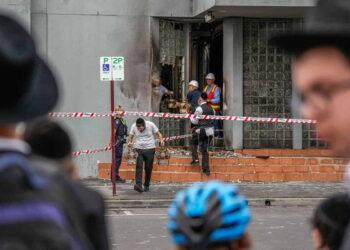
The shooting unfolded shortly after 6:45 p.m. at Bondi Beach, one of Australia’s most visited coastal landmarks. Thousands had gathered at the beach on a warm summer evening, including hundreds attending “Chanukah by the Sea,” a public celebration organized by the Orthodox Jewish movement Chabad.
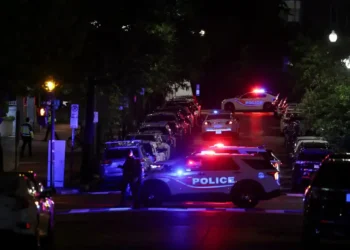
According to New South Wales Police Commissioner Mal Lanyon, emergency services responded to reports of gunfire and found chaotic scenes as people fled the shoreline. Video circulated by Australian media showed beachgoers running from the water as shots rang out from a nearby footbridge.
Police said the older gunman was shot dead at the scene. His son was wounded and taken into custody. Authorities are not seeking additional suspects.
New South Wales Premier Chris Minns said those killed ranged in age from 10 to 87. At least 42 others were hospitalized, several in critical condition.
Two improvised explosive devices were discovered nearby and rendered safe by bomb disposal units. Lanyon described them as rudimentary, designed to be ignited by a wick rather than detonated electronically.
■ Related News
Targeting a Jewish celebration
The event had featured family activities including face painting and a petting zoo before the violence erupted. Chabad confirmed that Rabbi Eli Schlanger, assistant rabbi at Chabad of Bondi and one of the event’s organizers, was among those killed.
Israel’s Foreign Ministry said at least one Israeli citizen died in the attack. French President Emmanuel Macron confirmed that a French national, Dan Elkayam, was also among the victims.
Australian authorities have not yet released the full list of victims’ names.
Among the personal accounts emerging was that of Larisa Kleytman, who told local media that her husband, Alexander Kleytman, was killed. The couple were reported to be Holocaust survivors, adding a layer of historical trauma to an attack widely condemned as antisemitic.
Arsen Ostrovsky, a lawyer attending the celebration with his family, said he was grazed in the head by a bullet. Writing from hospital, he described “an absolute bloodbath” and said he never imagined such violence could occur in Australia.
Another witness, Lachlan Moran, said gunfire continued intermittently for several minutes as people dropped belongings and ran for cover.
A bystander identified by relatives as Ahmed al Ahmed was hailed by Minns as a “genuine hero” after footage appeared to show him tackling and disarming one of the attackers.
National and international reaction
Albanese called the attack “an act of pure evil” and said it struck at the heart of a country that prides itself on multicultural harmony. He urged national unity and solidarity with Australia’s Jewish community.
Australia is home to approximately 117,000 Jews, according to official figures, with the vast majority living in Sydney and Melbourne. Over the past year, antisemitic incidents — including vandalism, threats and assaults — have increased sharply following the October 7, 2023 attacks by Hamas on Israel and the subsequent war in Gaza.
The government’s Special Envoy to Combat Antisemitism reported in July that such incidents had more than tripled over the preceding year. Synagogues and Jewish-owned properties in Sydney and Melbourne have been targeted in separate incidents, heightening community concerns.
Israel’s Prime Minister Benjamin Netanyahu accused the Australian government of failing to do enough to curb antisemitism. Albanese’s administration has rejected such claims and said it has taken multiple steps to strengthen hate crime laws and community protections.
Messages of condemnation poured in from global leaders. King Charles III said he and Queen Camilla were “appalled and saddened.” United Nations Secretary-General António Guterres expressed horror at the attack, while U.S. Secretary of State Marco Rubio condemned what he described as terrorism targeting a Jewish celebration.
Gun laws under scrutiny
The massacre is the deadliest shooting in Australia in nearly three decades. After the 1996 mass killing at Port Arthur in Tasmania, where 35 people were murdered, Australia enacted sweeping gun control reforms that included a national firearms registry and a buyback scheme for certain weapons.
Since then, large-scale mass shootings have been rare. Notable incidents in recent years have involved smaller numbers of fatalities, often in domestic or extremist contexts.
Minns said there would “almost certainly” be renewed debate over gun laws. Police said six firearms were recovered from a property linked to the older gunman, prompting questions about how they were obtained under Australia’s strict regulatory framework.
Commissioner Lanyon said one of the attackers had previously been known to security services, though authorities had no indication of an imminent plot. He pledged a thorough investigation, adding that further details would be released as inquiries continue.
A country in mourning
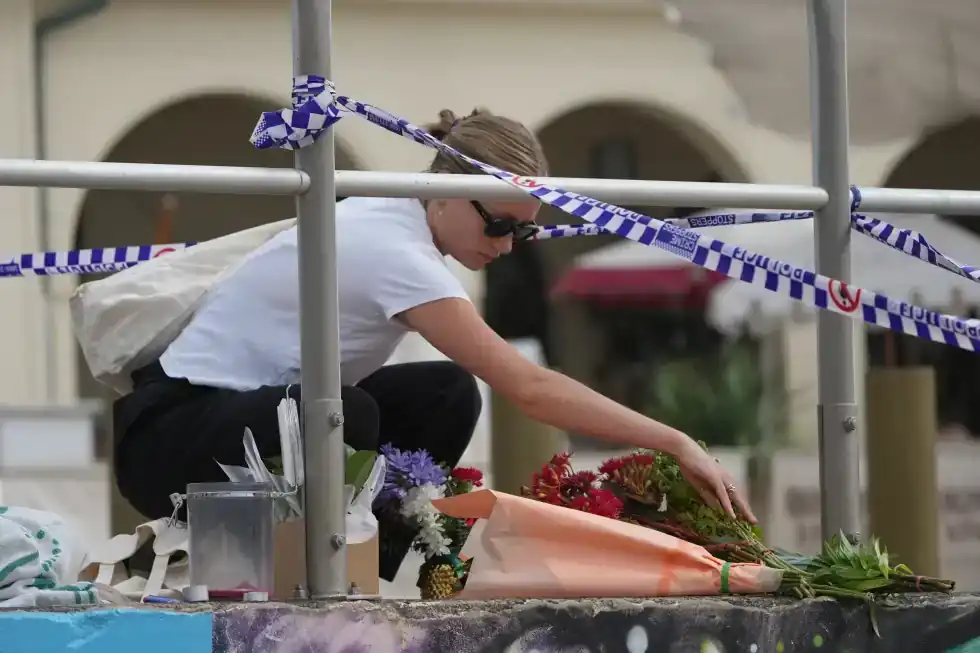
Bondi Beach is often portrayed as a symbol of Australia’s open, outdoor culture — a place associated with leisure and family gatherings. That symbolism has deepened the national shock.
Community leaders across religious and political lines have called for calm. Security around synagogues and Jewish schools has been heightened as a precaution.
As forensic teams continue their work and investigators piece together the events leading up to the attack, Australians are confronting a rare episode of mass violence that has exposed tensions within a society that has long viewed itself as relatively insulated from such tragedies.
The coming days are expected to bring memorials, political debate and further scrutiny of how two men were able to carry out a deadly assault at one of the country’s most visible public spaces.
Source: AP News – Father and son gunmen kill at least 15 people in attack on Hanukkah event at Sydney’s Bondi Beach