The war-linked disruption in the Strait of Hormuz is rapidly evolving into a broader energy security test for the global economy, with tanker traffic grinding to a halt and governments considering military escorts to stabilize one of the world’s most critical oil corridors.
Roughly one-fifth of global oil and natural gas shipments normally pass through the narrow waterway linking the Persian Gulf to the Gulf of Oman. As attacks on commercial vessels increase and insurers withdraw coverage, energy markets are confronting the possibility that a prolonged disruption could reverberate far beyond the battlefield.
According to data cited by the International Maritime Organization, incidents involving merchant vessels in the region have already resulted in casualties among seafarers and significant disruption to shipping movements.

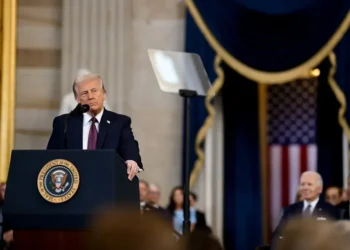
The intensifying crisis has also drawn direct warnings from Donald Trump, who said the United States would escalate military operations if Iran attempted to formally close the waterway.
Strategic Artery for Global Energy Faces Sustained Disruption
The Strait of Hormuz is a narrow, curved maritime corridor roughly 33 kilometers (21 miles) wide at its tightest point. Despite bordering territorial waters of Iran and Oman, the passage functions as an international shipping lane connecting oil producers across the Gulf to global markets.
Energy exports from Saudi Arabia, Kuwait, Iraq, Qatar, Bahrain, the United Arab Emirates and Iran typically transit this route before heading primarily toward Asian markets.
Analysts say the scale of reliance on this chokepoint leaves few immediate alternatives. While some pipelines in Saudi Arabia and the UAE can redirect limited volumes away from the Gulf, the majority of shipments still depend on the maritime corridor.
“The scale of what is at stake cannot be overstated,” said Hakan Kaya of investment firm Neuberger Berman. Kaya warned that while a brief slowdown could be absorbed by global markets, a month-long closure could push crude prices into triple digits and send European natural gas prices toward crisis levels.



Attacks on Tankers Intensify Security Risks
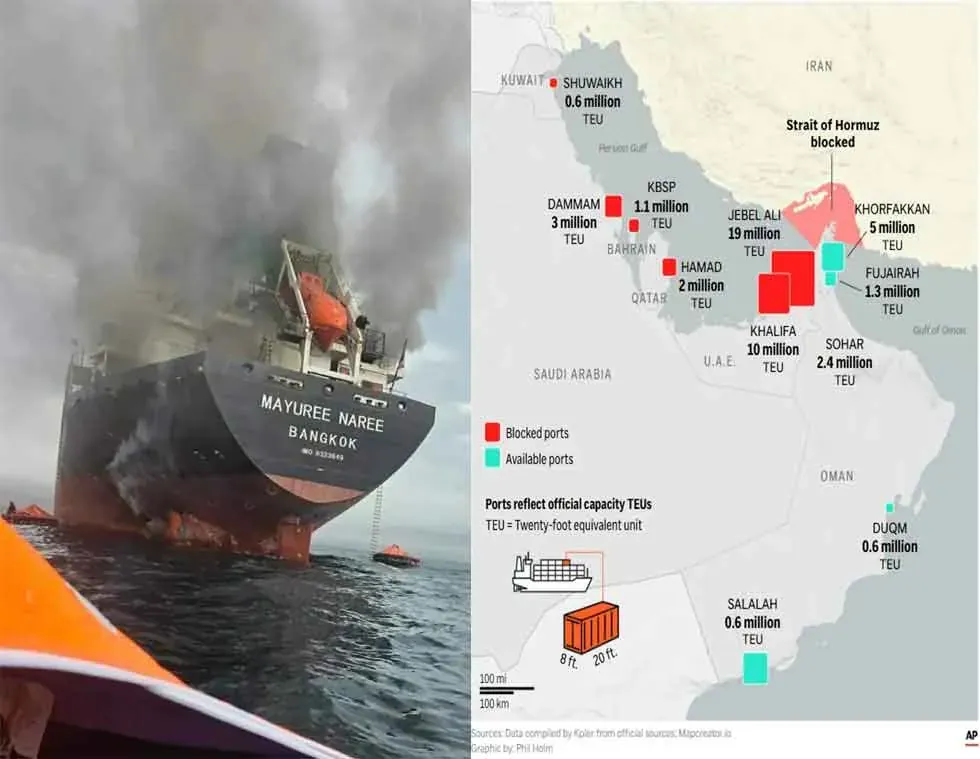
Shipping incidents in and around the waterway have grown rapidly since the conflict escalated. The International Maritime Organization confirmed at least 12 incidents involving merchant vessels in the area, with Secretary-General Arsenio Dominguez reporting multiple fatalities among maritime crews.
Separately, the United Kingdom Maritime Trade Operations center recorded more than a dozen attacks or suspicious encounters affecting tankers, cargo ships, and support vessels across the Persian Gulf, Strait of Hormuz and Gulf of Oman.
These incidents have created a security environment that effectively halts commercial movement through the corridor even without an official closure.
Shipping analysts say vessels already inside the Persian Gulf are largely stranded while new shipments are rerouting or delaying departure.
Energy Supply Chain Strains Spread Across Shipping Industry
Major global shipping companies have begun suspending operations through the strait as the risk environment deteriorates.
Danish container giant Maersk announced it had halted vessel crossings until further notice. Similar decisions followed from major carriers including Hapag-Lloyd, CMA CGM and MSC.
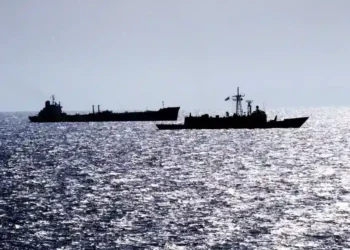
Industry experts say hundreds of tankers are now idle in Gulf waters while additional ships scheduled to enter the region remain anchored or redirected elsewhere.
Logistics specialists warn the bottleneck could ripple through global supply chains if exports remain suspended for an extended period.
Insurance and Military Measures Signal Escalating Stakes
To encourage shipping companies to resume operations, Washington is attempting to stabilize maritime insurance markets.
The U.S. International Development Finance Corp. has launched a government-backed reinsurance facility covering up to $20 billion in potential losses, targeting damage to vessels, cargo, and operating systems caused by conflict-related incidents.
At the same time, U.S. officials have raised the possibility of naval escorts for oil tankers if commercial traffic does not resume.
European governments are also discussing a French-led initiative that could deploy multinational naval escorts once the most intense phase of the conflict subsides.
Such measures reflect how rapidly the crisis has expanded from regional hostilities into a systemic risk for global energy flows.
Mine Warfare Concerns Raise Risk of Full Maritime Shutdown
Military tensions in the strait have intensified further amid concerns that naval mines could be deployed in the narrow shipping channel.
Trump said U.S. forces recently destroyed 16 Iranian vessels believed capable of laying mines, warning that additional operations could follow if threats escalate.
Although Washington says it has not yet confirmed mine placement in the waterway, naval strategists say even the perception of mine risk can paralyze shipping because clearing operations are slow and dangerous.
A Chokepoint With Global Consequences
The Strait of Hormuz has remained one of the world’s most sensitive maritime corridors for decades, with tensions periodically threatening tanker traffic. Yet a prolonged halt to shipping on the scale now being considered would mark one of the most significant energy disruptions in modern history.
Energy markets are therefore watching not only the military conflict itself but also whether diplomatic or security arrangements can restore confidence among shipowners, insurers and energy traders.
If traffic cannot resume soon, the confrontation around the Strait of Hormuz could evolve from a regional maritime crisis into a broader test of global energy resilience.