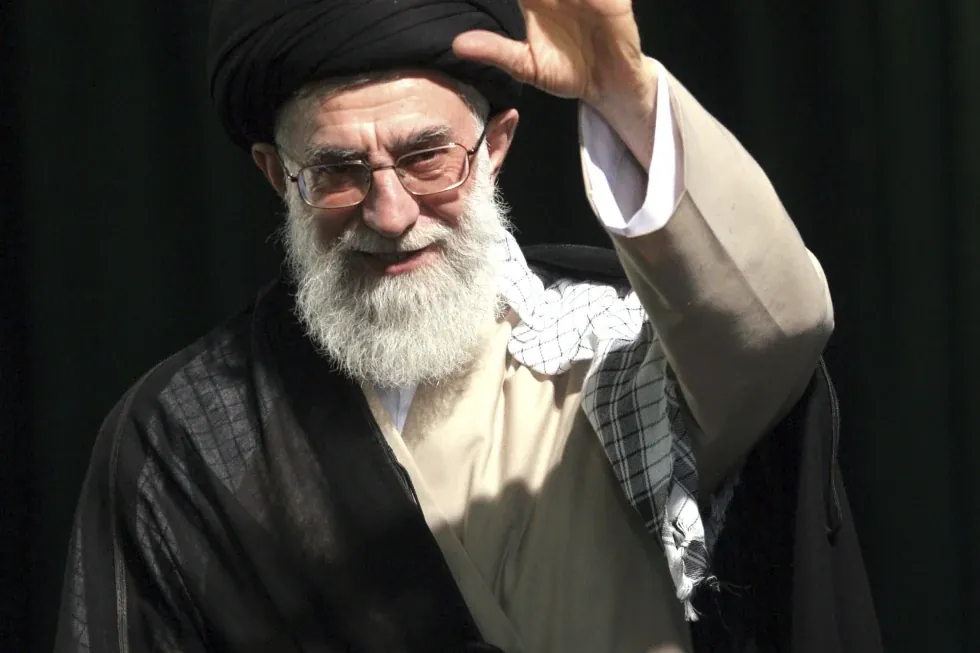
Since the 1979 Iranian Revolution, the office of rahbar — Supreme Leader of Iran — has stood at the apex of the country’s political and religious order. Ali Khamenei, who has held this position since 1989, transformed it from a successor role to a centralized locus of power. Understanding how he rose to command and consolidate authority is essential to grasping the Islamic Republic’s structure, domestic politics, and foreign policy.
Despite initial questions about his religious credentials, Khamenei’s ascension reshaped Iran’s constitution, expanded control over armed forces and judicial institutions, and blunted elected bodies’ influence. His tenure illustrates how revolutionary ideals were institutionalized into a theocratic political system with enduring impact on governance and regional strategy.
Revolutionary Origins and Political Emergence
The seeds of Khamenei’s future leadership were planted in the upheaval of Iran’s Islamic Revolution in 1979, which overthrew the Western‑aligned monarchy of Shah Mohammad Reza Pahlavi and established a theocratic republic. Central to this new order was the doctrine of velāyat‑e faqīh — governance by Islamic jurists — as articulated by Ayatollah Ruhollah Khomeini, the revolution’s charismatic leader. Under velāyat‑e faqīh, supreme authority was vested in a senior cleric deemed capable not only of religious guidance but political stewardship.

Ali Khamenei was born in 1939 in Mashhad, a major Shiite religious center, and pursued religious studies in Qom. Like many revolutionaries, he was active against the Shah’s regime, enduring imprisonment for his opposition. After the revolutionary victory, he became a member of the Revolutionary Council, a body that helped steer the nascent republic’s direction.
During the Iran‑Iraq War (1980–1988), Khamenei’s role expanded. He served in several capacities including deputy defence minister and at one point commanded the Islamic Revolutionary Guard Corps (IRGC), which itself emerged as a key institution to defend the revolution and counter internal and external threats.
In 1981, Khamenei was elected president of Iran, a role that, in the republic’s early years, carried less power than it does today, with real authority remaining with the supreme leader and clerical bodies. Still, his presidency raised his stature and deepened his network within the hard‑line leadership.
Constitutional Changes and Ascension to Supreme Leader
When Ayatollah Khomeini’s health declined in the late 1980s, the question of his successor became pressing. Initially, Khomeini had designated Grand Ayatollah Hossein Ali Montazeri as his heir, but political differences led to Montazeri’s dismissal. Instead, power shifted to Abdul‑Hossein Vahid Dastjerdi and eventually to Khamenei.
However, Khamenei did not meet the original constitutional requirement to be a marja‘‑e taqlid — a high clerical authority recognized by Shiite jurists as worthy of emulation — that was seen as essential for velāyat‑e faqīh. To clear the way, Iran’s constitution was amended in 1989. It retained the core concept of clerical guardianship but lowered qualifications so that a jurist with sufficient knowledge of Islamic law and perceived leadership ability could serve. This paved the way for Khamenei’s election as Supreme Leader by the Assembly of Experts, an 88‑member body of clerics tasked with selecting and overseeing the leader.

The constitutional revision also eliminated the position of prime minister and rebalanced executive power, granting the Supreme Leader greater oversight over the presidency and political institutions. This structural shift entrenched the office as the ultimate arbiter of state affairs.
The Institutional Basis of Supreme Authority
As Supreme Leader, Khamenei wields constitutional authority over Iran’s key state instruments, far beyond what elected officials control. This includes the judiciary, state media, and all branches of the armed forces — with the IRGC and its elite Quds Force among the most significant. He appoints the commanders of the armed forces and the head of the judiciary, and his office has influence over economic and religious institutions such as the bonyads — large charitable foundations with extensive assets.
A particularly potent lever of power is the Guardian Council, a 12‑member body that vets candidates for parliamentary and presidential elections and can veto legislation. Six of its members are directly appointed by the Supreme Leader; the other six by the judiciary chief, who in turn is appointed by the leader. This effectively ensures that the ideological orientation of Iran’s political elite aligns with the clerical establishment’s preferences.
Beyond formal constitutional powers, Khamenei consolidated authority through a network of loyal clerics, administrators, and security personnel embedded in state institutions. “Clerical commissars” in key ministries and governmental bodies were empowered to intervene in political matters, reinforcing the Supreme Leader’s oversight beyond visible political channels.
The Revolutionary Guard Corps and Centralization of Control
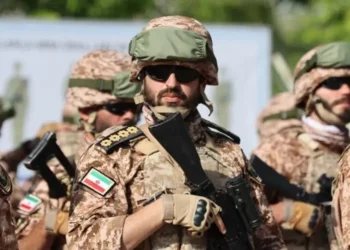
One of Khamenei’s most enduring legacies is the central role the Islamic Revolutionary Guard Corps has played in Iranian politics, security, and the economy. Originally established after the revolution to protect the regime, the IRGC evolved under Khamenei into a multi‑dimensional institution with capabilities far beyond conventional military functions. It now exerts influence in domestic security, regional foreign policy, and major economic sectors through its vast conglomerates.
The IRGC’s expansion has reinforced the Supreme Leader’s authority: its commanders owe loyalty to him personally, and its power helps deter internal dissent and external challenges. The Basij militia, an IRGC‑aligned volunteer force, likewise plays a critical role in suppressing political protest and enforcing state norms.
Oversight, Checks, and the Elected System
While Iran holds regular elections for the presidency and parliament (Majles), these bodies operate within the framework of clerical review and ultimate oversight by the Supreme Leader. The Assembly of Experts, which selects the leader, is elected by the people — but its candidates are vetted by the Guardian Council, limiting the range of eligible voices. Theoretically, this body can supervise or remove a leader deemed unfit, but such oversight has never been exercised in practice.
The dual structure — popular elections with clerical supervision — is central to the Islamic Republic’s hybrid system. Reformist presidents and movements have sometimes gained office and challenged conservative clerical dominance, yet the Supreme Leader’s broad powers have often constrained their agendas.
Continuity and the Future of the Office
Khamenei’s long tenure has made the Supreme Leader’s office the defining institution of the Islamic Republic. Its reach extends across domestic governance, economic strategy, security policy, and relations with global powers. The office’s consolidation of power reflects both ideological commitments to velāyat‑e faqīh and pragmatic adaptations to the challenges of revolutionary governance and international isolation.
Succession in this system involves the same Assembly of Experts and constitutional mechanisms that facilitated Khamenei’s own rise. Debates over future leadership and the office’s role continue among analysts of Iranian politics, reflecting both institutional constraints and factional balances within the clerical establishment.