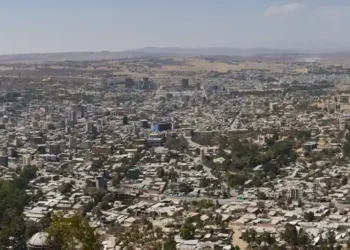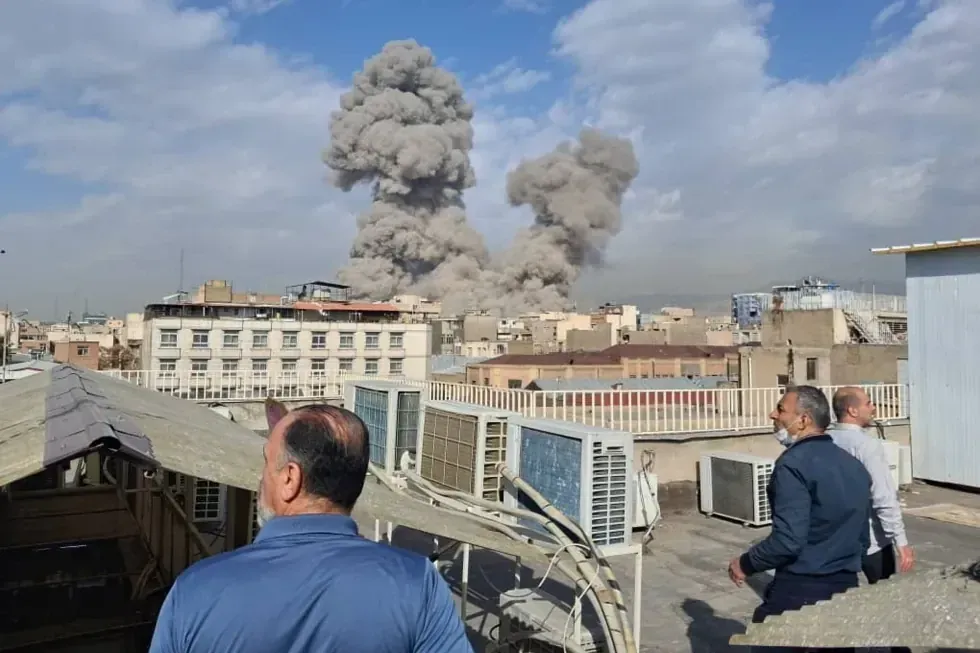
DUBAI, United Arab Emirates (JN) – Israel launched a daylight military strike on Iran’s capital, Tehran, on Saturday, in an operation that U.S. officials said involved American participation. The assault, which sent plumes of smoke over the city’s downtown district, marked one of the most direct escalations in years between the two regional rivals.
The strike unfolded against the backdrop of stalled diplomacy over Iran’s nuclear program and heightened military deployments across the Middle East. Regional airspace closures and emergency alerts in both countries underscored the risk of broader confrontation.
While the full scale of the operation and potential casualties remained unclear, the attack signals a significant shift from shadow conflict toward overt military action at a moment of acute geopolitical tension.

Strikes Reported in Tehran and Beyond
Iranian state media reported explosions in multiple locations nationwide, with one apparent strike occurring near the offices of Supreme Leader Ayatollah Ali Khamenei in central Tehran. Roads leading to his compound were reportedly closed by authorities as additional blasts echoed across the capital.
It was not immediately clear whether Khamenei, 86, was present at the time. He has not appeared publicly in recent days as tensions with the United States have intensified.
In neighboring Iraq, authorities closed national airspace, citing security concerns. Iran also shut down its airspace, and mobile phone services were reportedly cut in parts of the country as the situation developed.
U.S. Participation and Strategic Context
Two U.S. sources familiar with the matter said Washington was participating in the operation, though the extent of American involvement was not immediately detailed. The White House declined to comment publicly.
The strike comes after the United States positioned additional fighter aircraft and warships in the region in recent weeks, moves widely seen as an effort to increase pressure on Tehran amid stalled negotiations over its nuclear program.

Former President Donald Trump had previously sought an agreement to constrain Iran’s nuclear activities, arguing that Tehran’s domestic challenges presented leverage for a diplomatic breakthrough. Iran maintains that it has the right to enrich uranium under international law and has rejected expanding talks to include its ballistic missile program or its support for regional armed groups.
Those groups include Hamas in Gaza and Hezbollah in Lebanon, both of which Israel considers significant security threats.
The nuclear issue has remained a central flashpoint since the collapse of earlier agreements aimed at limiting Iran’s uranium enrichment activities in exchange for sanctions relief. Diplomacy has stalled repeatedly, and military signaling on both sides has intensified in recent months.
Israeli Military Response and Civil Defense Measures
Israel’s Defense Minister, Israel Katz, described the operation as an effort “to remove threats,” without providing operational details.
As sirens sounded across Israel, the military issued what it called a “proactive alert” to prepare the public for the possibility of retaliatory missile fire. Israeli authorities closed the country’s airspace and activated emergency protocols nationwide.
Several hospitals moved patients and ongoing surgeries to fortified underground facilities, a precaution frequently taken during periods of heightened security risk. The measures reflect longstanding concerns that Iran or its regional allies could respond with missile or drone attacks targeting Israeli territory.
Uncertainty Over Retaliation
Iran has previously warned that any direct attack involving the United States would put American military personnel and bases in the region at risk. U.S. forces are stationed across multiple Gulf states, as well as in Iraq and Syria.
It was not immediately clear whether Tehran would respond directly or through allied groups. Iranian officials have yet to release casualty figures or detailed assessments of the damage.
The strike appears to represent one of the most overt confrontations between Israel and Iran in recent years, moving beyond the shadow campaign of cyber operations, covert actions, and targeted strikes that have characterized much of their rivalry.
A Region on Edge
The Middle East has experienced repeated cycles of escalation tied to Iran’s nuclear program and its regional alliances. Diplomatic efforts led by world powers have aimed to curb enrichment levels and expand monitoring, but disagreements over scope and sequencing have stalled progress.
Saturday’s events add a new layer of uncertainty to those efforts. Airspace closures in multiple countries and heightened alert levels across the region suggest governments are bracing for possible spillover.
With communication lines strained and military forces on heightened readiness, the coming hours are likely to determine whether the confrontation remains contained or widens into a broader regional crisis.
Source: AP News – Israel launches attack on Iran’s capital with US help as tensions high over nuclear talks