Anxiety and insomnia are rising among Venezuelans as uncertainty grows over a possible confrontation between Caracas and Washington. While daily life in the capital appears largely unchanged, residents describe a persistent sense of unease shaping routines, travel plans and even school preparations.
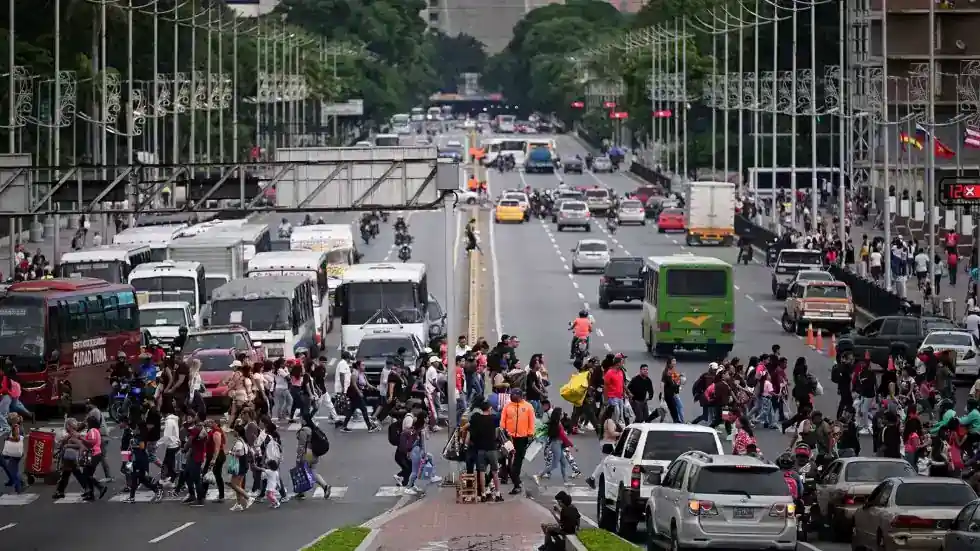
Christmas lights glow across Caracas and traditional holiday music fills shopping districts. Children attend school, workers commute, and vendors open their stalls as usual. On the surface, the Venezuelan capital projects seasonal normality.
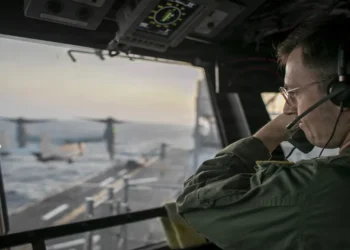
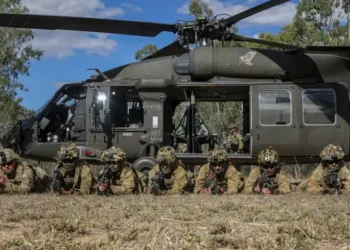
Yet beneath that calm exterior, many residents describe a steady current of anxiety linked to escalating tensions between Venezuela and the United States. Reports of US military activity in the Caribbean and repeated warnings from Washington have fueled uncertainty, leaving some Venezuelans struggling to sleep and questioning what comes next.

For Victoria, a commerce worker in western Caracas who asked to use a pseudonym for fear of reprisals, the strain has become part of daily life. Her two children now live abroad, and she remains alone in the capital. In recent months, she says, she has developed a nightly habit of checking news alerts in the early hours, even though she knows it worsens her insomnia.
“There’s a confrontation in which we, ordinary citizens, have nothing to do,” she says. “We try to carry on with our daily activities, but everything feels interrupted by the situation.”
Victoria says she now relies on natural sleep aids and sometimes avoids conversations altogether. Physical discomfort, she adds, accompanies the emotional strain. “Only those of us living it truly feel it,” she says.
Emotional toll of prolonged tension
Mental health professionals say such reactions are not uncommon in times of political and geopolitical uncertainty.
Yorelis Acosta, a clinical and social psychologist and research coordinator at the Center for Development Studies at the Central University of Venezuela, says the psychological impact varies widely depending on location, personal experience and access to information.
■ Related News

“There is no single way to process what is happening,” she explains. For Venezuelans living in border states such as Táchira or Zulia, concerns may be more acute due to geographic proximity to potential flashpoints. Those in Caracas may experience tension differently. Meanwhile, members of the diaspora often perceive the country as more militarized than daily life suggests.
Acosta notes that information overload plays a significant role. Some people attempt to disengage entirely, while others remain hyperconnected to social media and news updates, sometimes amplifying fear through unverified reports.
Her advice is measured: remain informed, but set limits. “We need reliable sources and defined periods to check the news,” she says. “We cannot spend all day connected. Physical movement, breathing, and structured routines are essential for mental balance.”
The broader context adds complexity. Venezuela has endured years of political crisis, economic contraction and migration. According to United Nations agencies, nearly eight million Venezuelans have left the country over the past decade, creating one of the world’s largest displacement crises. That reality intensifies emotional responses during periods of renewed geopolitical tension, particularly around family-centered holidays.
Divided perceptions at home
Public demonstrations reflect contrasting narratives.
At a December march in support of President Nicolás Maduro, participants echoed the government’s message of stability and sovereignty. Some marchers told reporters that daily life continues normally and that the country remains at peace under the protection of the armed forces.
Supporters framed the moment as one of national resilience, chanting slogans emphasizing peace. For them, the visible rhythms of commerce and education are proof that Venezuela is not on the brink of conflict.
Others, however, interpret the same environment differently. The coexistence of festive decorations and geopolitical tension creates what psychologists describe as cognitive dissonance — outward normality alongside inward apprehension.
December, typically a period of reunions, sharpens that contrast. For families separated by migration, the holidays can magnify absence and uncertainty. The possibility of further isolation deepens that emotional strain.
Preventive measures in schools and businesses
Anxiety has also translated into precautionary steps.
Some private schools in Caracas have asked parents to prepare individual emergency kits for students, including water, non-perishable food, hygiene supplies and flashlights. School administrators cite contingency planning for natural disasters such as earthquakes. However, some parents privately interpret the move as preparation for broader disruptions.
Businesses are also adjusting. Several owners, speaking anonymously due to political sensitivities, say they are monitoring road conditions more closely and conducting internal communication drills to prepare for potential interruptions in transportation or supply chains. These steps, while not unprecedented in a country accustomed to economic volatility, reflect heightened alertness.
The uncertainty intensified after the US Federal Aviation Administration advised airlines in late November to exercise caution when flying over Venezuela and parts of the southern Caribbean, citing safety concerns. Several carriers subsequently suspended routes. Venezuelan authorities responded by revoking certain flight permits after a brief deadline to resume service.
For residents like Victoria, the aviation disruptions carried personal consequences. She has not visited her daughter in France in two years. The suspension of flights, she says, felt like “a complete collapse,” raising fears of deeper isolation.
She is exploring alternative routes through neighboring countries such as Colombia, Panama or Curaçao, but remains hesitant. “I worry about taking risks under the current circumstances,” she says.
Diaspora decisions
For Venezuelans living abroad, the calculus is equally fraught.
Luis Rosas, an engineer based in Brazil, had planned to travel home to celebrate his mother’s 80th birthday. As December approached, he found himself weighing emotional desire against safety considerations.
“Family is always the reason to return,” he says. “But situations beyond our control affect everything.”
Ultimately, Rosas decided not to travel this Christmas, citing concerns about unpredictability. His decision mirrors that of many in the diaspora who must balance reunion with caution.
Between normality and unease
Caracas today presents a dual image: illuminated plazas and holiday markets on one side; quiet conversations about contingency plans on the other. There has been no confirmed military confrontation on Venezuelan territory, and daily civic life continues.
Still, the psychological effects of prolonged geopolitical tension are tangible. Insomnia, heightened vigilance and disrupted family plans reflect how international standoffs can filter into private lives.
For many Venezuelans, the central challenge is not immediate conflict but sustained uncertainty. In that space between normal routine and unresolved tension, anxiety has found fertile ground.
Source: CNN – Insomnia and anxiety stalk Venezuelans amid US military buildup