


Journos News
Sunday, February 1, 2026
  • Login
  • Home
  • Breaking News
  • World News
  • Politics
  • Business
  • Conflict and Crisis
  • Sports
  • Technology
  • Entertainment
  • Health
No Result
View All Result
  • Home
  • Breaking News
  • World News
  • Politics
  • Business
  • Conflict and Crisis
  • Sports
  • Technology
  • Entertainment
  • Health
No Result
View All Result
Journos News
No Result
View All Result
Home Environment Agriculture & Wildlife

How the Modern Potato Evolved From a Wild Tomato 9 Million Years Ago

New research reveals a surprising genetic origin story behind one of the world’s most important staple crops.

The Daily Desk by The Daily Desk
August 1, 2025
in Agriculture & Wildlife, Aquaculture & Water Management, Environment, Environment News
0
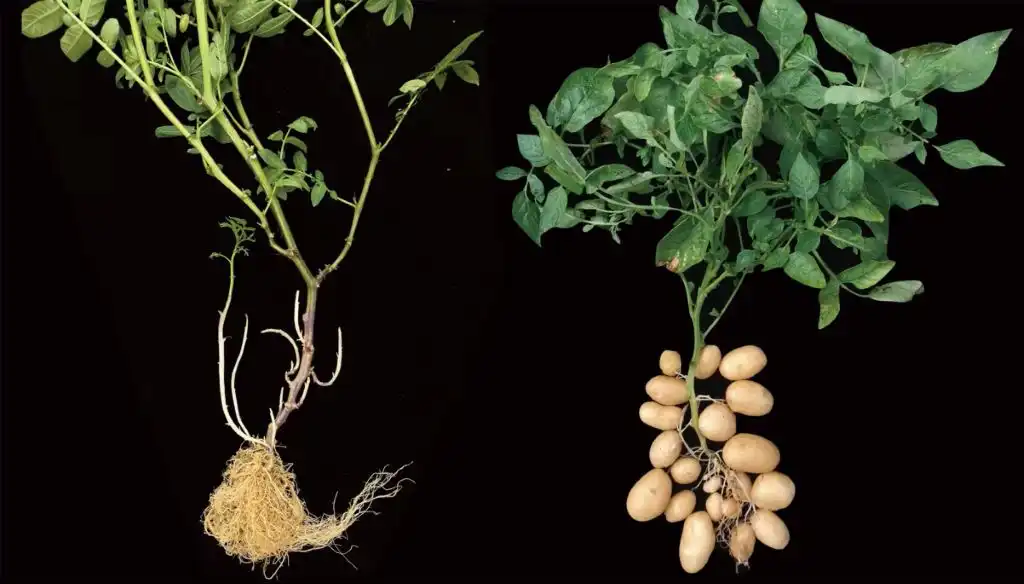
The Surprising Tomato Connection Behind the Potato’s Ancient Origins - AGIS-CAAS

From Tomato to Tuber: Scientists Solve the Mystery of the Potato’s Origins - AGIS-CAAS

The unexpected roots of the modern potato: A 9-million-year-old genetic fusion

August 1, 2025 – 14:00 EDT

A groundbreaking study has traced the origins of the modern potato to an ancient genetic encounter between two unlikely plant relatives—one of which was a wild tomato. The research not only solves a long-standing botanical mystery but could also pave the way for more resilient crops in the face of climate change.

A chance genetic meeting in the Andes

The potato we know today was first domesticated in the Andes around 10,000 years ago. However, its evolutionary past had remained a mystery, largely due to the limited fossil record for plants. A new study published in Cell by a team of evolutionary biologists and genomic researchers sheds light on the deeper history of this globally essential food.

By analyzing the genomes of 450 potato species, both wild and cultivated, researchers found that the modern potato evolved from a natural hybridization event roughly 9 million years ago. It involved a wild tomato ancestor and a now-extinct potato-like plant called Etuberosum.

Although neither of the original plants produced tubers—the underground storage structures that we eat today—their hybrid offspring did. This genetic fusion allowed the new plant to survive in the cold, dry environments of the Andes by storing nutrients underground, eventually giving rise to the tuber-producing potato species we rely on.

RELATED POSTS

Galapagos Albatross Spotted 3,000 Miles North Off California Coast

Do Dogs Respond to Music? What Research Suggests About Sound, Stress, and Canine Behavior

Westminster Dog Show at 150: Continuity, Change, and Cultural Significance

US Braces for Prolonged Freeze After Winter Storm Kills at Least 29

Massive winter storm blankets much of United States with ice, snow, and extreme cold

Thousands of U.S. Flights Canceled as Major Winter Storm Paralyzes Travel

A closer look at the plants involved

All three plants—potatoes, tomatoes, and Etuberosums—belong to the Solanum genus, the largest group in the nightshade family. Though visually similar, Etuberosum plants lack tubers and are extremely rare, found only in isolated regions like the Juan Fernández Islands and Chilean rainforests.

Dr. Sandy Knapp of the Natural History Museum in London, a coauthor of the study, explained that early botanical studies misclassified potatoes and Etuberosums as close relatives. However, genetic testing suggested a deeper connection between potatoes and tomatoes.

The team used phylogenetic analysis—a method of studying genetic lineage—to uncover this hidden relationship. By examining preserved plant specimens and rare wild potato samples, some of which exist only in a single Andean valley, the researchers compiled the most comprehensive potato genetic database ever created.

Key genes that sparked the evolution of the tuber

The hybridization event that led to the potato involved two critical genes from each parent plant. According to the study, a tomato ancestor contributed the SP6A gene, which acted like a “master switch,” instructing the plant to start forming tubers. Meanwhile, Etuberosum donated the IT1 gene, essential for building the underground stems that eventually became the tubers.

“If either gene was missing, the plant wouldn’t have been able to form tubers,” said study coauthor JianQuan Liu, a professor of ecology at Lanzhou University in China.

Dr. Amy Charkowski of Colorado State University, who was not involved in the research, noted that bees likely facilitated this cross-species pollination, a random event that changed the course of agricultural history.

Evolution shaped by environmental extremes

The Andes mountains—formed by tectonic shifts over millions of years—provided the perfect testing ground for the hybrid plant. Unlike modern tomatoes that thrive in hot, dry climates or Etuberosums that prefer milder conditions, the ancestral potato adapted to cold, high-altitude environments.

Its ability to grow and reproduce via underground tubers gave it an evolutionary advantage. Unlike plants that relied on seeds and pollination, these early potatoes could clone themselves by growing new tubers, which spread easily in varied terrain. This reproductive method allowed them to flourish across the mountainous landscape, giving rise to more than 100 wild potato species today—though many remain inedible due to toxicity.

Modern implications: breeding the next-generation potato

Today, the cultivated potato ranks as the world’s third most important food crop after rice and wheat, contributing significantly to global caloric intake. Understanding how it evolved is more than a historical curiosity—it could revolutionize agriculture.

By identifying the genes responsible for tuber formation, scientists can now attempt to breed disease-resistant and climate-resilient potatoes. Professor Sanwen Huang, coauthor and president of the Chinese Academy of Tropical Agricultural Sciences, emphasized that decoding the potato’s genetic past is vital for creating stronger crops in the future.

“We’ve finally solved the mystery of where potatoes came from,” said Huang. “This knowledge opens the door to innovative breeding techniques that may improve global food security.”

Seed potatoes, which are reproduced from true seeds instead of cloning, are especially promising. These offer greater genetic diversity, making them more resilient against pests, diseases, and shifting weather patterns. Huang’s team is currently working on fast-breeding, seed-based potato strains that incorporate key tomato genes.

Facing future challenges with wild relatives

Dr. Knapp and Charkowski agree that wild potato species may hold the key to future innovation. Many of these species have evolved natural resistance to drought, insects, and pathogens—traits that could be introduced into commercial crops through selective breeding.

Charkowski’s lab is investigating why certain pests target potatoes but not tomatoes and how wild species fend off disease. This research could help protect a crop that is especially crucial in high-altitude, arid, or short-season regions where few other staples grow effectively.

A botanical love story

As romantic as it is scientific, the potato’s origin is now seen as a rare evolutionary success born from chance. “It’s a beautiful example of how randomness in evolution can lead to something globally important,” said Dr. Tiina Särkinen, a nightshade expert from the Royal Botanic Garden Edinburgh.

She added, “The potato wasn’t carefully designed—it happened because of a wild encounter between two unlikely plants. And yet, here we are, feeding the world with it.”

Follow JournosNews.com for professionally verified reporting and expert analysis across world events, business, politics, technology, culture, and health — your reliable source for neutral, accurate journalism.
Source: CNN – The modern potato evolved from a wild tomato fling 9 million years ago, scientists say

This article was rewritten by JournosNews.com based on verified reporting from trusted sources. The content has been independently reviewed, fact-checked, and edited for accuracy, neutrality, tone, and global readability in accordance with Google News and AdSense standards.

All opinions, quotes, or statements from contributors, experts, or sourced organizations do not necessarily reflect the views of JournosNews.com. JournosNews.com maintains full editorial independence from any external funders, sponsors, or organizations.

Stay informed with JournosNews.com — your trusted source for verified global reporting and in-depth analysis. Follow us on Google News, BlueSky, and X for real-time updates.

Tags: #AncientPlants#AndeanAgriculture#BotanicalResearch#CropHistory#EvolutionaryBiology#FoodGenetics#GeneticDiscovery#ModernPotatoEvolution#PlantEvolution#PotatoOrigins#SolanaceaeFamily#WildTomatoHybrid
ShareTweetSend
The Daily Desk

The Daily Desk

The Daily Desk – Contributor, JournosNews.com, The Daily Desk is a freelance editor and contributor at JournosNews.com, covering politics, media, and the evolving dynamics of public discourse. With over a decade of experience in digital journalism, Jordan brings clarity, accuracy, and insight to every story.

Related Posts

Waved albatross flying over Pacific waters off California coast - Melody Baran/University of California, San Diego-Scripps Institution of Oceanography via AP
All About Animals

Galapagos Albatross Spotted 3,000 Miles North Off California Coast

February 1, 2026
Dog resting calmly in kennel with soft music playing nearby - AP Photo/Kerstin Joennson,File
All About Animals

Do Dogs Respond to Music? What Research Suggests About Sound, Stress, and Canine Behavior

January 31, 2026
Historic and modern Westminster Dog Show dogs and handlers - AP Photo/Jacob Harris, File
All About Animals

Westminster Dog Show at 150: Continuity, Change, and Cultural Significance

January 31, 2026
Snow-covered US city during deadly winter storm and power outages - AP Photo/Charles Krupa
Environment

US Braces for Prolonged Freeze After Winter Storm Kills at Least 29

January 26, 2026
Ice-covered trees and roads during widespread U.S. winter storm - AP Photo/Julia Demaree Nikhinson
Environment

Massive winter storm blankets much of United States with ice, snow, and extreme cold

January 26, 2026
Snow-covered airport runway during U.S. winter storm disruptions - Mike Simons/Tulsa World via AP
Environment

Thousands of U.S. Flights Canceled as Major Winter Storm Paralyzes Travel

January 25, 2026
US winter storm bringing snow, ice and extreme cold - AP Photo/Cara Anna
Environment

Huge winter storm threatens crippling ice, heavy snow across much of the U.S.

January 23, 2026
Snow-covered interstate after massive Michigan multi-vehicle crash - WZZM via AP
Environment

100 vehicles involved in Michigan interstate pileup as snowstorm sweeps U.S.

January 20, 2026
Wildfires burning near homes in central Chile during heatwave - AP Photo/Javier Torres
Environment

Wildfires sweep across Chile, killing at least 18 and forcing mass evacuations

January 19, 2026
Load More
Next Post
From Russian Prison to U.S. Recovery: Paul Whelan’s Ongoing Struggles - Nathan Howard/Reuteres

Life After Russia: Paul Whelan’s Difficult Return to the U.S.

Conspiracy Theories About COVID Origins Are Putting Public Health at Risk - Joe Raedle/Getty Images/File

How COVID Origin Theories Are Undermining Future Pandemic Preparedness

After heroic rescue, spotlight returns to migrant worker conditions in Singapore - PUB/BBC

Singapore sinkhole rescue sparks renewed focus on migrant worker rights

JournosNews logo

Journos News delivers globally neutral, fact-based journalism that meets international media standards — clear, credible, and made for a connected world.

  • Categories
  • World News
  • Politics
  • Business & Economy
  • Conflict and Crisis
  • Sports
  • Technology
  • Entertainment
  • Science & Health
  • Lifestyle & Culture
  • Investigations & Watchdog
  • Resources
  • Submit a Story
  • Advertise with Us
  • Syndication & Partnerships
  • Site Map
  • Press & Media Kit
  • Editorial Team
  • Careers
  • AI Use Policy

Join thousands of readers receiving the latest updates, tips, and exclusive insights straight to their inbox. Never miss an important story again.

  • About Us
  • Accessibility Statement
  • Contact Us
  • Privacy Policy
  • Terms and Conditions

© JournosNews.com – Trusted source for breaking news, trending stories, and in-depth reports.
All rights reserved.

Welcome Back!

Login to your account below

Forgotten Password?

Retrieve your password

Please enter your username or email address to reset your password.

Log In
No Result
View All Result
  • Home
  • Breaking News
  • World News
  • Politics
  • Business
  • Conflict and Crisis
  • Sports
  • Technology
  • Entertainment
  • Health

© JournosNews.com – Trusted source for breaking news, trending stories, and in-depth reports.
All rights reserved.

This website uses cookies. By continuing to use this website you are giving consent to cookies being used. Visit our Privacy and Cookie Policy.
