Israeli forces fired a mortar shell into a residential area of Gaza City, wounding at least 10 people and prompting an internal military investigation, according to Israeli and Palestinian officials. The incident is the latest to strain a fragile ceasefire between Israel and Hamas that has been in place since October.
Palestinian health officials said several of the wounded were in critical condition, while Israel’s military said the round deviated from its intended target during an operation near the ceasefire boundary.
Mortar lands beyond ceasefire boundary
The Israeli military said the mortar was fired during an operation near the so-called “Yellow Line,” a demarcation established under the ceasefire agreement that separates areas under Israeli control from the rest of the Gaza Strip. According to the army, the shell veered off course and landed in a civilian area.

The military did not specify the original target or clarify whether Israeli troops had crossed the line during the operation. It said the incident is under investigation.
Fadel Naeem, director of Al-Ahli Hospital in central Gaza City, said the hospital received 10 wounded people following the strike, some with life-threatening injuries. Palestinian officials described the area hit as densely populated.
Civilian casualties since the truce
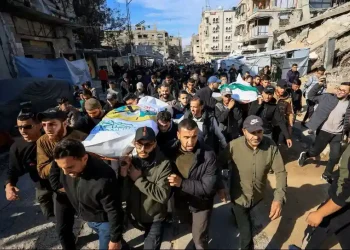
The mortar strike was not the first incident since the ceasefire took effect on Oct. 10 in which Israeli fire caused casualties outside the Yellow Line. Palestinian health authorities say more than 370 people have been killed by Israeli fire since the truce began.
Israel has said it has responded to repeated Hamas violations of the ceasefire and maintains that most of those killed were militants. However, an Israeli military official, speaking on condition of anonymity under military rules, acknowledged that civilians have been killed in several incidents, including children and a family traveling in a van.
Palestinian residents and officials say the boundary is poorly marked in places, contributing to confusion and deadly outcomes. Israeli forces have begun placing yellow concrete blocks to better delineate the line, but officials acknowledge that markings are incomplete in some areas.
Ceasefire enters uncertain phase
The Israel-Hamas ceasefire has struggled to progress beyond its initial phase, with both sides accusing each other of violations. The first phase centered on the exchange of Israeli hostages for Palestinian prisoners held by Israel.
A proposed second phase calls for further Israeli troop withdrawals, the deployment of an international stabilization force, the establishment of a technocratic governing body in Gaza, and the disarmament of Hamas. None of those steps has yet been implemented.
Israel says it will not proceed to the next phase until the remains of Ran Gvili, the last Israeli hostage believed to be held in Gaza, are returned. Israeli officials say Hamas has so far failed to locate his remains.
Hamas, for its part, has urged greater international pressure on Israel to ease restrictions, reopen key border crossings, halt what it describes as deadly ceasefire violations, and allow more humanitarian aid into Gaza.
Aid shortages and humanitarian strain
Recently released figures from Israeli military sources suggest Israel has not consistently met the ceasefire requirement to allow 600 aid trucks per day into Gaza, though Israeli authorities dispute that assessment.
Humanitarian organizations say aid shortages continue to have severe consequences for Gaza’s population. Food remains scarce in much of the territory, which is still recovering from famine-like conditions that emerged during the war.
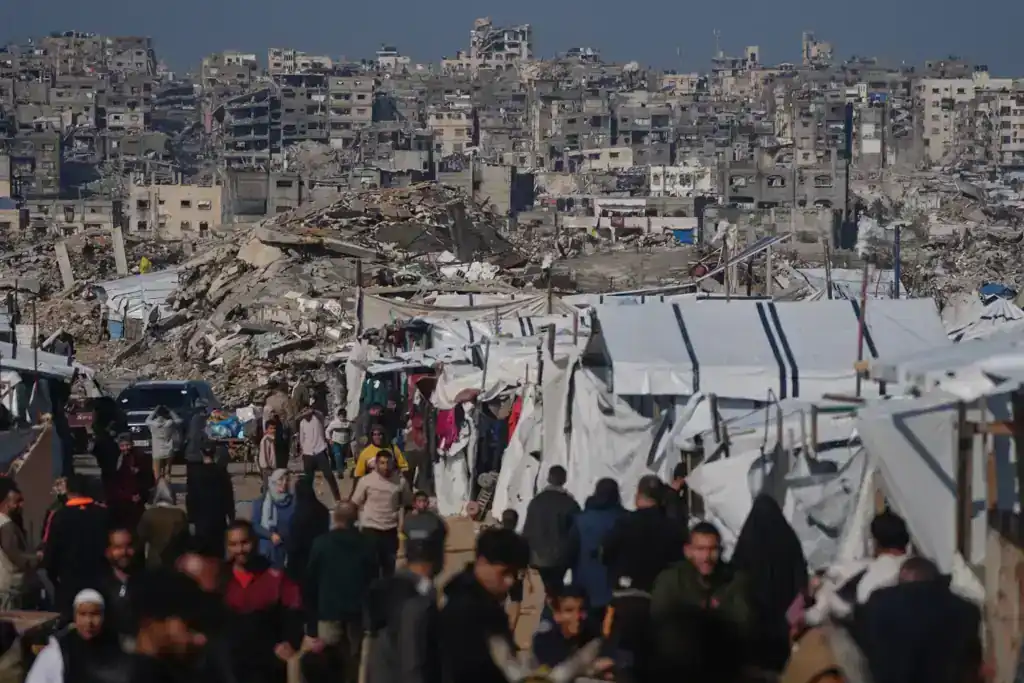
More than 2 million people live in Gaza, and the vast majority have been displaced by fighting. Many remain in overcrowded tent camps or in partially destroyed buildings with limited access to clean water, medical care, and electricity.
The broader toll of the war
The war began with a Hamas-led attack on southern Israel on Oct. 7, 2023, that killed about 1,200 people and resulted in the capture of 251 hostages. Most hostages or their remains have since been returned through ceasefire agreements or other arrangements.
Israel’s subsequent military campaign in Gaza has killed more than 70,660 Palestinians, according to Gaza’s Health Ministry. The ministry does not differentiate between civilians and combatants but says roughly half of those killed were women and children. Its data, compiled by medical professionals, is widely cited by international organizations.
As negotiations falter and violence continues near the ceasefire line, diplomats and aid groups warn that further incidents involving civilians could undermine efforts to stabilize Gaza and move the truce toward a lasting settlement.
This article was rewritten by JournosNews.com based on verified reporting from trusted sources. The content has been independently reviewed, fact-checked, and edited for accuracy, neutrality, tone, and global readability in accordance with Google News and AdSense standards.
All opinions, quotes, or statements from contributors, experts, or sourced organizations do not necessarily reflect the views of JournosNews.com. JournosNews.com maintains full editorial independence from any external funders, sponsors, or organizations.
Stay informed with JournosNews.com — your trusted source for verified global reporting and in-depth analysis. Follow us on Google News, BlueSky, and X for real-time updates.