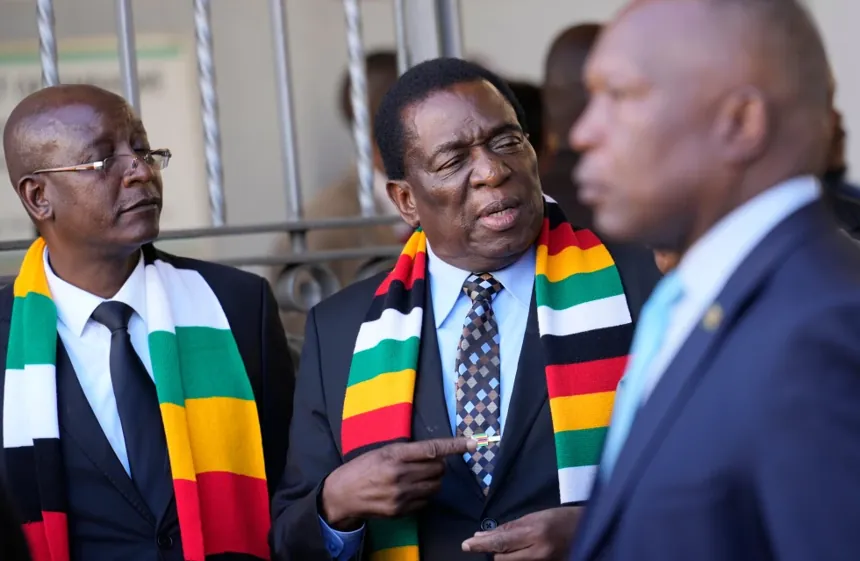
HARARE, Zimbabwe — Zimbabwe’s Senate has approved a controversial constitutional amendment package that would postpone the country’s next presidential election, eliminate direct voting for the presidency and extend the tenure of President Emmerson Mnangagwa.
The legislation passed on Wednesday with overwhelming support in the upper chamber, moving the proposal to its final stage before becoming law. If signed by the president, the reforms would significantly reshape Zimbabwe’s electoral system and extend the current administration’s time in power.
The measure passed with 75 senators voting in favor and four opposing it. Support came primarily from the ruling ZANU-PF party, although some lawmakers from opposition ranks also backed the bill.

Election Timeline Would Be Altered
Under the proposed constitutional changes, national elections scheduled for 2028 would be postponed until 2030.
The reforms would also lengthen presidential and parliamentary terms from five years to seven years, effectively allowing Mnangagwa to remain in office for an additional two years beyond the current electoral timetable.
Another major provision would eliminate direct presidential elections. Instead, future presidents would be selected by lawmakers rather than through a nationwide popular vote.
Supporters of the bill argue the changes remain consistent with constitutional term-limit provisions because the existing two-term restriction for presidents would not be removed, even though each term would be longer.
Opposition and Legal Challenges Continue
The proposal has generated strong criticism from opposition politicians, civil society organizations and legal experts.
■ Related News


Critics argue that extending presidential terms and altering the structure of presidential elections should require approval through a national referendum rather than parliamentary action alone.
Several legal challenges have been filed in Zimbabwe’s courts, although judges have not yet issued rulings on the cases.
The debate has intensified political divisions in the country, with opponents alleging intimidation, harassment and politically motivated arrests linked to resistance against the constitutional reforms.
Mnangagwa’s Future at the Center of Debate
Mnangagwa has led Zimbabwe since 2017, when the military-backed removal of longtime leader Robert Mugabe brought an end to nearly four decades of Mugabe’s rule.
The president has previously stated that he would leave office when his second term concludes in 2028. However, members of the ruling party have increasingly promoted constitutional changes that would allow him to remain in office beyond that date.
At 83 years old, Mnangagwa is among the world’s oldest serving national leaders, and the proposed reforms have intensified scrutiny of Zimbabwe’s political succession plans.
Ruling Party Pushes Legislation Forward
The Senate vote follows approval by the lower house of Parliament last week, where lawmakers overwhelmingly endorsed the amendments.
ZANU-PF legislators have prioritized the bill’s passage, at times extending parliamentary sessions late into the night to advance the legislation through both chambers.
With parliamentary approval now complete, attention shifts to whether Mnangagwa will sign the amendments into law and how courts may respond to ongoing legal challenges.
The outcome could have lasting implications for Zimbabwe’s democratic institutions, electoral system and political future as the country approaches what was originally scheduled to be a presidential election year in 2028.
Tags: Zimbabwe, Emmerson Mnangagwa, ZANU-PF, Zimbabwe Senate, Constitutional Amendments, Presidential Election, Electoral Reform, Robert Mugabe, African Politics, Parliament, Governance, Democracy