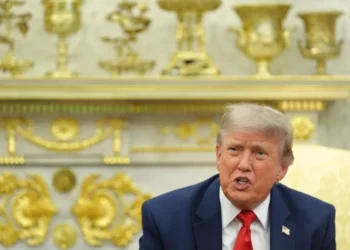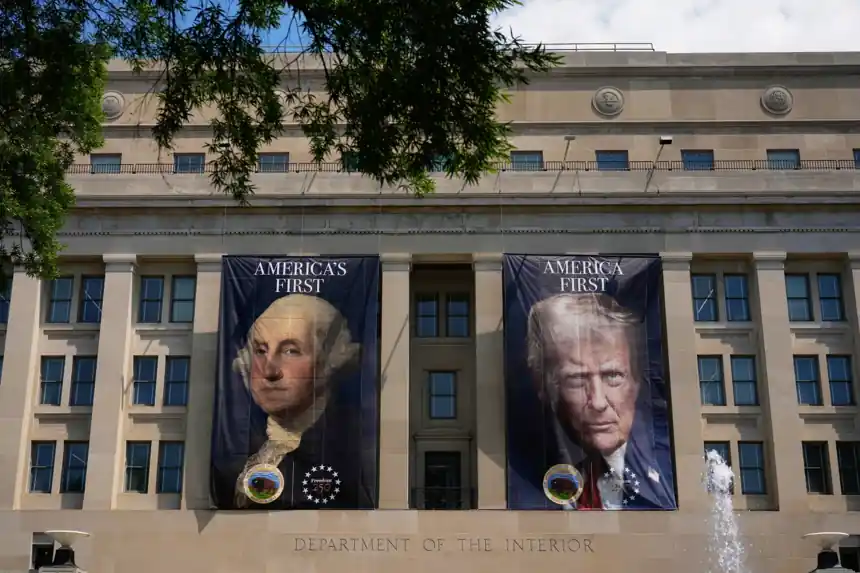
America’s upcoming 250th anniversary has become intertwined with renewed debate over the scope of presidential authority as President Donald Trump continues to exercise broad executive powers during his second term.
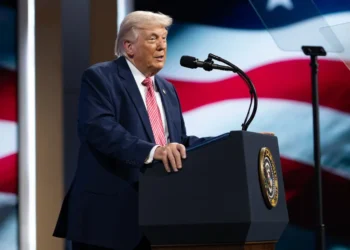
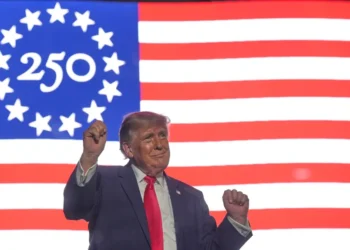
The anniversary commemorating the nation’s independence from British rule has been marked by public events led by Trump, including a campaign-style rally on the National Mall. According to the supplied material, the president also plans to return to the Mall on July 4 for another event, while his own commemorative activities have largely overshadowed a bipartisan commission established by Congress to coordinate the national observance.
The developments have prompted renewed discussion among historians, legal scholars, political organizations, and elected officials about the constitutional balance between executive authority and institutional oversight.

Executive Authority Becomes the Central Political Debate
Since returning to office in January 2025, Trump has taken a series of actions that critics argue represent an expansion of presidential authority.
According to the supplied material, those actions include nominating one of his former personal lawyers to serve as attorney general, directing the Department of Justice to pursue political opponents, deploying U.S. Marines to Los Angeles, seeking greater federal influence over election administration, filing lawsuits against media organizations, and pursuing litigation involving federal agencies.
The White House referred questions regarding Trump’s exercise of executive authority to the president’s previous public statements.
Trump has repeatedly defended his interpretation of presidential powers. During earlier public appearances, he cited Article II of the U.S. Constitution in describing the authority of the presidency and has rejected comparisons portraying him as a monarch or dictator.
Earlier this year, he told CBS’ “60 Minutes,” “I’m not a king.”
■ Related News


Historical Comparisons Fuel Public Debate
The supplied material notes that comparisons between presidents and monarchs have periodically appeared throughout American political history. However, Princeton University historian Julian Zelizer argued that Trump has generated renewed attention because of how he has described the presidency and exercised executive authority.
The debate has also extended into political messaging.
According to the supplied material, the official White House X account earlier this year published an image of Trump alongside King Charles III with the caption “TWO KINGS.” Trump also posted “LONG LIVE THE KING” on social media after announcing the end of a New York City transportation program.
Meanwhile, the political organization Indivisible adopted the slogan “No Kings,” framing its opposition around concerns over executive power during Trump’s second administration.
Courts Continue to Test Presidential Powers
With Republicans controlling Congress, the judiciary has become one of the principal institutions reviewing disputes involving presidential authority.
The supplied material states that the U.S. Supreme Court has issued several significant rulings affecting Trump’s administration.
During the 2024 presidential campaign, the Court ruled that presidents possess broad immunity from criminal prosecution for official acts, a decision that affected multiple investigations connected to Trump’s first administration.
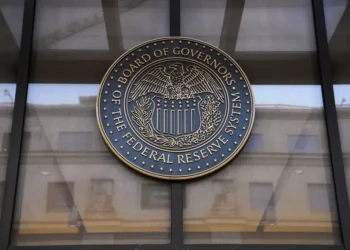
At the same time, the Court has also placed limits on executive authority in other cases. According to the supplied material, justices allowed Federal Reserve Governor Lisa Cook to remain in office while litigation continues regarding the president’s authority to remove members of independent agencies.
The Court also ruled against Trump’s global tariff policy, concluding that only Congress possessed the authority involved in that dispute.
John Yoo, a law professor at the University of California, Berkeley, said those rulings demonstrate that constitutional limits on presidential authority remain in place.
Financial Interests and Ethics Questions Remain Under Review
The article also highlights renewed scrutiny over Trump’s business interests during his second presidency.
According to the supplied material, Trump launched multiple cryptocurrency ventures before and after returning to office, while questions have continued regarding potential conflicts involving his private business operations.
The supplied material further states that Trump filed a $10 billion lawsuit against the Internal Revenue Service following the disclosure of his tax returns. It also reports that the Department of Justice initially directed the IRS to negotiate a settlement before later modifying its approach following criticism from members of both political parties.
Julian Zelizer said the scale of Trump’s continuing business interests distinguishes his administration from previous presidencies discussed in historical comparisons.
Justice Department Actions Face Political Scrutiny
The Justice Department has also become a focal point in debates over executive authority.
According to the supplied material, Trump has publicly urged federal prosecutors to pursue investigations involving several political opponents. The article states that indictments were later brought against former FBI Director James Comey and New York Attorney General Letitia James, although those charges were eventually dismissed before additional charges were later filed against Comey.
The supplied material also reports that California Governor Gavin Newsom criticized a White House event celebrating Trump’s 80th birthday, arguing that government property was used in ways that benefited the president’s private business interests. Days later, Newsom disclosed that the Department of Justice was investigating him and his wife.
The supplied material does not indicate the outcome of those investigations.
America 250 Celebrations Coincide With Broader Constitutional Debate
As preparations continue for the nation’s 250th anniversary, discussion surrounding the constitutional limits of presidential authority has become closely linked to the broader public conversation about American democratic institutions.
The supplied material presents differing views from legal scholars, historians, administration officials, and political organizations regarding Trump’s interpretation of executive power.
While critics argue that his approach represents an unprecedented expansion of presidential authority, Trump has maintained that his actions fall within the constitutional powers granted to the office. Court decisions continue to shape the legal boundaries of those powers as litigation proceeds.
Tags: Executive Branch, U.S. Supreme Court, Constitution, Department of Justice, Presidential Authority, Congress, Institutional Accountability, America 250, Federal Government, Rule of Law,