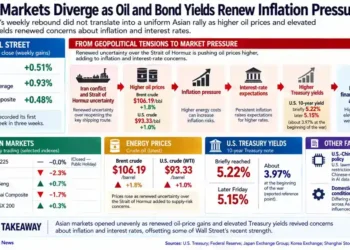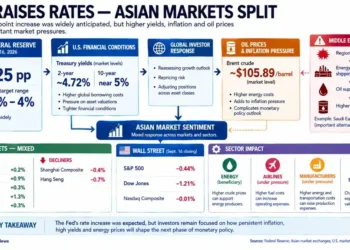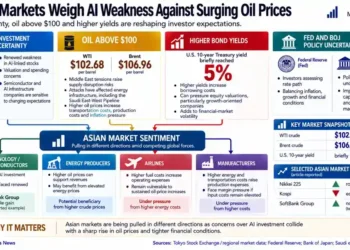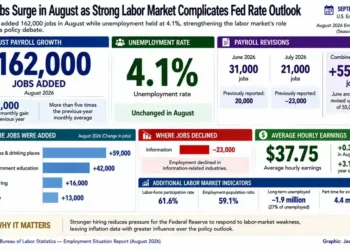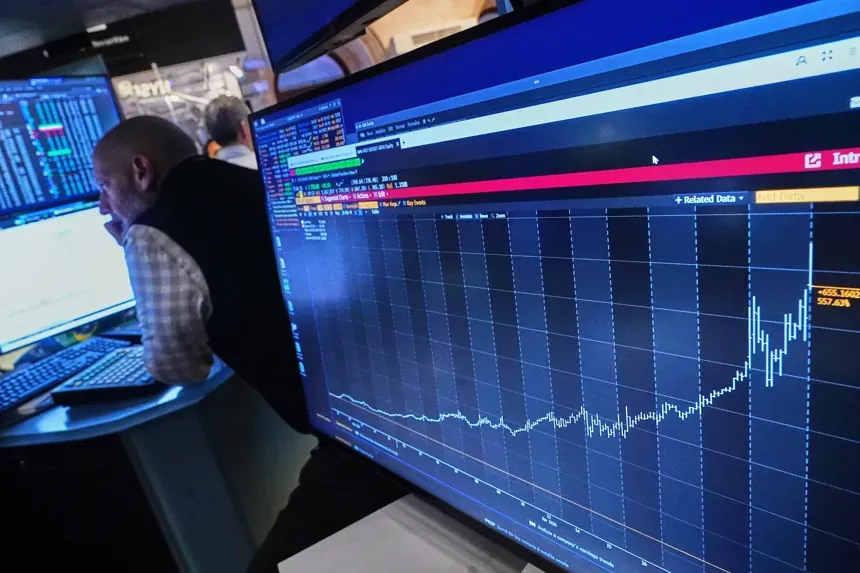
Global equity markets, led by benchmarks in the United States, have continued to post record highs despite ongoing conflict involving Iran, underscoring the dominant influence of corporate earnings and macroeconomic indicators over geopolitical uncertainty. According to market data reported by Associated Press, major U.S. indices advanced as investors assessed steady profit growth alongside moderating inflation trends.
The rally highlights how financial markets are prioritizing earnings resilience and economic stability, even as geopolitical risks persist in the background. Analysts indicate that sustained corporate performance and expectations of controlled inflation are shaping investor sentiment more strongly than external shocks.
Earnings Performance Drives Market Momentum
Recent corporate disclosures point to stronger-than-expected earnings across multiple sectors, providing a key foundation for equity gains. Data compiled from company filings and cited by Reuters show that several large-cap firms reported year-over-year profit growth, reinforcing confidence in business fundamentals.

Revenue expansion, coupled with cost management strategies, has supported margins despite elevated input prices in prior quarters. Analysts note that earnings consistency is contributing to valuation support, particularly in sectors such as technology and financials.
Inflation Trends and Policy Expectations
Macroeconomic data has also played a central role in sustaining market optimism. Inflation indicators have shown signs of stabilization, according to figures referenced in coverage by Bloomberg, easing concerns about prolonged monetary tightening.
Expectations that the Federal Reserve may maintain or gradually adjust its policy stance have contributed to improved market sentiment. Lower volatility in inflation readings has allowed investors to reassess risk exposure with greater confidence.
Limited Market Reaction to Geopolitical Risk
Despite the ongoing conflict involving Iran, equity markets have shown limited sustained disruption. Market participants appear to be factoring geopolitical developments into pricing without triggering broad risk-off movements.
Industry analysts suggest that while geopolitical tensions can influence energy prices and short-term volatility, their impact on equities tends to be contained unless they significantly disrupt global economic activity. Current conditions indicate that investors are viewing the conflict as a manageable risk within a broader macroeconomic framework.
■ Related News


Sector Trends and Investor Positioning
Sector performance has reflected a preference for companies with stable earnings visibility and strong balance sheets. Technology firms, in particular, have contributed to index gains, while cyclical sectors have responded to improving economic expectations.
Portfolio positioning data cited by financial analysts indicates continued allocation toward equities, supported by expectations of steady growth and controlled inflation. This trend aligns with broader institutional strategies that prioritize long-term fundamentals over short-term geopolitical developments.
Strategic Outlook
Looking ahead, market direction is expected to depend on the interplay between earnings performance, inflation data, and central bank policy decisions. Analysts emphasize that continued profit growth and stable economic indicators will be critical in sustaining current valuation levels.
At the same time, geopolitical developments, including tensions involving Iran, remain a variable that could influence market conditions if escalation affects global supply chains or energy markets. For now, financial markets appear anchored by corporate fundamentals and macroeconomic stability.