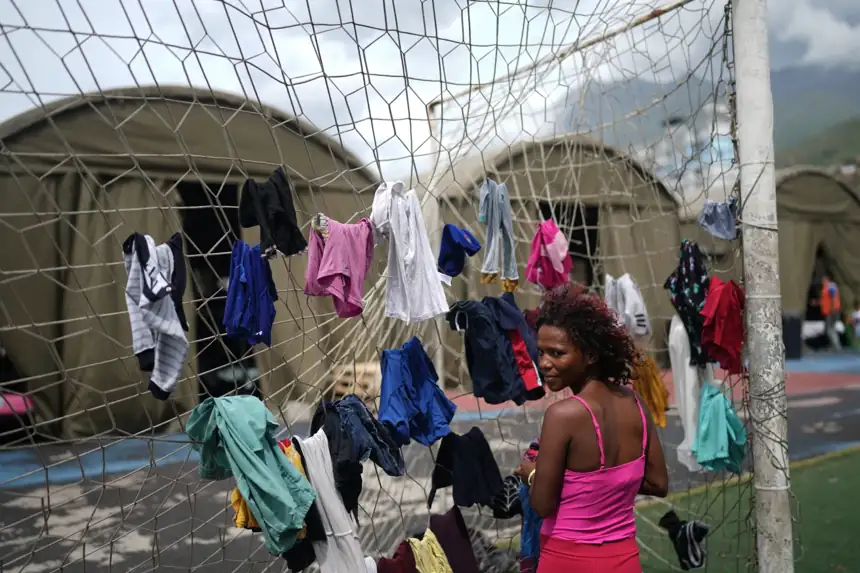
CATIA LA MAR, Venezuela – Growing numbers of survivors of last month’s devastating twin earthquakes in Venezuela are seeking medical care for chronic illnesses and disease outbreaks as humanitarian organizations expand emergency operations across the country’s hardest-hit communities.
The increasing demand for assistance comes as the United Nations has appealed for approximately $300 million to support 1.3 million people in urgent need following the disaster, which devastated much of the northern state of La Guaira.
Mobile clinics, field hospitals and community kitchens now operate throughout affected areas, providing medical treatment and emergency assistance to thousands of displaced residents.

Long-term health needs emerge
Tom Fletcher, the United Nations’ emergency relief chief, said medical needs have shifted from emergency trauma care toward the treatment of chronic illnesses that were interrupted by the disaster.
“It is clear at displacement sites that, particularly after two weeks, that people are turning up because they haven’t been able to get their other treatments,” Fletcher told The Associated Press during a visit to Venezuela.
“So, they’re not turning up with just the fractures now, they’re turning up with those longer-term health needs. And it’s vital that we’re there for them.”
Doctors working in Catia La Mar reported increasing cases of skin diseases, diarrheal illnesses and requests for medications used to treat chronic conditions such as diabetes and high blood pressure.
Medical workers said many of the illnesses are linked to overcrowded temporary shelters and inadequate access to clean water and sanitation—problems that existed in some communities even before the earthquakes.


Thousands remain displaced
Among those seeking treatment was 67-year-old Irma Echarri, who visited a mobile medical unit hoping to replace prescription eye drops and pain medication while also seeking care for persistent pain in her nose following the June 24 earthquakes.
“It hurts a lot,” Echarri said while waiting for treatment. “It hurts because it hurts.”
Although her home remained standing, many of her neighbors continue living in temporary shelters or outdoors after the earthquakes destroyed 190 buildings and damaged another 856, according to Venezuelan authorities.
Officials said the twin earthquakes killed 3,889 people and left roughly 18,000 residents homeless.
Many displaced families are now sheltering in schools, parks, sidewalks, plazas and other public spaces.
International aid effort expands
Fletcher said the United States has so far provided the largest share of international earthquake-response assistance, while much of the relief effort is being delivered by Venezuelan organizations working alongside global humanitarian agencies.
One beneficiary, 41-year-old Zulbey Reyes, sought treatment at a clinic operated by Venezuelan organization Paluz in partnership with the International Rescue Committee after developing chest pain following the disaster.
Having also lost her job as a nanny because of the earthquakes, Reyes said doctors determined her pain was caused by inflammation rather than heart disease.
“I thought it was my heart that was sick,” she said. “But it’s a nerve that became inflamed after the screams that day.”
Health system under pressure
Armando Denegri, the Pan American Health Organization’s representative in Venezuela, said half of La Guaira’s healthcare professionals were directly affected by the earthquakes.
“Some disappeared, some died, others were severely affected by the crisis, impacting their families,” Denegri told reporters, without providing further details.
The United Nations Office for Disaster Risk Reduction has estimated that direct damage to housing and infrastructure totals about $37 billion.
Shift in government approach
The widespread presence of humanitarian organizations marks a significant change from recent years, when nongovernmental organizations often faced accusations of anti-government activity and restrictions under the administration of former President Nicolás Maduro, during which current acting President Delcy Rodríguez served as vice president.
Fletcher said the current emergency has encouraged cooperation despite previous political tensions.
“When you have a crisis of this magnitude, people put the politics to one side and are able to focus on saving as many lives as possible, and that’s what I’m seeing so far in this response,” he said.
This report is based on reporting by The Associated Press.
Article Topics: Venezuela | Earthquake | Humanitarian Crisis | United Nations | La Guaira | Public Health | Disaster Relief | Latin America