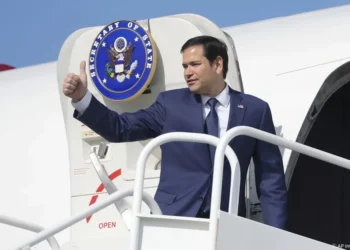
The State Department’s decision to impose visa sanctions on former European Union digital chief Thierry Breton and several leaders of anti-disinformation organizations marks a significant escalation in the US administration’s confrontation with Europe’s online content rules. Rather than a narrow immigration measure, the action broadens an already sensitive fight over who sets the boundaries of acceptable speech on global platforms. As first reported by CNN and echoed across multiple international outlets, Secretary of State Marco Rubio framed the move as a response to what Washington called “organized efforts” to suppress American viewpoints.
The sanctions target figures associated with Europe’s digital regulatory architecture and the wider anti-disinformation ecosystem, including leaders from the Global Disinformation Index, the Center for Countering Digital Hate, and Germany’s HateAid. By focusing on individuals linked to both state-backed regulation and civil society enforcement pressure, Washington has shifted the dispute from policy criticism into direct personal penalties.
This transforms what had been a legal disagreement over platform governance into a deeper diplomatic confrontation over digital sovereignty, jurisdiction, and alliance norms.

Regulatory Autonomy Faces Direct External Pressure
The immediate strategic significance lies in the US targeting architects and advocates of Europe’s Digital Services Act, the framework that has increasingly shaped how major platforms moderate harmful or illegal content. Thierry Breton’s inclusion is especially consequential because he became one of the most visible defenders of Europe’s right to regulate US-based tech giants operating across the bloc.
By weaponizing visa access against former regulators, Washington signals a willingness to challenge not just policy outcomes but the legitimacy of the regulatory model itself. That raises the likelihood of a firmer EU institutional response centered on defending legal autonomy and resisting perceived extraterritorial intimidation.
Civil Society Networks Become the Next Diplomatic Battleground
The inclusion of nonprofit and advocacy leaders expands the conflict beyond Brussels and into the transatlantic civil society sphere. Organizations focused on disinformation, hate speech, and online harms now risk becoming proxies in a broader geopolitical contest over free expression standards.
That escalation is particularly notable because it recasts long-running debates over platform accountability as questions of foreign policy alignment. Once NGOs are drawn into sanctions regimes, future cooperation between US and European civil society actors on election integrity, extremism, and digital safety may become more politically fraught.
Alliance Strain Deepens Beyond the Tech Sector
The broader diplomatic fallout extends well beyond speech governance. European officials have already condemned the sanctions as an attack on regulatory sovereignty, and the dispute risks spilling into trade, defense coordination, and broader US-EU trust at a time when both sides face mounting external security pressures.



What makes this episode structurally significant is that it sets a precedent for using mobility restrictions as leverage in ideological disputes among allies. If replicated, similar measures could harden disagreements over AI governance, privacy law, election safeguards, and platform transparency into recurring alliance flashpoints.
The forward-looking risk is clear: a conflict that began over digital moderation standards is evolving into a test of how resilient transatlantic institutions remain when domestic speech politics are projected into foreign policy tools. The sanctions may therefore be remembered less as an isolated punitive step and more as the moment the US-EU technology dispute entered a durable diplomatic phase.