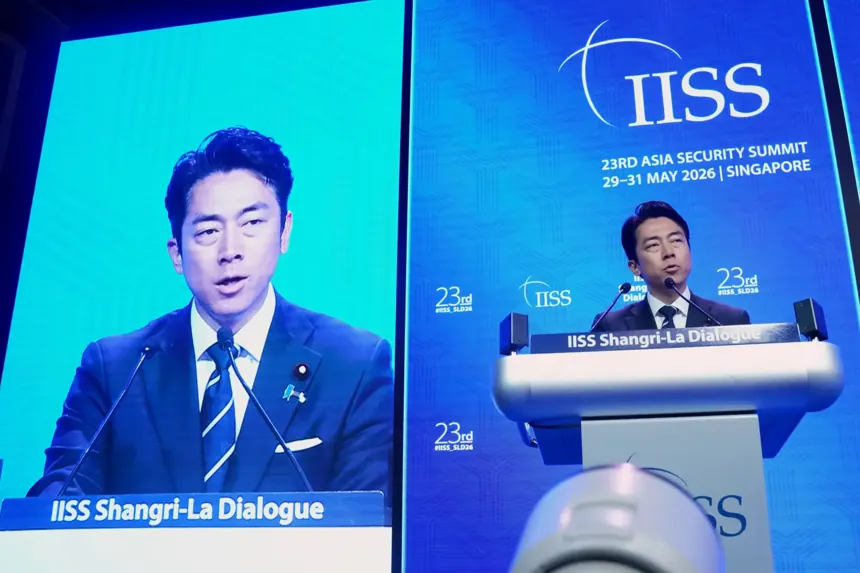
Senior defense officials from key U.S. allies called for stronger international cooperation at a major security forum in Singapore on Sunday, warning that growing divisions among allied nations could weaken deterrence and embolden strategic rivals during a period of mounting global instability.
The appeals came during the Shangri-La Dialogue, Asia’s leading defense and security conference, where officials from Japan, Australia, the Netherlands and other partner nations emphasized the need for coordinated responses to security threats that increasingly extend beyond regional boundaries. Their remarks followed renewed criticism from U.S. Defense Secretary Pete Hegseth toward some Western allies over defense spending levels and military readiness.
Japan Warns Against Fractures Among Allies
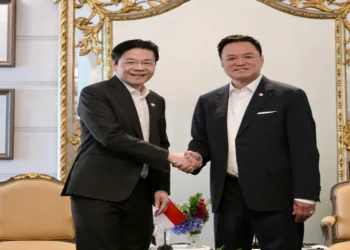
Japanese Defense Minister Shinjiro Koizumi praised Washington’s continued engagement in the Indo-Pacific but stressed that alliances remain essential to maintaining stability and preventing strategic competitors from exploiting divisions among partner nations.

Speaking at the conference organized by the International Institute for Strategic Studies, Koizumi argued that unity strengthens deterrence while political or military fragmentation weakens collective security. He warned that gaps between the United States, Europe and other allied countries could create opportunities for adversaries to advance their interests.
The comments reflected growing concerns among American partners about preserving international cooperation as security challenges become increasingly interconnected across Europe, the Indo-Pacific and the Middle East.
China Remains Central to Regional Security Concerns
The conference also highlighted continuing tensions surrounding China’s expanding military capabilities and regional influence.
Japan has significantly adjusted its defense posture in recent years as Beijing continues military modernization efforts and expands its strategic reach. Last month, Prime Minister Sanae Takaichi’s government ended a longstanding prohibition on lethal weapons exports, marking a major shift in Japan’s postwar defense policy. Chinese Foreign Ministry spokesperson Guo Jiakun criticized the move, accusing Tokyo of moving toward militarization.
Koizumi rejected those accusations, arguing that Japan’s military capabilities remain limited compared with China’s strategic arsenal. He also indicated that Tokyo’s concerns about Beijing’s behavior remain unchanged despite recent diplomatic developments between Washington and Beijing.
■ Related News




The Philippines likewise continues to voice concerns regarding China’s actions in contested regional waters, even as the United States has recently adopted a somewhat less confrontational tone following President Donald Trump’s visit to Beijing.
Debate Continues Over Power and International Rules
The discussion exposed differing emphases among allied governments regarding how international security should be maintained.
During remarks delivered Saturday, Hegseth argued that military strength remains the foundation of any rules-based international order and renewed criticism of some European governments for failing to invest sufficiently in defense capabilities. He praised several Indo-Pacific partners for increasing military spending while warning that international rules alone cannot guarantee security.
Australian Defense Minister Richard Marles agreed that military power is necessary to support international norms but emphasized that strong rules remain essential, particularly for middle-sized nations seeking stability in an increasingly competitive strategic environment. He said collective challenges require collective responses and stressed the continued importance of alliances in maintaining regional security.
European Officials Highlight Global Nature of Conflicts
Dutch Defense Minister Dilan Yesilgöz-Zegerius argued that modern conflicts demonstrate how security challenges now cross regional boundaries and require coordinated international responses.
She pointed to links between conflicts in Europe and support networks involving actors from Asia and the Middle East, arguing that regional crises can no longer be viewed in isolation. The Dutch minister said cooperation among middle powers is increasingly necessary to preserve stability and defend international legal frameworks.
Her remarks echoed broader concerns raised throughout the conference that geopolitical competition, military modernization and cross-regional security partnerships are reshaping traditional defense strategies. Officials repeatedly stressed that cooperation among allies remains a critical component of deterrence at a time when security threats are becoming more interconnected.
While participants broadly agreed on the need for stronger coordination, differences remain over defense spending priorities, military commitments and how to respond to emerging geopolitical challenges. Further discussions among allied governments are expected as regional tensions continue to evolve.