Journos News
Tuesday, June 16, 2026
  • Login
  • Home
  • World
    • Conflicts & War
      • Iran-Israel Conflict
      • Russia-Ukraine War
    • Africa
    • Americas
    • Asia
    • Europe
    • Middle East
    • Oceania
  • Politics
  • Business
  • Technology
  • Health
  • Science
  • Sports
  • Entertainment
  • Culture
No Result
View All Result
  • Home
  • World
    • Conflicts & War
      • Iran-Israel Conflict
      • Russia-Ukraine War
    • Africa
    • Americas
    • Asia
    • Europe
    • Middle East
    • Oceania
  • Politics
  • Business
  • Technology
  • Health
  • Science
  • Sports
  • Entertainment
  • Culture
No Result
View All Result
Journos News
No Result
View All Result
Home In Depth

Why the Ukraine–Iran Strategic Convergence Is Reshaping Modern Warfare

Shared battlefield innovations and geopolitical pressures are driving unexpected alignment

The Daily Desk by The Daily Desk
April 18, 2026
in In Depth
0
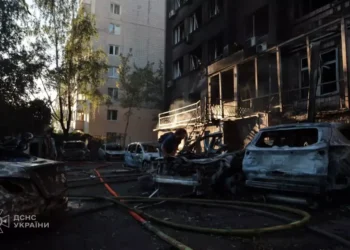
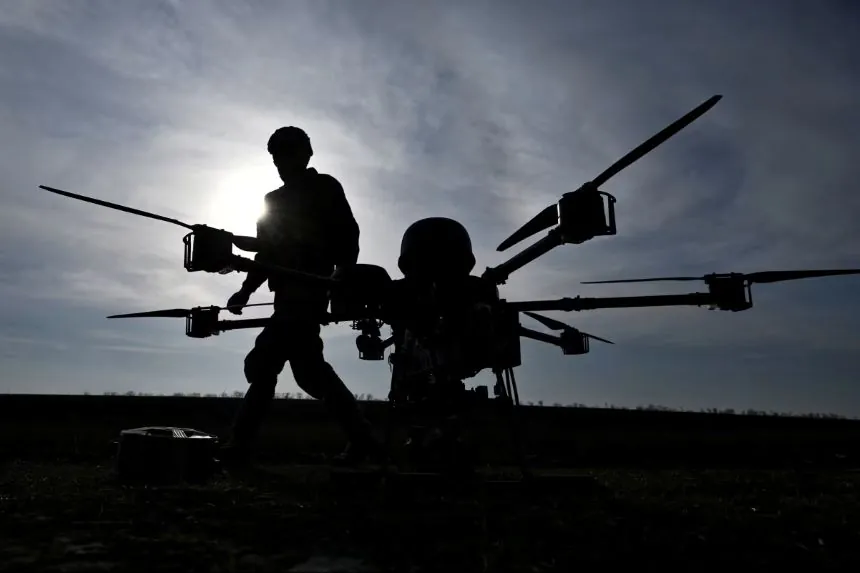
Drone warfare technology used in Ukraine and Iran-linked conflicts - Dmytro Smolienko/Ukrinform/NurPhoto/Getty Images

Drone systems have become central to modern asymmetric warfare strategies - Dmytro Smolienko/Ukrinform/NurPhoto/Getty Images

The evolving relationship between Ukraine and Iran is drawing increasing attention among defense analysts and policymakers. While the two countries are not formal allies, their overlapping use of military technologies—particularly drones—reflects a broader convergence in modern warfare tactics. This development has implications far beyond their respective conflicts.

At its core, the convergence highlights how regional wars are no longer isolated. Instead, they are increasingly interconnected through shared technologies, tactical adaptations, and global supply chains. As reported by Reuters and the Financial Times, the diffusion of drone warfare capabilities is reshaping how states project power, especially those operating under economic or military constraints.

Introduction

The war in Ukraine, following Russia’s full-scale invasion in 2022, has become one of the most closely studied conflicts in modern military history. At the same time, Iran has continued to expand its regional influence through proxy groups and asymmetric warfare strategies across the Middle East.

Though separated geographically and politically, both contexts reveal striking similarities in how warfare is conducted. Analysts cited by the Financial Times have noted that technological adaptation—particularly in unmanned aerial systems—has created a form of “strategic convergence,” where lessons learned in one theater influence operations in another.

This convergence does not imply direct coordination but reflects a shared response to structural constraints: limited access to advanced conventional weaponry, economic sanctions, and evolving battlefield realities.

RELATED POSTS

What We Know — and Still Don’t Know — About the Emerging Deal to End the Iran War

The Differences — and Similarities — in the Trump and Putin Visits to China

What to Know About the Bundibugyo Virus and Congo’s Latest Ebola Outbreak

Understanding a rare but serious zoonotic disease and its transmission pathways

Pope Leo XIV and Donald Trump: Religion, Power and the Politics of Modern Conservatism

White House Dinner Shooting: Security, Risk, and the Limits of Protection at High-Level Events

Historical Roots of Asymmetric Warfare

Both Iran and Ukraine’s adversaries have long relied on asymmetric strategies to offset conventional military disadvantages. Iran, in particular, has developed a doctrine centered on proxy warfare, missile systems, and increasingly sophisticated drone capabilities.

According to reporting by the Associated Press, Iran’s investment in drones dates back decades, driven by the need to circumvent sanctions and compensate for limitations in its air force. These systems have been deployed across multiple conflict zones, including Iraq, Syria, and Yemen.

In contrast, Ukraine rapidly scaled its drone usage after 2022, integrating commercially available technologies with military-grade systems. The BBC has reported that Ukrainian forces have used drones not only for reconnaissance but also for precision strikes, often adapting civilian devices for combat purposes.

The Rise of Drone Warfare

Drones have emerged as a central feature of modern conflict, offering relatively low-cost, high-impact capabilities. Both Ukraine and Iran-linked forces have demonstrated how these systems can alter battlefield dynamics.

Reuters reporting has highlighted the widespread use of so-called “loitering munitions,” which can hover over a target area before striking. These weapons blur the line between surveillance and attack, allowing for greater flexibility in combat.

In Ukraine, drone usage has become deeply integrated into military operations, from frontline reconnaissance to targeting artillery positions. Meanwhile, Iran has exported similar technologies to allied groups, enabling them to conduct attacks with plausible deniability.

The convergence lies in how these tools are deployed: decentralized, adaptable, and scalable. This marks a shift away from traditional, centralized military doctrines toward more networked forms of warfare.

Structural Drivers Behind Convergence

Several structural factors explain why this convergence is occurring.

First, economic constraints play a significant role. Both Ukraine and Iran operate under financial pressures—Ukraine due to the costs of sustained war, and Iran due to longstanding international sanctions. According to the World Bank and IMF data, such constraints often incentivize cost-effective military solutions, including drones.

Second, technological accessibility has lowered barriers to entry. Commercial drone technology is widely available, and with modifications, it can be repurposed for military use. Bloomberg has reported that global supply chains have made it increasingly difficult to restrict access to key components.

Third, battlefield necessity drives innovation. In Ukraine, the intensity of the conflict has accelerated the development of new tactics. Similarly, Iran’s regional engagements have required continuous adaptation to counter more technologically advanced adversaries.

Institutional and Strategic Implications

The convergence between Ukraine’s battlefield innovations and Iran’s longstanding strategies is influencing military thinking globally.

NATO officials, cited in Reuters reporting, have acknowledged that the Ukraine war is reshaping alliance doctrines, particularly regarding air defense and electronic warfare. The widespread use of drones has exposed vulnerabilities in traditional systems designed to counter aircraft and missiles.

At the same time, Iran’s model of distributing capabilities to non-state actors has raised concerns about proliferation. The United Nations has repeatedly warned about the risks associated with the spread of drone technology, particularly in volatile regions.

This convergence also complicates deterrence strategies. Traditional models based on state-to-state conflict are less effective when non-state actors and decentralized technologies are involved.

Regional and Global Implications

The implications extend beyond Europe and the Middle East. Analysts cited by the Financial Times suggest that the lessons from Ukraine and Iran are being studied by militaries worldwide, including in Asia-Pacific regions.

Countries facing resource constraints may increasingly adopt similar approaches, prioritizing flexibility and cost-efficiency over conventional force structures. This could lead to a more fragmented global security environment, where smaller actors wield disproportionate influence.

Furthermore, the convergence highlights the interconnected nature of modern conflicts. Technologies developed or refined in one region can quickly appear in another, often with significant consequences.

Why the Issue Persists

The persistence of this convergence is tied to broader systemic trends. As long as economic pressures, technological diffusion, and geopolitical tensions remain, the incentives for adopting such strategies will continue.

Efforts to regulate drone proliferation face significant challenges. Unlike nuclear or chemical weapons, drones are relatively easy to produce and conceal. International frameworks have struggled to keep pace with rapid technological change.

Moreover, the demand for adaptable, low-cost military solutions is unlikely to diminish. Both state and non-state actors are likely to continue experimenting with these technologies, further blurring the lines between different forms of conflict.

Conclusion

The strategic convergence between Ukraine and Iran reflects deeper transformations in how wars are fought and understood. While the two operate in distinct geopolitical contexts, their shared reliance on drone technology and asymmetric tactics underscores a broader shift in global military dynamics.

What is clear is that modern warfare is becoming more decentralized, technologically driven, and interconnected. What remains uncertain is how international institutions and military alliances will adapt to these changes. As conflicts continue to evolve, the patterns observed in Ukraine and Iran are likely to shape the future of warfare in ways that extend far beyond their immediate regions.

This article was rewritten and editorially reviewed by Journos News based on verified reporting from trusted sources. All content is independently fact-checked and edited for accuracy, neutrality, tone, and global readability in line with Google News and AdSense publishing standards.

Opinions, quotes, and statements from contributors, experts, or cited organizations do not necessarily reflect the views of Journos News. The newsroom maintains full editorial independence from external funders, sponsors, and affiliated entities.

Editorial Standards  |  Journos News

Tags: #AsymmetricWarfare#ConflictTrends#DefenseAnalysis#DroneWarfare#Geopolitics#GlobalSecurity#InternationalSecurity#MilitaryStrategy#ModernConflict#StrategicAnalysis#UkraineIran#WarTechnology
The Daily Desk

The Daily Desk

The Daily Desk – Contributor, JournosNews.com, The Daily Desk is a freelance editor and contributor at JournosNews.com, covering politics, media, and the evolving dynamics of public discourse. With over a decade of experience in digital journalism, Jordan brings clarity, accuracy, and insight to every story.

Related Posts

What We Know — and Still Don’t Know — About the Emerging Deal to End the Iran War

by The Daily Desk
May 25, 2026
0
Diplomatic negotiations over an emerging Iran war agreement continue internationally - AP Photo/Vahid Salemi

The emerging diplomatic effort aimed at ending the current Iran war has triggered cautious international attention, but many aspects of...

Read moreDetails

The Differences — and Similarities — in the Trump and Putin Visits to China

by The Daily Desk
May 22, 2026
0
Donald Trump and Vladimir Putin during separate diplomatic visits to China - Alexander Kazakov, Sputnik, Kremlin/(Evan Vucci/Pool Photo via AP, File

The visits by former U.S. President Donald Trump and Russian President Vladimir Putin to China took place under very different...

Read moreDetails

What to Know About the Bundibugyo Virus and Congo’s Latest Ebola Outbreak

by The Daily Desk
May 19, 2026
0
Health workers responding to Ebola outbreak in eastern Congo - AP Photo/ Hajarah Nalwadda

The Bundibugyo virus, one of several species of Ebola, has resurfaced in the Democratic Republic of Congo during a new...

Read moreDetails

Understanding a rare but serious zoonotic disease and its transmission pathways

by The Daily Desk
May 9, 2026
0
Rodent carrier spreading hantavirus in enclosed contaminated environment- AP Photo/Misper Apawu

Hantavirus refers to a group of viruses primarily carried by rodents and transmitted to humans through environmental exposure. While infections...

Read moreDetails

Pope Leo XIV and Donald Trump: Religion, Power and the Politics of Modern Conservatism

by The Daily Desk
May 6, 2026
0
Pope Leo XIV and Donald Trump during political and religious discussions - AP Photo/Gregoria Borgia/Jacquelyn Martin

The emergence of Pope Leo XIV alongside the political influence of President Donald Trump represents two powerful institutions navigating a...

Read moreDetails

White House Dinner Shooting: Security, Risk, and the Limits of Protection at High-Level Events

by The Daily Desk
April 27, 2026
0
White House exterior with security presence during official evening event - Andrew Harnik/Getty Images

The phrase “White House dinner shooting” evokes a scenario that is both highly unusual and deeply consequential. While incidents involving...

Read moreDetails

Why the Global Economy Is Less Vulnerable to Oil Shocks Than in the 1970s

by The Daily Desk
April 12, 2026
0
Oil tanker and refinery symbolize modern energy market resilience - AP Photo, File

The latest surge in oil prices, driven by conflict in the Middle East and renewed pressure on major shipping chokepoints,...

Read moreDetails

Why the Iran–Israel–U.S. Ceasefire Remains Fragile

by The Daily Desk
April 12, 2026
0
Diplomatic talks following Iran Israel US ceasefire negotiations - Pakistan Ministry of Foreign Affairs via AP

The ceasefire involving Iran, Israel, and the United States is less a final settlement than a tactical pause inside a...

Read moreDetails

How Middle East Conflict Could Reshape Global Aviation Networks

by The Daily Desk
March 26, 2026
0
Aircraft rerouting over Middle East conflict-affected airspace corridor - AP Photo/Mohammad Zaatar

The global aviation system has been built on efficiency, connectivity, and predictable airspace access. A prolonged conflict in the Middle...

Read moreDetails
Load More
Next Post
Police vehicles outside Shreveport home after fatal house shooting - AP Photo/Gerald Herbert

Louisiana Father Charged After Eight Children Killed in House Shooting

Eddie Murphy receives AFI Life Achievement Award at tribute ceremony - AP Photo/Chris Pizzello

Eddie Murphy Honored With AFI Life Achievement Award at Star-Studded Tribute Ceremony

HiPP baby food jars recalled after contamination detected in Austria - AP Photo/Stanislav Hodina

HiPP Baby Food Recall Triggers Public Health Alert After Rat Poison Detection in Austria

JournosNews logo

Journos News delivers globally neutral, fact-based journalism that meets international media standards — clear, credible, and made for a connected world.

  • Categories
  • World News
  • Politics
  • Business & Markets
  • Technology
  • Health
  • Science
  • Sports
  • Arts & Culture
  • Resources
  • Editorial Standards
  • Submit a Story
  • Advertise with Us
  • Syndication & Partnerships
  • Site Map
  • Press & Media Kit
  • Editorial Team
  • Careers

Join thousands of readers receiving the latest updates, tips, and exclusive insights straight to their inbox. Never miss an important story again.

  • About Us
  • Accessibility Statement
  • Contact Us
  • Privacy Policy
  • Terms and Conditions

© JournosNews.com – Trusted source for breaking news, trending stories, and in-depth reports.
All rights reserved.

Welcome Back!

Login to your account below

Forgotten Password?

Retrieve your password

Please enter your username or email address to reset your password.

Log In
No Result
View All Result
  • Home
  • World
    • Conflicts & War
      • Iran-Israel Conflict
      • Russia-Ukraine War
    • Africa
    • Americas
    • Asia
    • Europe
    • Middle East
    • Oceania
  • Politics
  • Business
  • Technology
  • Health
  • Science
  • Sports
  • Entertainment
  • Culture

© JournosNews.com – Trusted source for breaking news, trending stories, and in-depth reports.
All rights reserved.

This website uses cookies. By continuing to use this website you are giving consent to cookies being used. Visit our Privacy and Cookie Policy.