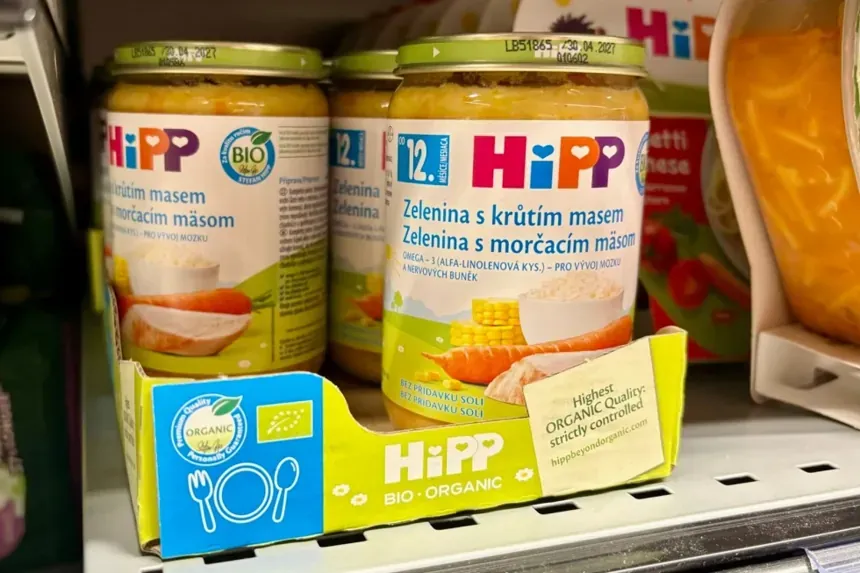
Health authorities in Austria have issued a food safety alert following a recall of baby food products made by HiPP after samples tested positive for a substance commonly used as rat poison. The incident has raised concerns over contamination risks in infant nutrition and triggered regulatory scrutiny.
According to reporting by the Associated Press, the affected products were identified during routine quality testing, prompting immediate withdrawal from the market. Authorities have not reported any confirmed illnesses linked to the contaminated jars, but investigations are ongoing to determine the source and scope of the contamination.
Contamination Detected in Routine Testing
The contamination was discovered during internal checks conducted by the manufacturer, highlighting the role of quality assurance systems in food safety monitoring. Austrian food safety regulators confirmed the presence of a toxic compound typically used in rodenticides, though specific chemical details were not publicly disclosed.

Health officials stated that even trace exposure to such substances could pose risks, particularly for infants, whose developing systems are more vulnerable to toxins. As a precautionary measure, consumers have been advised to avoid using the recalled products and return them to retailers.
An initial risk assessment suggests limited distribution of the affected batches, but authorities emphasized that testing and traceability efforts are still underway.
Infant Food Safety Under Scrutiny
The recall has intensified attention on food safety protocols in the infant nutrition sector, where regulatory standards are among the strictest in the food industry. Experts note that contamination incidents, while rare, can undermine public confidence and highlight vulnerabilities in production or supply chains.
According to the World Health Organization, foodborne chemical exposure remains a global public health concern, particularly in products intended for infants and young children. The WHO emphasizes that even low-level contamination events require rapid response and transparent communication.
While no causal pathway has yet been confirmed, investigators are examining potential points of contamination, including raw material sourcing, processing environments, and packaging stages.


Regulatory Response and Product Recall
Austrian authorities have initiated a formal investigation and coordinated with European food safety bodies to assess whether the issue extends beyond national borders. The recall applies to specific batches distributed within Austria, with no immediate indication of wider international impact.
Regulators are also reviewing compliance with food safety standards and may consider additional inspections or enforcement measures depending on investigation findings. The European Union’s food safety framework requires rapid alert systems for such incidents, enabling cross-border information sharing.
HiPP said in a statement that it is cooperating fully with authorities and has implemented additional internal checks to prevent recurrence. The company emphasized that the recall was precautionary and part of its commitment to product safety.
Broader Implications for Public Health Monitoring
The incident underscores the importance of surveillance systems and routine testing in preventing potential health risks before products reach consumers. Public health experts highlight that early detection and swift recalls are critical in minimizing exposure, particularly among high-risk populations such as infants.
While no adverse health outcomes have been reported, authorities continue to monitor the situation and advise parents to follow official guidance. Further updates are expected as laboratory analyses and trace-back investigations progress.