The United States has approved a sweeping package of arms sales to Taiwan valued at more than $10 billion, marking one of the largest military support announcements for the island in recent years. The move, unveiled by the Trump administration, comes as Washington and Beijing continue to clash over security, trade, and China’s growing pressure on Taiwan.
U.S. officials say the sales are intended to strengthen Taiwan’s defensive capabilities and maintain stability in the Taiwan Strait, a position that has consistently drawn strong opposition from Beijing.
Details of the arms sales package
According to the U.S. State Department, the package consists of eight separate arms sales agreements covering a wide range of military equipment. The largest portion includes 82 High Mobility Artillery Rocket Systems (HIMARS) and 420 Army Tactical Missile Systems (ATACMS), with a combined value exceeding $4 billion. These systems are similar to those supplied by the United States to Ukraine in its defense against Russia.
The package also includes 60 self-propelled howitzer systems and related equipment, valued at more than $4 billion. In addition, Taiwan will receive drones worth more than $1 billion, along with military software valued at over $1 billion.
Other approved items include Javelin and TOW missiles worth more than $700 million, helicopter spare parts valued at $96 million, and refurbishment kits for Harpoon missiles estimated at $91 million.
In nearly identical statements announcing the sales, the State Department said the transactions serve U.S. “national, economic, and security interests” by supporting Taiwan’s efforts to modernize its armed forces and maintain a credible defensive posture. The department added that the sales are intended to help preserve political stability and military balance in the region.
Legal obligations and regional implications
Under U.S. law, Washington is required to assist Taiwan in maintaining its ability to defend itself. This obligation, rooted in long-standing U.S. policy, has become increasingly contentious as China has stepped up military pressure on the self-governing island and reiterated its claim that Taiwan must eventually reunify with the mainland, by force if necessary.
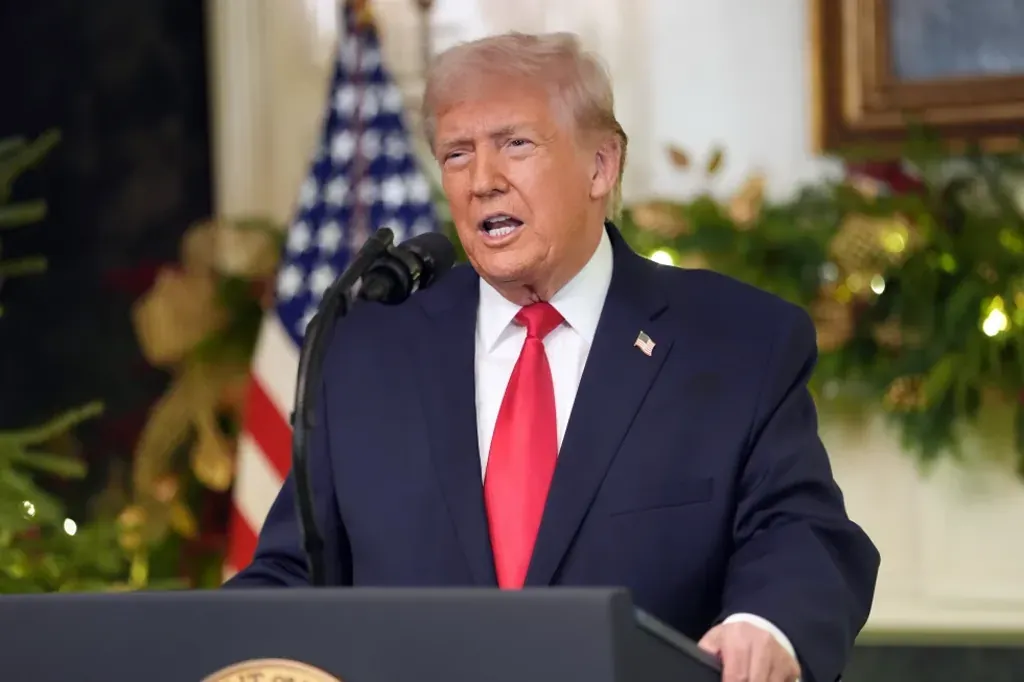
Although President Donald Trump announced the arms package during a nationally televised address, he made little reference to foreign policy and did not directly mention China or Taiwan. Nonetheless, the scale of the deal is expected to heighten tensions with Beijing, which routinely condemns U.S. arms sales to Taiwan as interference in its internal affairs.
Taiwan’s response
Taiwan’s Defense Ministry welcomed the announcement, saying the arms sales would help the island maintain “sufficient self-defense capabilities” and strengthen deterrence. In a statement issued Thursday, the ministry said bolstering Taiwan’s defense is essential to maintaining peace and stability in the region.
Foreign Minister Lin Chia-lung also expressed gratitude to Washington, describing U.S. support as critical to Taiwan’s ability to deter conflict in the Taiwan Strait, the narrow body of water separating the island from China’s mainland.
Rising defense spending in Taiwan
The arms sales come as Taiwan’s government moves to significantly increase its defense budget. Taipei has pledged to raise defense spending to 3.3% of gross domestic product next year and to reach 5% by 2030. The push follows calls from the Trump administration and the Pentagon for Taiwan to spend as much as 10% of its GDP on defense, a level higher than that of the United States or most of its allies.
The proposed increases have sparked political debate within Taiwan. The opposition Kuomintang (KMT) party and some segments of the public have questioned both the scale and pace of the spending, citing economic and social priorities.
Last month, President Lai Ching-te announced a special $40 billion budget for arms purchases, to be spread over eight years from 2026 to 2033. The plan includes funding for an advanced air defense system, referred to by officials as “Taiwan Dome,” designed to enhance detection and interception capabilities.
China’s reaction and U.S. legislation
The expanded U.S. military support for Taiwan has been closely linked to legislation passed by Congress and expected to be signed into law by President Trump. The measure, part of the annual National Defense Authorization Act, outlines broader security priorities and support for Taiwan.
China’s embassy in Washington has sharply criticized the legislation, accusing the United States of promoting a “China threat” narrative and undermining Beijing’s sovereignty and security interests. In a statement following passage of the bill in the House, the embassy said the legislation disrupts efforts to stabilize U.S.-China relations and unfairly targets China.
The U.S. Senate passed the bill on Wednesday, setting the stage for its enactment and reinforcing Washington’s commitment to Taiwan’s defense amid an increasingly strained regional security environment.
This article was rewritten by JournosNews.com based on verified reporting from trusted sources. The content has been independently reviewed, fact-checked, and edited for accuracy, neutrality, tone, and global readability in accordance with Google News and AdSense standards.
All opinions, quotes, or statements from contributors, experts, or sourced organizations do not necessarily reflect the views of JournosNews.com. JournosNews.com maintains full editorial independence from any external funders, sponsors, or organizations.
Stay informed with JournosNews.com — your trusted source for verified global reporting and in-depth analysis. Follow us on Google News, BlueSky, and X for real-time updates.