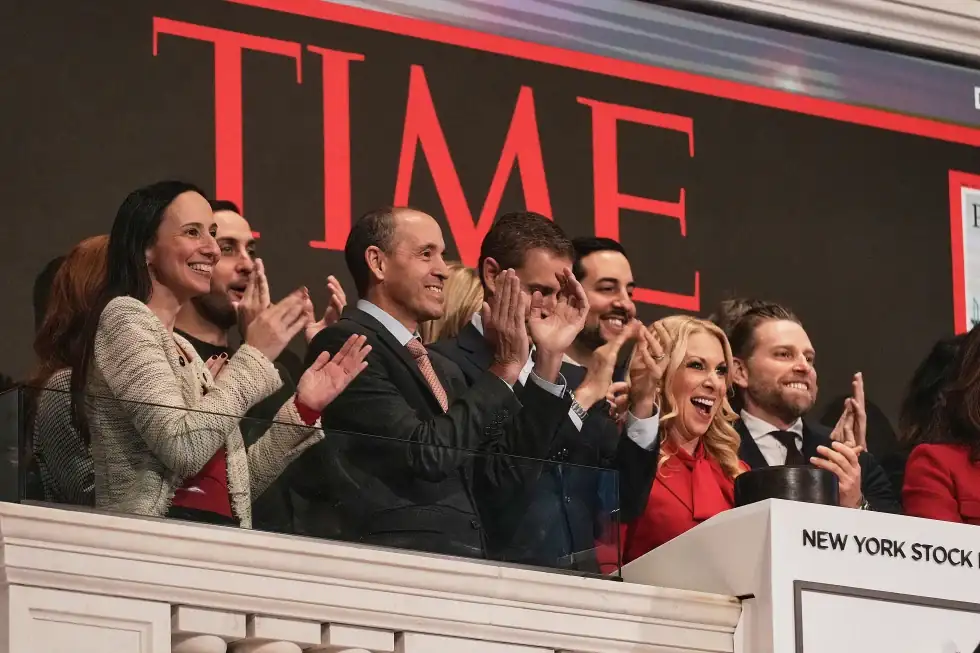
Time magazine has named the “Architects of AI” as its 2025 Person of the Year, marking what editors describe as a decisive moment when artificial intelligence moved from promise to pervasive force. The choice reflects the growing influence of the executives and researchers who have shaped the technology’s rapid rise.
In announcing the designation, Time said 2025 was the year AI’s “full potential roared into view,” underscoring both its transformative reach and the unease it has sparked. Rather than honoring a single figure, the publication selected a group of leaders it says have imagined, built and commercialized systems now reshaping industries and daily life.
The decision places human agency at the center of the AI story — a deliberate move by editors to spotlight the individuals driving change rather than the technology itself.

A group selection amid an AI turning point
In a note explaining the choice, editor-in-chief Sam Jacobs said Time has historically recognized not only individuals but also groups and, on rare occasions, concepts. Past selections have included the personal computer in 1982 and the endangered Earth in 1988.
This year’s covers feature prominent figures in the AI ecosystem. One image echoes the iconic 1930s “Lunch Atop a Skyscraper” photograph, showing eight leaders seated on a steel beam: Mark Zuckerberg, Lisa Su, Elon Musk, Jensen Huang, Sam Altman, Demis Hassabis, Dario Amodei, and AI researcher Fei-Fei Li, who launched startup World Labs last year.
Another cover depicts scaffolding around towering letters spelling “AI,” styled as computer components — a visual metaphor for a technology still under construction yet already towering over the global economy.
Five of the eight honorees — Musk, Zuckerberg, Huang, Altman and Su — are billionaires. According to estimates compiled by Forbes, their combined wealth approaches $870 billion, much of it amassed during the past three years of intense investor enthusiasm surrounding AI development.
Industry analysts say the selection reflects a broader shift in how the technology is perceived. Thomas Husson, principal analyst at research firm Forrester, said 2025 marked the point when AI moved from niche experimentation to mainstream adoption, as a critical mass of consumers began integrating it into daily routines.




Politics, power and public visibility
Time also noted the presence of AI executives at the inauguration of Donald Trump earlier this year in Washington, a signal of the sector’s growing prominence in political and economic life.
The intersection of AI and government has intensified debate over regulation, national competitiveness and labor market impacts. As companies race to deploy increasingly capable systems, policymakers face mounting pressure to balance innovation with safeguards.
Anthony Aguirre, executive director of the nonprofit Future of Life Institute, cautioned that rapid development without robust oversight could have far-reaching consequences. He warned that leading companies are pushing aggressively into domains once dominated by human judgment, raising questions about social stability and ethical guardrails.
Such concerns have accompanied AI’s rise even as businesses tout productivity gains and new creative tools. The debate has become a defining feature of the technology’s expansion, with governments and international bodies weighing standards and oversight frameworks.
A tradition of influence
Time’s Person of the Year, first awarded in 1927, is intended to recognize the individual or group that most shaped headlines over the previous 12 months — for better or worse. The 2024 title went to President Trump following his return to the White House, while 2023’s honoree was singer Taylor Swift.
The publication has occasionally sparked controversy with its selections. In 1982, editors chose the personal computer over Apple co-founder Steve Jobs, a decision that later became part of tech industry lore.
This year, prediction markets had listed AI itself, as well as Huang and Altman individually, among leading contenders. Other names circulating publicly included Pope Leo XIV — elected earlier this year following the death of Pope Francis — alongside political figures such as Israeli Prime Minister Benjamin Netanyahu and New York Mayor-elect Zohran Mamdani.
Time has been owned since 2018 by Marc Benioff, co-founder of Salesforce. Benioff has described AI as among the most significant technological waves of his lifetime, while stating he does not influence the magazine’s editorial decisions.
A defining year for artificial intelligence
By naming the “Architects of AI,” Time underscores the degree to which artificial intelligence has become embedded in economic strategy, public discourse and everyday life. The choice reflects not only technological achievement but also the concentration of influence among a small circle of executives and researchers steering the field’s direction.
As AI systems become more capable and widely deployed, their architects — and the institutions backing them — are likely to remain central figures in global debates over innovation, regulation and the future of work.
Source: AP News – Time magazine names ‘Architects of AI’ as its person of the year for 2025