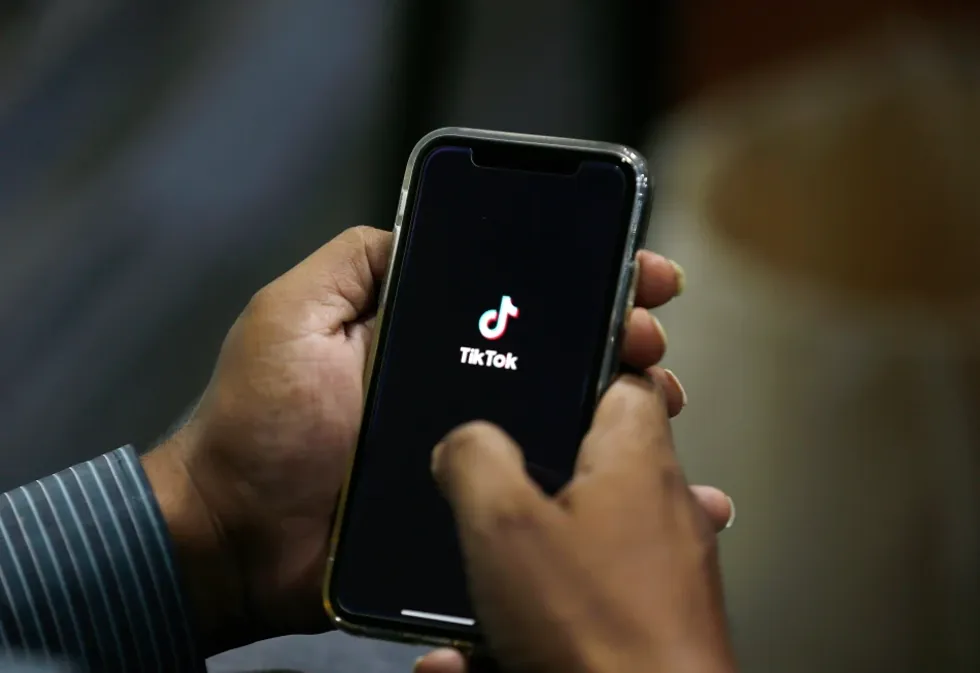
TikTok has agreed to restructure its American operations through a new joint venture with U.S. investors, marking a significant shift in the platform’s global structure as security concerns reshape the future of foreign-owned technology companies operating in the United States.
The deal — confirmed internally by TikTok leadership — establishes a new U.S.-based entity that will be partly controlled by American investors including Oracle and Silver Lake, alongside Abu Dhabi–backed investment firm MGX. The restructuring is designed to address long-running national security concerns surrounding the app’s Chinese parent company, ByteDance.
As first reported by The Associated Press, the agreements are expected to formally close on January 22, creating a majority-American governance structure intended to safeguard U.S. user data while allowing the platform to continue operating domestically.

The move represents the culmination of years of political pressure and regulatory scrutiny that forced TikTok to reconsider how it manages technology, ownership and influence in one of its largest markets.
Strategic Control Shifts to U.S. Investors
Under the terms outlined in an internal memo distributed by TikTok CEO Shou Zi Chew, the new venture will divide ownership among multiple stakeholders in a structure designed to satisfy U.S. regulatory demands.
A consortium of investors — including Oracle, Silver Lake and MGX — will collectively control half of the company, with each firm holding a 15% stake. ByteDance itself will retain a minority position of 19.9%, while affiliates of existing ByteDance investors will hold an additional 30.1%.
The governance structure also changes significantly. The venture will operate under a seven-member board of directors with a majority of American members, a design meant to demonstrate operational independence from ByteDance’s headquarters.
In the memo to employees, Chew acknowledged the role staff played in sustaining the company through months of uncertainty, telling workers the agreements ensure TikTok can “continue to grow and thrive in the U.S. and around the world.”
■ Related News


Algorithm and Data Controls Become the Central Security Test
The restructuring directly addresses the most contentious issue in Washington’s debate over TikTok: the control of its recommendation algorithm and the handling of U.S. user data.
American officials have long argued that the platform’s algorithm — which determines what videos users see — could theoretically be influenced by Chinese authorities through ByteDance, raising concerns about information manipulation.
Under the new arrangement, TikTok’s U.S. user data will be stored locally in systems managed by Oracle. The platform’s recommendation system will also be retrained using American user data to reduce the possibility of outside influence over content feeds.
The new U.S. venture will additionally oversee domestic content moderation policies, creating another layer of operational separation between the American platform and its Chinese parent company.
Those provisions are intended to satisfy legislation passed by the U.S. Congress that required TikTok to divest from ByteDance or face a nationwide ban.
Political Pressure Forced the Structural Reset
The agreement follows a prolonged political and regulatory standoff in Washington that repeatedly threatened TikTok’s future in the United States.
After bipartisan majorities in Congress approved legislation requiring TikTok to separate from ByteDance, then-President Joe Biden signed the measure into law, establishing a deadline that would have forced the platform offline if ownership was not restructured.
The app briefly went dark in early 2025 before the newly inaugurated administration of Donald Trump intervened.
On his first day back in office, Trump issued an executive order allowing TikTok to continue operating while negotiations for a restructuring deal proceeded. Additional extensions followed throughout the year as officials attempted to broker a solution that would address national security concerns without eliminating a platform used by millions of Americans.
One potential arrangement collapsed earlier in the year after Beijing reportedly withdrew support amid rising trade tensions triggered by U.S. tariff announcements.
A Platform Too Large to Disappear
TikTok’s scale in the United States made the dispute politically and economically consequential.
The platform counts more than 170 million American users, and research by Pew Research Center indicates that roughly 43% of U.S. adults under 30 regularly get news from TikTok — a higher share than from platforms such as YouTube, Facebook and Instagram.
For advertisers, creators and media companies, the possibility of a shutdown threatened to disrupt one of the most influential digital distribution networks of the past decade.
Market reaction to the restructuring reflected the stakes for technology partners involved in the arrangement. Shares of Oracle rose about 5% in after-hours trading following news of the agreement.
Technology Sovereignty Debate Moves Into a New Phase
Even with the restructuring in place, the broader debate surrounding foreign-owned digital platforms in the United States is unlikely to end.
The TikTok arrangement represents one of the most significant attempts yet to separate a global technology platform’s operations along geopolitical lines — effectively creating a nationalized version of a globally integrated service.
If successful, the model could influence how other governments approach platforms whose ownership structures cross political and regulatory boundaries.
For TikTok, the agreement offers something it has lacked for years: a pathway to stability in the United States — provided the new structure satisfies both regulators and investors once the venture formally launches next year.