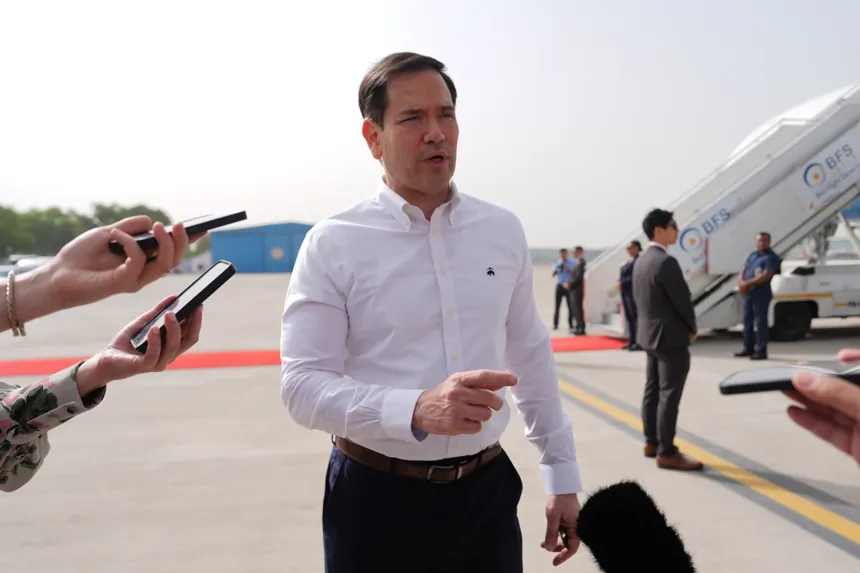
US Secretary of State Marco Rubio used his first official visit to India to reinforce strategic ties with New Delhi while attempting to ease growing tensions over trade, energy policy, and regional geopolitics.
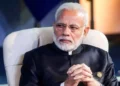
During meetings with Indian Prime Minister Narendra Modi and External Affairs Minister S. Jaishankar, Rubio emphasized cooperation on defense, maritime security, energy, and technology as both countries sought to stabilize relations strained by tariffs and disagreements over Russian oil purchases. Officials said the talks also focused on Indo-Pacific security and the future of the Quad alliance.
Rubio’s four-day visit comes at a delicate moment in US-India relations, as Washington attempts to maintain India as a key strategic partner while also pursuing broader economic and geopolitical priorities involving China, Russia, and the Middle East. Analysts noted that the trip reflects continued US efforts to strengthen partnerships in Asia despite periodic disputes over trade and foreign policy alignment.

Trade Frictions Remain a Major Challenge
Relations between Washington and New Delhi have faced pressure in recent months following US tariff measures affecting Indian exports and disagreements over India’s continued imports of discounted Russian crude oil.
According to international reports, both governments are negotiating a broader bilateral trade agreement after reaching an interim arrangement that eased some tariff disputes and expanded Indian purchases of American goods, including energy products. Rubio expressed optimism that a larger trade deal could eventually be finalized.
Indian officials also raised concerns over visa restrictions and mobility issues affecting Indian professionals and students traveling to the United States. Jaishankar reportedly urged Washington to simplify visa procedures as part of wider economic cooperation discussions.
Despite the tensions, both governments reaffirmed commitments to deepening collaboration in sectors including artificial intelligence, critical minerals, nuclear energy, and defense technology.
Quad Alliance Gains Renewed Attention
A central focus of Rubio’s visit involved preparations for meetings with foreign ministers from the Quadrilateral Security Dialogue, commonly known as the Quad, which includes the United States, India, Japan, and Australia.
■ Related News



The grouping has increasingly become a strategic platform for maritime security cooperation, supply-chain coordination, and regional policy in response to China’s expanding military and economic influence across the Indo-Pacific. Quad members have repeatedly criticized Beijing’s activities in the South China Sea, while China has accused the alliance of attempting to contain its rise.
Analysts said uncertainty surrounding US policy toward China has increased scrutiny over the Quad’s future direction. Some experts warned that any major improvement in US-China relations could reduce India’s strategic leverage within Washington’s Indo-Pacific strategy.
Energy Security Shapes Diplomatic Agenda
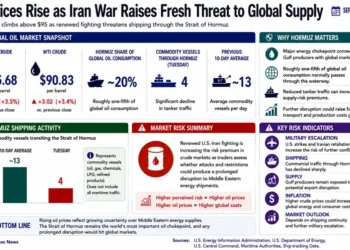
The ongoing tensions involving Iran and instability around the Strait of Hormuz also featured prominently in discussions between American and Indian officials.
India remains heavily dependent on imported crude oil, and officials expressed concern about shipping disruptions and rising fuel prices linked to Middle East instability. Rubio said Washington supports keeping global energy markets open and emphasized stronger US-India energy cooperation.
New Delhi has attempted to diversify its energy suppliers while maintaining purchases of Russian crude since the start of the Ukraine war, a policy that at times generated friction with Washington. However, recent US measures extending temporary sanctions waivers for some Russian oil shipments have eased immediate tensions.
Cultural Diplomacy Accompanies Strategic Talks
Alongside formal diplomatic meetings, Rubio’s itinerary included cultural engagements across several Indian cities, including Kolkata, Agra, Jaipur, and New Delhi.
The US secretary of state visited the headquarters of the Missionaries of Charity in Kolkata and toured the Taj Mahal in Agra with his wife, Jeanette Rubio. He also attended a gala event marking the 250th anniversary of US independence in New Delhi.
Diplomatic observers said the cultural aspects of the trip were intended to reinforce broader people-to-people ties and demonstrate Washington’s continued commitment to maintaining strong long-term relations with India despite ongoing policy disagreements.