Colombians headed toward a tense presidential election under growing fears of violence as armed groups increasingly deploy drones loaded with explosives in conflict-hit regions across the country.
Authorities expanded security operations ahead of Sunday’s vote after a series of attacks targeting police stations and military positions raised concerns about voter safety, particularly in southwestern Colombia. Residents in areas affected by the violence said fear of attacks could discourage turnout in one of the country’s most consequential elections in years.
The election is widely viewed as a referendum on President Gustavo Petro’s controversial “total peace” strategy, which sought negotiations with rebel factions and criminal groups to reduce decades of armed conflict. Critics argue that insecurity has worsened during Petro’s presidency, while supporters say the violence reflects the complexity of dismantling entrenched armed networks.

Drone Warfare Reshapes Colombia’s Conflict
The growing use of drones by illegal armed groups has dramatically altered Colombia’s security landscape.
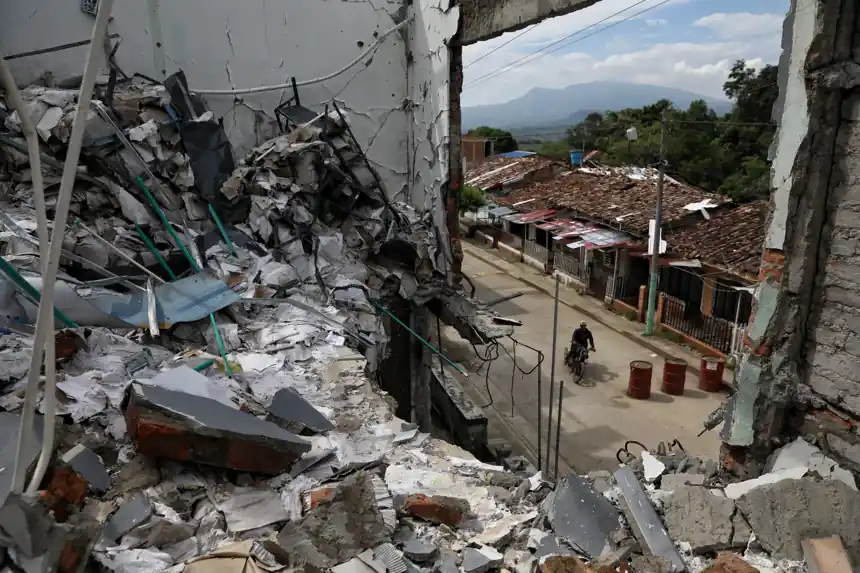
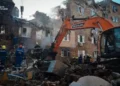
In towns near Jamundí in Valle del Cauca province, residents described living under constant fear of explosive-laden drones targeting police compounds. Local authorities blamed dissident factions of the former Revolutionary Armed Forces of Colombia (FARC) that rejected the country’s 2016 peace accord.
According to Colombia’s Defense Ministry, drone attacks struck 333 targets in 2025, compared with 61 incidents recorded the previous year. Military officials reported more than 100 drone attacks already this year, including strikes that killed soldiers in conflict zones near the Venezuelan border and the Pacific coast.
Security analysts said armed groups have increasingly adopted “swarm-style” attacks using multiple drones simultaneously, complicating defensive operations and increasing risks to civilians living near police or military facilities.
Election Becomes Referendum on Petro’s Security Strategy
President Petro’s “total peace” initiative has become one of the defining issues of the campaign.
■ Related News
The policy attempted to negotiate simultaneously with rebel organizations, criminal gangs, and dissident armed groups in an effort to reduce violence nationwide. However, the government recently suspended negotiations with some organizations following continued attacks and kidnappings.
A sharp divide has emerged among presidential candidates over how to confront the security crisis. Candidates aligned with Petro’s coalition support continuing negotiations and limited ceasefires, while conservative and hardline contenders advocate aggressive military action against armed groups.
Right-wing presidential candidate Abelardo de la Espriella has promised tougher anti-crime measures and stronger military operations modeled partly on El Salvador’s crackdown against gangs.
Meanwhile, leftist candidate Iván Cepeda defended continued dialogue efforts, arguing that military escalation alone cannot resolve Colombia’s decades-long conflict.
International Observers Monitor Security Risks
International organizations and election observers have raised concerns about the impact of violence on democratic participation.
Colombia’s Electoral Observation Mission warned that nearly one-third of municipalities face elevated risks from illegal armed groups during the election period. The Organization of American States also expressed concern earlier this year over the use of drones to disrupt political events and intimidate communities.
Security officials deployed more than 120,000 police officers and military personnel nationwide to secure polling stations and transport election materials. Rebel groups including the National Liberation Army (ELN) and dissident FARC factions separately announced temporary ceasefires ahead of the vote, though authorities remain cautious about enforcement.
Political violence has remained a persistent concern throughout the campaign season. Reports from monitoring groups documented attacks, intimidation, and threats against candidates, community leaders, and journalists in several rural regions.
Civilians Caught Between Conflict and Democracy
For many Colombians living in conflict zones, the election reflects broader uncertainty over the country’s future.
Residents in violence-affected communities described balancing hopes for peace against fears of becoming targets during clashes between armed groups and security forces. In some areas, families relocated after explosive attacks damaged homes near police facilities.
Analysts warned that regardless of who wins the presidency, Colombia’s next administration will face difficult choices over how to confront increasingly sophisticated armed organizations while preserving fragile peace efforts.
The presidential election will determine who succeeds Petro, who is constitutionally barred from seeking another term.