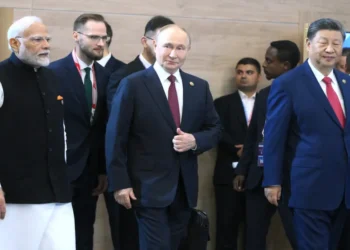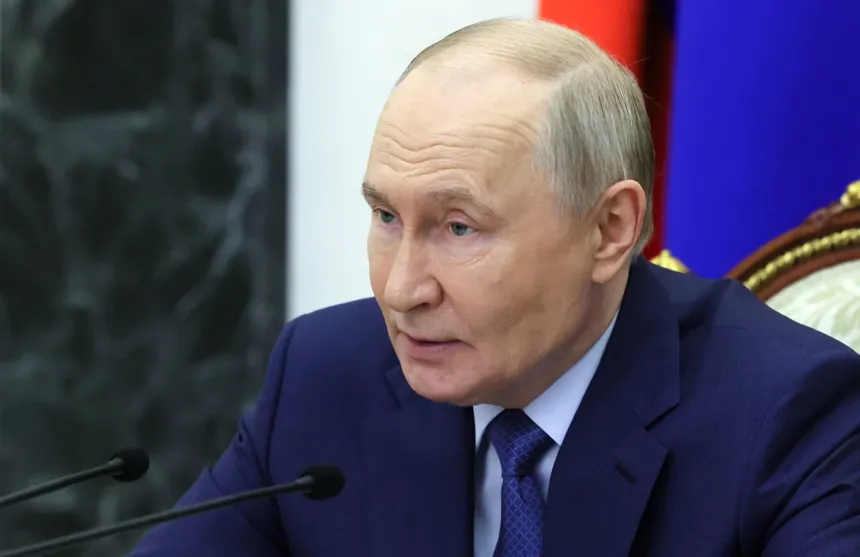
Russian President Vladimir Putin is scheduled to visit Beijing next week for talks with Chinese leader Xi Jinping, a diplomatic move that comes only days after U.S. President Donald Trump concluded his own high-profile summit in China. The closely timed visits have intensified international attention on Beijing’s growing role at the center of global geopolitical negotiations.
The Kremlin said Putin’s two-day visit on May 19-20 will focus on strengthening the “comprehensive partnership” between Russia and China while discussing regional security, economic cooperation and international affairs. Officials indicated the trip will also coincide with the 25th anniversary of the Russia-China Treaty of Friendship signed in 2001.
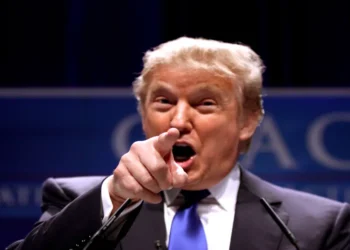
The meeting follows Trump’s visit to Beijing, where discussions with Xi centered on trade, Iran and Taiwan, but produced few major policy breakthroughs. Analysts noted that the rapid succession of summits highlights China’s increasingly influential diplomatic position amid rising tensions between global powers.

Strategic Partnership Gains Momentum
Russia and China have significantly expanded political and economic cooperation since Moscow’s 2022 invasion of Ukraine triggered sweeping Western sanctions. Beijing has avoided directly condemning Russia’s military campaign while increasing bilateral trade and diplomatic engagement with Moscow.
International analysts said Putin’s upcoming visit demonstrates how both governments continue positioning themselves as counterweights to U.S.-led global influence. Kremlin officials stated the talks will address “international and regional issues,” language often used to describe coordination on matters involving NATO, sanctions and global security frameworks.
Chinese officials have repeatedly described relations with Russia as stable and strategic despite criticism from Western governments. Beijing has also promoted itself as a diplomatic power capable of maintaining communication with multiple rival blocs simultaneously.
Ukraine War Remains Central Issue
The visit comes as fighting in Ukraine continues with ongoing drone strikes, prisoner exchanges and intensified battlefield activity. Ukrainian President Volodymyr Zelenskyy recently confirmed a prisoner swap involving hundreds of detainees, while both Moscow and Kyiv reported overnight drone attacks targeting infrastructure and border regions.
Western governments continue to monitor China’s relationship with Russia closely, particularly over concerns that Beijing’s economic support could help Moscow withstand sanctions pressure. Chinese authorities have denied supplying direct military assistance to Russia while calling for political negotiations to end the conflict.
■ Related News


Security experts noted that Putin’s trip could further reinforce perceptions of a tightening strategic bloc between Moscow and Beijing at a time when relations with the United States remain strained over Ukraine, Taiwan and global trade disputes.
Beijing’s Diplomatic Influence Expands
The sequence of Trump’s summit and Putin’s upcoming visit has fueled broader debate about China’s expanding diplomatic leverage. Analysts at international policy institutions said Beijing increasingly appears positioned as a central power balancing relations between competing geopolitical camps.
While Trump emphasized economic cooperation during his China visit, Putin’s talks are expected to focus more heavily on long-term strategic coordination and security cooperation. Observers said the contrast reflects China’s ability to engage simultaneously with rival global actors pursuing sharply different priorities.
Diplomatic observers expect the Beijing meetings to shape discussions on the Ukraine war, sanctions policy and broader global power competition in the coming months as China continues strengthening its role in international affairs.