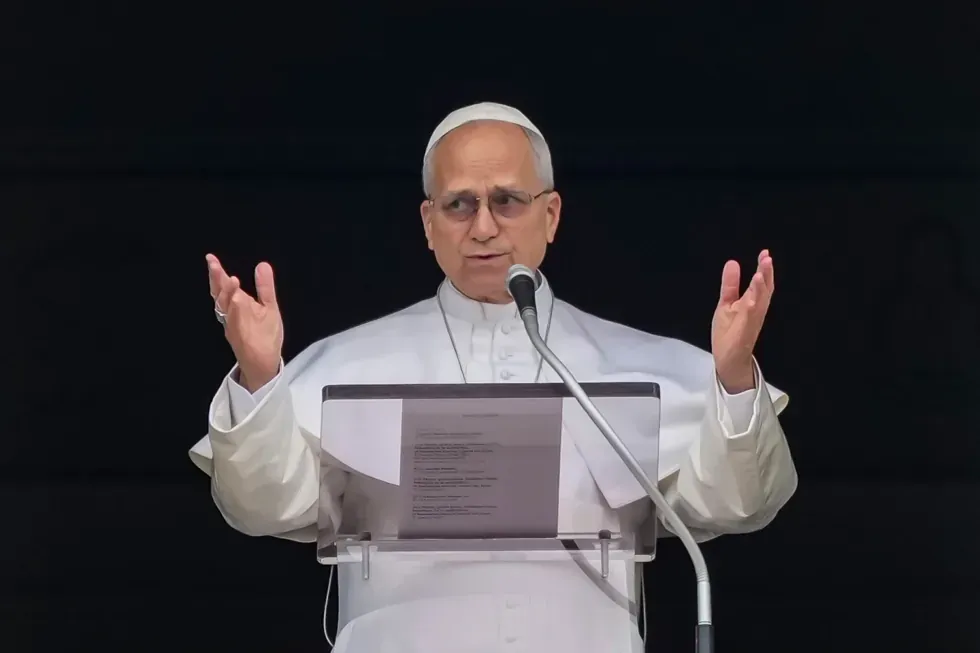
ROME (Journos News) – The Vatican is moving closer to open diplomatic friction over the war in Iran after Pope Leo XIV issued his most direct appeal yet for a ceasefire, urging the leaders responsible for the conflict to halt military operations and reopen negotiations.
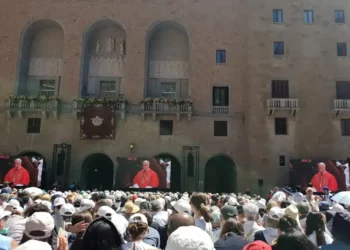
Speaking after his traditional Sunday blessing, the pontiff appealed “to those responsible for this conflict” to stop the fighting, warning that continued violence risks extinguishing any remaining pathway toward dialogue.
The remarks mark a noticeable shift in tone from the Vatican, which for weeks had limited itself to broad calls for peace following the outbreak of hostilities involving the United States, Israel, and Iran. According to reporting by The Associated Press, Leo’s intervention comes amid rising global concern over civilian casualties and the widening humanitarian consequences across the Middle East.

While the pope avoided directly naming Washington or Jerusalem—consistent with the Holy See’s longstanding diplomatic practice—the timing and context of the appeal leave little doubt about the conflict he was addressing.
Moral Pressure on Wartime Leadership Intensifies
Leo’s message was framed as a moral appeal directed squarely at decision-makers who launched the campaign.
“On behalf of the Christians of the Middle East and all women and men of good will,” the pope said, “I appeal to those responsible for this conflict: cease fire so that avenues for dialogue may be reopened.”
The Vatican rarely singles out the accountability of wartime leadership so directly, and the language reflects growing concern inside the Holy See that the conflict is hardening into a prolonged regional confrontation.
Leo’s remarks also referenced attacks on civilian targets, including a missile strike that hit a school in Iran during the opening phase of the war. The attack reportedly killed more than 160 people, many of them children.
■ Related News

U.S. officials have said outdated intelligence likely contributed to the strike and that an investigation is underway.
Civilian Casualties Sharpen Vatican Alarm
Images of the aftermath have already shaped the Vatican’s public messaging.
The Holy See’s official newspaper, L’Osservatore Romano, highlighted the devastation from the strike earlier this month by publishing an aerial image showing a mass grave being prepared for victims, placing the human cost of the conflict at the center of the Vatican’s narrative.
In his remarks Sunday, Leo said he remained close to the families of victims and warned that attacks on schools, hospitals, and residential areas deepen the humanitarian toll.
The pope’s language suggests growing concern that the war’s civilian impact could further destabilize an already volatile region.
Regional Fragility Raises Stakes for Christian Communities
The Vatican’s alarm is particularly acute regarding the conflict’s spillover into Lebanon.
Aid organizations have warned that the war’s effects are compounding an already fragile humanitarian situation in the country. For the Holy See, the stakes extend beyond geopolitics: southern Lebanon hosts Christian communities that the Vatican has long regarded as a vital anchor for Christianity in the Middle East.
Any prolonged conflict that spreads across borders risks weakening those communities and intensifying regional displacement pressures.
The Vatican has historically treated such developments not only as humanitarian crises but also as strategic threats to religious coexistence across the region.
Internal Vatican Voices Escalate Criticism
While Pope Leo has carefully avoided direct accusations against specific governments, several senior Catholic leaders have adopted far more pointed language.
Cardinal Robert McElroy, the archbishop of Washington, described the war as morally unjustifiable, signaling unease within the American Catholic hierarchy.
Chicago Cardinal Blase Cupich criticized White House social media posts about the war, calling it troubling that imagery resembling video game footage was used in official messaging about an active conflict.
The Vatican’s chief diplomat, Cardinal Pietro Parolin, has also challenged Washington’s justification that the operation constituted a “preventive war,” though he stressed that the Holy See continues to keep diplomatic channels open.
“The Holy See speaks with everyone,” Parolin said in remarks reported this week. “When necessary we also speak with the Americans and the Israelis to show what we believe are possible solutions.”
Vatican Balances Neutrality With Moral Authority
For much of the conflict’s early weeks, the pope maintained a cautious tone, reflecting a Vatican tradition of neutrality designed to preserve diplomatic access to all sides.
That approach has historically allowed the Holy See to function as a quiet intermediary in international disputes.
However, Leo’s latest remarks suggest the Vatican is now willing to apply stronger moral pressure as the war’s human cost grows.
By emphasizing accountability while still avoiding direct political accusations, the pope appears to be navigating a narrow diplomatic line: warning of escalating consequences without fully abandoning the Vatican’s role as a potential mediator.
A Test for Global Diplomacy
The Vatican’s increasingly urgent language underscores the broader diplomatic strain surrounding the war.
If the conflict continues to expand geographically or deepen humanitarian damage, pressure from religious institutions, international organizations, and allied governments is likely to intensify.
For now, the pope’s appeal adds another voice to a growing global chorus calling for de-escalation—while also signaling that the world’s smallest sovereign state is preparing to play a larger moral role in the unfolding crisis.