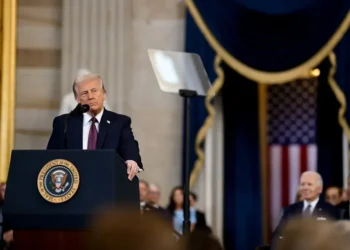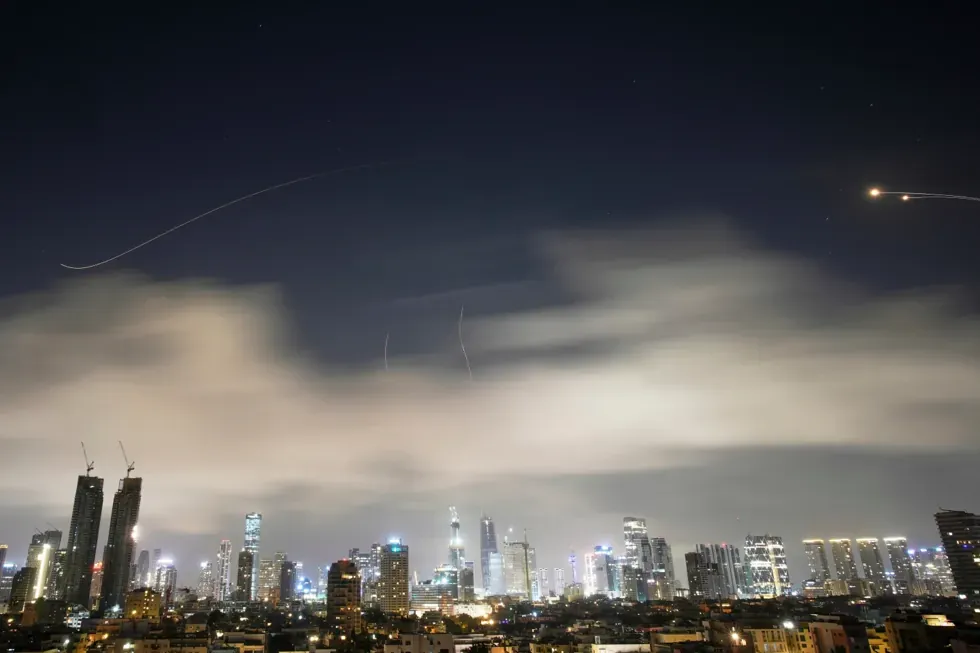
President Donald Trump is pressing several major economies to contribute naval forces to safeguard the strategically vital Strait of Hormuz, a maritime corridor responsible for roughly one-fifth of the world’s traded oil. Yet despite mounting pressure from Washington, key allies and energy-importing nations have so far stopped short of committing military assets.
Speaking to reporters aboard Air Force One on Sunday, Trump said he had demanded that “about seven” countries join a coalition tasked with ensuring free navigation through the waterway amid the ongoing conflict involving Iran. According to the president, nations heavily dependent on Gulf oil should assume greater responsibility for protecting the route.
“I’m demanding that these countries come in and protect their own territory,” Trump said, arguing that the United States relies less on the strait because of domestic energy production.

The appeal comes as oil markets react sharply to the war’s disruption of shipping lanes, highlighting the growing strategic stakes of the narrow passage connecting the Persian Gulf to global markets.
Allied Capitals Respond With Diplomatic Caution
Despite the urgency conveyed by Washington, governments across Europe and Asia have responded with carefully calibrated statements rather than firm commitments.
Officials in the government of Keir Starmer confirmed that the British prime minister discussed reopening the strait with Trump in a phone call Sunday. London described the passage as critical for global shipping but did not indicate whether the United Kingdom would deploy naval forces.
Meanwhile, China signaled support for diplomatic de-escalation without addressing participation in a maritime security mission. A spokesperson for the Chinese embassy in Washington said all parties share responsibility for maintaining stable energy supplies, emphasizing communication rather than military involvement.
South Korea’s foreign ministry similarly said it was “carefully reviewing” developments while coordinating with Washington.

A direct appeal may come soon from Washington to Tokyo. Japan’s prime minister, Sanae Takaichi, is scheduled to meet Trump at the White House later this week, a visit widely expected to include discussions on maritime security in the Gulf.
Even countries exploring a possible escort mission are proceeding cautiously. Emmanuel Macron has previously said France is working with partners in Europe and Asia on potential ship protection efforts, though officials stress such steps would depend on improved security conditions.
Germany has taken a clearer stance. Foreign Minister Johann Wadephul told German television that Berlin does not anticipate becoming an active participant in the conflict.
The absence of firm commitments underscores the difficulty Washington faces in translating shared economic interests into collective military action.
Energy Markets Brace as Strategic Waterway Remains Under Strain
The tension surrounding the strait has intensified concerns over global energy supply, prompting an unprecedented release of emergency oil reserves coordinated by the International Energy Agency.
The agency said Sunday that nearly 412 million barrels from member countries’ strategic reserves will be released to stabilize markets — described as the largest collective drawdown ever organized.
Asian members plan to release reserves immediately, while supplies from Europe and the Americas are expected to begin entering markets by the end of March.
The move reflects growing fears that sustained disruption in the strait could trigger prolonged price volatility and ripple effects across global economies.
Regional Tensions Expand Beyond Maritime Routes
Military developments across the Gulf region continue to widen the conflict’s geographic footprint.
Authorities in several Gulf states reported fresh missile and drone attacks a day after Tehran warned that three major ports in the United Arab Emirates could become targets. The warning marked the first time Iranian officials threatened non-U.S. assets in a neighboring state.
Tehran has accused the United States of launching strikes against Iran’s Kharg Island oil terminal from the UAE — a claim rejected by Emirati officials. Governments hosting U.S. military bases have denied allowing their territory to be used for offensive operations.
Iranian officials insist their attacks target American-linked infrastructure, though regional authorities say several civilian locations — including airports and oil facilities — have been struck during the exchanges.
Human Toll Mounts as War Expands Across Multiple Fronts
The widening conflict has produced mounting casualties and displacement across the region.
According to the International Committee of the Red Cross, more than 1,300 people have been killed in Iran since the war intensified. Iranian officials say women and children account for a significant share of the casualties.
Missile attacks have also killed civilians in Gulf countries, many of them migrant workers.
In Israel, authorities report at least a dozen deaths from Iranian missile strikes. Meanwhile, fighting involving the Iran-backed group Hezbollah has expanded the conflict into Lebanon, where government figures indicate more than 800 people have been killed and hundreds of thousands displaced within days.
The scale of regional disruption illustrates how quickly the conflict has moved beyond its original flashpoints, reshaping security calculations throughout the Middle East.
Global Energy Security Now Hinges on Uncertain Diplomacy
Washington’s push for a multinational maritime force reflects a broader effort to shift responsibility for securing global energy routes toward countries most dependent on Gulf supplies.
Yet the cautious responses from potential partners suggest that even governments deeply reliant on oil shipments remain wary of direct involvement in a rapidly escalating conflict.
With shipping routes under pressure, energy markets volatile, and missile strikes expanding across the region, the diplomatic challenge now confronting Washington may prove as complex as the military crisis unfolding in the waters of the Strait of Hormuz.