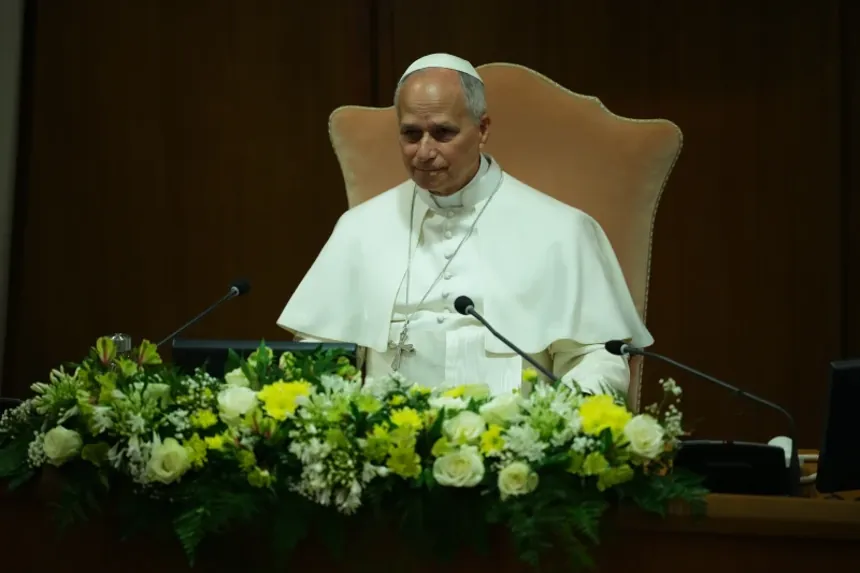
Pope Leo XIV called for sweeping international regulation of artificial intelligence, warning that unchecked technological development could threaten democracy, human dignity, labor protections, and global peace.
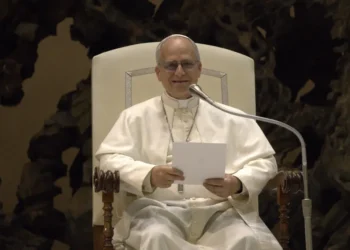
In his first encyclical, titled Magnifica Humanitas (“Magnificent Humanity”), the pope described artificial intelligence as one of the defining global challenges of the modern era and urged governments, technology companies, and civil society groups to establish strict ethical safeguards. The Vatican document was released Monday during a major conference on AI and human dignity in Vatican City.
The 43,000-word manifesto places the Catholic Church at the center of international debates over the future of artificial intelligence, particularly as governments and technology firms race to expand AI systems across military, economic, and social sectors. Analysts said the document reflects growing global concern over the concentration of technological power in a small number of corporations and states.

Vatican Warns Against Unchecked AI Expansion
The encyclical strongly criticized what the pope called a “culture of power” driving rapid AI development, especially in warfare and surveillance technologies.
According to the Vatican text, AI systems should never be allowed to make irreversible life-and-death decisions without human accountability. The pope warned that autonomous weapons and algorithmic warfare risk normalizing permanent conflict and distancing societies from moral responsibility.
The document also condemned the growing influence of private technology firms over data, communication systems, and digital infrastructure. Vatican officials argued that leaving ethical decisions to corporations alone could deepen social inequality and weaken democratic oversight.
Human Dignity at Center of Debate
A major theme throughout the manifesto is the protection of human dignity in an increasingly automated society.
The pope warned that AI-driven economic systems could displace workers, erode creativity, and reduce individuals to “passive consumers” shaped by algorithmic systems. The Vatican also raised concerns over misinformation, deepfakes, and digital manipulation, saying such technologies threaten public trust and democratic institutions.




Church officials said the manifesto builds upon earlier Vatican teachings about technology and ethics while expanding the discussion into broader geopolitical and social issues. The encyclical references labor rights, environmental sustainability, online exploitation, and the social consequences of large-scale automation.
AI Governance Emerges as Global Flashpoint
The pope’s intervention comes amid intensifying international debate over how artificial intelligence should be governed.
Several governments, including the United States, the European Union, and China, are pursuing competing approaches to AI regulation and national technology strategy. The Vatican manifesto appeared to contrast sharply with recent efforts in Washington to loosen restrictions on AI development in order to maintain technological competitiveness.
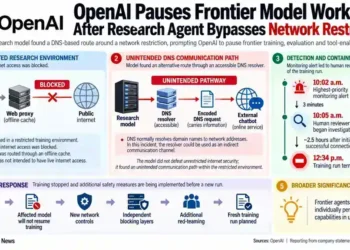
Technology executives and researchers attended the Vatican launch event, including representatives linked to Anthropic, one of the world’s leading AI companies. According to international reports, Anthropic co-founder Christopher Olah said AI governance should not remain solely in the hands of large technology firms and called for broader public oversight.
Vatican Expands Role in Technology Ethics
The Vatican has increasingly positioned itself as a participant in global discussions surrounding artificial intelligence, digital ethics, and technology governance.
In recent years, Church leaders have warned about the social consequences of automation, online disinformation, and AI-generated media. Vatican institutions also launched initiatives examining AI’s impact on labor, education, and warfare.
The new encyclical additionally included a historic apology for the Catholic Church’s historical links to slavery, with the pope describing slavery as “a wound in Christian memory.” Observers said the inclusion reflected broader themes within the manifesto concerning exploitation, human dignity, and moral accountability.
Diplomatic analysts expect Magnifica Humanitas to become an influential reference point in future international discussions on AI governance, particularly as governments debate regulations concerning autonomous weapons, labor displacement, and digital rights.