U.S. equities pulled back modestly from record highs while oil prices advanced sharply, as renewed geopolitical tensions involving United States and Iran reshaped short-term market sentiment. The retreat in stocks follows a sustained rally, with energy price movements now emerging as a key macroeconomic variable influencing investor positioning.
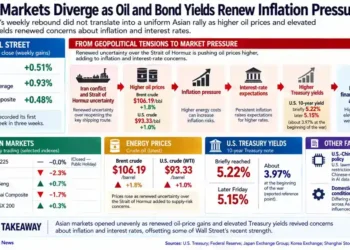
According to reporting by Associated Press, the benchmark S&P 500 declined 0.2% from its recent peak, while the Nasdaq Composite fell 0.3% and the Dow Jones Industrial Average edged lower by less than 0.1%. The pullback comes after a multi-session advance that had lifted major indexes to record levels.
Oil Price Volatility Drives Market Recalibration
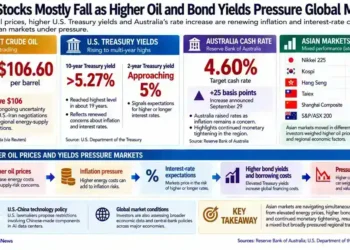
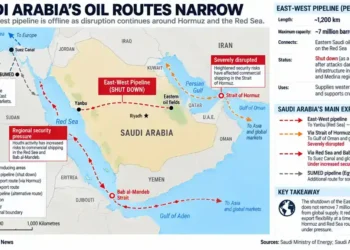
Brent crude, the international benchmark, rose approximately 5.6% to settle near $95.48 per barrel, reflecting concerns about potential supply disruptions in the Persian Gulf. The increase follows developments in the Strait of Hormuz, a critical transit route for global energy flows, where shipping activity remains vulnerable to escalation risks.

The price movement marks a reversal from earlier sessions, when oil declined after indications that shipping lanes could reopen. Analysts note that fluctuating access to the strait has introduced significant volatility into energy markets, complicating price expectations.
Energy market dynamics have been closely tied to the broader geopolitical environment. The expiration of a temporary ceasefire agreement between Washington and Tehran is viewed as a near-term catalyst, with investors assessing the probability of renewed disruptions to oil supply chains.
Equity Market Reaction and Sector Divergence
Despite the decline, U.S. equity benchmarks remain above pre-conflict levels, supported by strong corporate earnings performance. Data cited by market analysts indicate that a large majority of companies reporting first-quarter results have exceeded expectations, contributing to resilience in equity valuations.
Sector-level movements reflect sensitivity to energy costs. Airline and cruise operators, which are exposed to fuel price fluctuations, recorded declines, while construction-related companies saw gains tied to merger activity and deal announcements.
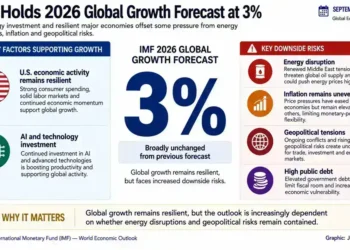
Market participants are balancing near-term geopolitical risks against underlying corporate fundamentals. Analysts cited by financial outlets suggest that while earnings momentum provides support, sustained increases in oil prices could feed into inflation expectations and influence monetary policy outlooks.




Macro and Policy Implications
The intersection of energy markets and geopolitical developments is increasingly shaping the macroeconomic narrative. The current environment underscores the role of supply-side shocks in influencing both inflation trajectories and asset pricing.
According to broader market analysis, volatility linked to the Iran-related conflict has already introduced uncertainty into global energy supply estimates. Approximately 20% of global oil flows typically transit through the Strait of Hormuz, highlighting the systemic importance of the region to energy markets.
Political developments also remain in focus. Statements from Donald Trump regarding energy prices and conflict resolution have added another layer of uncertainty, with policy direction potentially influencing market expectations for fuel costs and inflation trends.
Strategic Outlook
While the recent pullback in equities has been limited, the episode highlights the sensitivity of financial markets to geopolitical developments affecting commodity supply chains. Investors are likely to monitor both diplomatic progress and energy price stability as key determinants of near-term market direction.
Analysts note that the durability of the equity rally may depend on whether oil price increases remain contained or begin to materially affect corporate margins and consumer demand. For now, the interaction between strong earnings performance and external geopolitical risk continues to define the market environment.