NEW YORK (Journos News) – The expanding Iran war oil prices shock is beginning to reverberate across global markets, as military escalation in the Middle East disrupts shipping routes and energy infrastructure central to the world’s oil supply.
Oil surged sharply this week after the United States and Israel launched large-scale strikes against Iran, triggering a regional conflict that has damaged energy facilities and threatened shipping traffic through one of the most critical chokepoints in global trade.
As first reported by the Associated Press, roughly 20 million barrels of oil per day normally move through the Strait of Hormuz, a narrow waterway between Iran and the Arabian Peninsula. But ongoing missile attacks, drone strikes, and maritime security concerns have left many vessels unable to safely pass through the corridor.

Energy analysts say the result is an emerging supply deficit that is already pushing prices higher worldwide.
Global Supply Chains Face Sudden Energy Contraction
Oil prices climbed rapidly as markets reacted to the growing disruption.
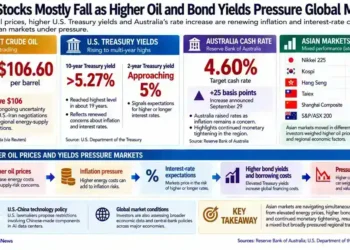
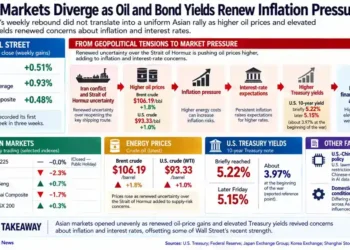
U.S. benchmark crude settled at $90.90 per barrel, marking a 36% increase over the past week. Brent crude, the global benchmark, reached $92.69 after rising 27% during the same period.
The price spike reflects both physical supply losses and rising risk premiums tied to the escalating conflict.
Claudio Galimberti, chief economist at energy consultancy Rystad Energy, said the combination of damaged infrastructure and precautionary shutdowns has removed roughly 9 million barrels of oil per day from the market.



“Right now, with all of this shut in, we are in a situation of extreme deficit,” Galimberti said.
Several producers have already begun adjusting operations. Kuwait announced it would cut oil output as a precaution while regional security conditions remain uncertain.
Industry analysts warn the move could deepen pressure on already tightening global supply.
Strategic Energy Chokepoint Becomes Central Risk
The Strait of Hormuz has emerged as the focal point of the crisis.
The narrow passage links Persian Gulf oil producers to global markets and handles about one-fifth of the world’s daily oil shipments.
Security threats—including missile attacks, drones, naval mines, and armed speedboats—have sharply raised the risk profile for tankers attempting to cross the waterway.
Amy Jaffe, director of the Energy, Climate Justice and Sustainability Lab at New York University, said shipping companies remain deeply concerned about the growing range of asymmetric threats.
“In the oil trading and shipping world, people are worried about counterterrorism risks,” she said, citing drones, explosive vessels, and coastal attacks targeting tankers.
Until credible maritime security guarantees emerge, analysts say the shipping bottleneck may persist even if some routes reopen.
Energy Price Shock Spreads Across Global Consumers
The energy disruption is already translating into higher fuel costs for businesses and households.
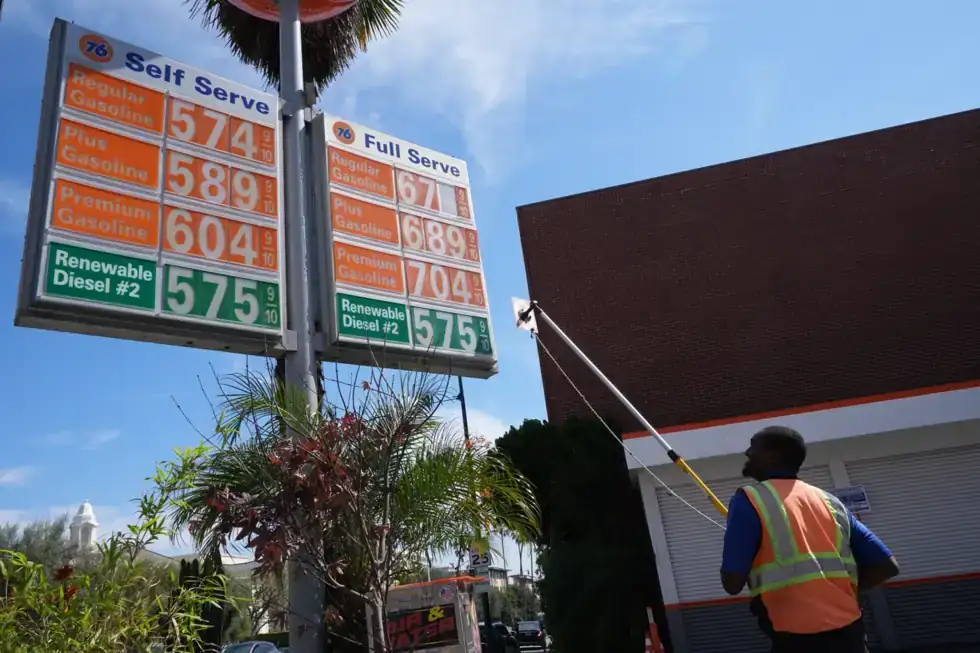
In the United States, the national average price of regular gasoline climbed to $3.41 per gallon—about 43 cents higher than the previous week, according to the AAA motor club.
Diesel prices rose even more sharply, reaching $4.51 per gallon.
The effects are even more pronounced in regions more dependent on Middle Eastern energy.
In Europe, diesel prices have doubled in some markets, while jet fuel costs in parts of Asia have surged nearly 200%, according to Rystad Energy data.
Those increases are beginning to ripple through transportation costs, airline pricing, and global supply chains.
U.S. Energy Independence Offers Limited Shield
Although the United States is now a net exporter of oil, global pricing dynamics mean American consumers remain exposed to international shocks.
Oil is traded on a worldwide market, so supply disruptions anywhere tend to affect prices everywhere.
Al Salazar, head of macro oil and gas research at energy analytics firm Enverus, said domestic producers cannot quickly offset lost global supply.
“If you put more wells in the ground, there’s about a six-month lag before you get that production uplift,” Salazar said.
Refining capacity also creates constraints. Much of the crude produced in the United States is lighter than the heavier grades processed by many U.S. refineries, forcing the country to continue importing some refined fuels even while exporting crude oil.
Regional Military Escalation Compounds Energy Risk
The widening conflict has increasingly targeted critical energy infrastructure.
Iran has launched retaliatory strikes across the region, including attacks that hit a Saudi refinery and a liquefied natural gas facility in Qatar.
Energy analysts estimate that roughly 20% of global LNG supply has been disrupted by damage and precautionary shutdowns.
Other incidents—including reported drone attacks on diplomatic facilities and strikes on pipelines—have further heightened fears of sustained disruption.
Each new attack adds uncertainty to markets already struggling to assess the scale and duration of supply losses.
Maritime Security Measures Face Skepticism
In response to the growing crisis, U.S. President Donald Trump announced a program to insure up to $20 billion in losses for shipping and commercial operations in the Gulf.
The initiative is intended to restore confidence among ship operators and stabilize maritime trade flows through the region.
But energy experts say financial guarantees alone may not persuade tanker operators to return to dangerous waters.
Even isolated attacks could have significant consequences for global markets.
“All it takes is one individual with a rocket-propelled grenade standing on shore to take out a tanker,” Salazar said, describing the persistent security risks facing shipping routes.
Energy Markets Confront a Prolonged Geopolitical Shock
For energy traders and policymakers, the central question is no longer whether the conflict will affect markets—but how long the disruption will last.
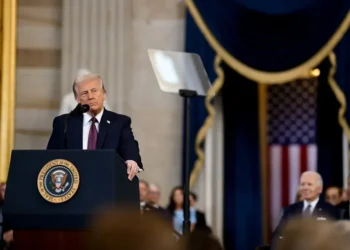
President Trump has said U.S. military operations against Iran could continue for four to five weeks, though he added the United States has the capacity to extend the campaign if necessary.
At the same time, the administration has ruled out negotiations with Iran unless Tehran agrees to unconditional surrender.
Those signals have reinforced expectations that the crisis could stretch well beyond the immediate military phase.
If the Strait of Hormuz remains unstable or infrastructure damage deepens, analysts warn the global economy may face a sustained period of elevated energy prices and supply volatility.