Japan’s benchmark Nikkei 225 index climbed above the 68,000 mark for the first time on Wednesday, extending a global stock market rally fueled by investor enthusiasm for artificial intelligence-related companies and infrastructure spending.
Market data showed the Nikkei 225 rose 2.9% to 68,634.74 by midafternoon trading in Tokyo. The advance followed another record-setting session on Wall Street, where all three major U.S. stock indexes closed at all-time highs on Tuesday.
The latest gains underscore the continued influence of artificial intelligence investments on global equity markets, with semiconductor and technology companies remaining at the center of investor attention.

AI Stocks Lead Japan’s Record Advance
Technology-related shares drove much of the Nikkei’s rally. Market data showed computer chip equipment manufacturer Tokyo Electron gained 13.4%, while semiconductor testing equipment producer Advantest rose 5.9%.
The performance reflected broader optimism surrounding companies linked to artificial intelligence infrastructure, including chipmakers, equipment suppliers and data center operators.
Elsewhere in Asia, trading was mixed. Hong Kong’s Hang Seng Index fell 1.7% to 25,596.92, while mainland China’s Shanghai Composite Index added 0.4% to 4,092.53.
Australia’s S&P/ASX 200 gained 0.9% to 8,806.40, and Taiwan’s Taiex advanced 2%. India’s Sensex declined 1.1%, while South Korean markets were closed for a public holiday.
Wall Street Sets New Highs
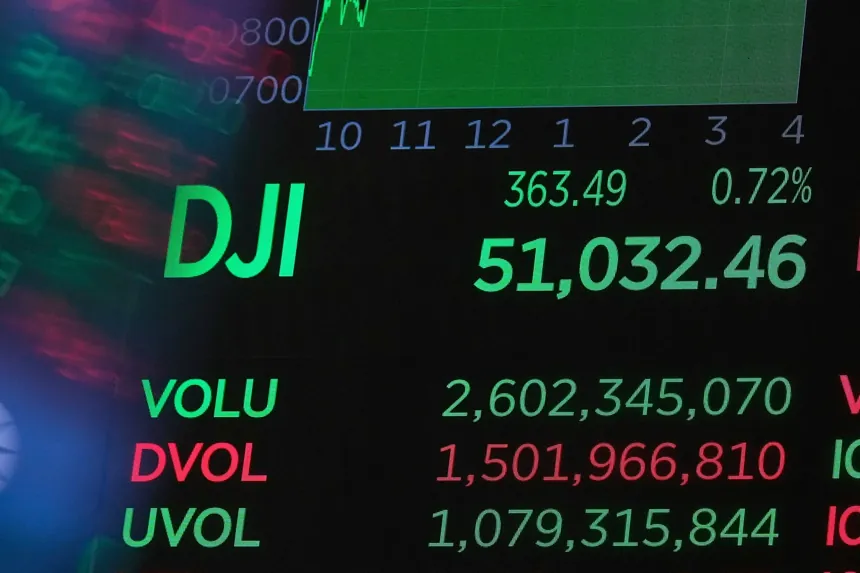
The rally in Asia followed another positive session in the United States, where market data showed the S&P 500 rose 0.1% to 7,609.78. The Dow Jones Industrial Average gained 0.4% to 51,307.79, while the Nasdaq Composite edged less than 0.1% higher to 27,093.90.




All three indexes finished at record levels.
Investor sentiment received support from a U.S. labor market report indicating employers were advertising more job openings at the end of April than economists had anticipated. The figures suggested continued resilience in the world’s largest economy.
Corporate Results Highlight AI Demand
Several technology-related companies posted strong gains following developments tied to artificial intelligence spending.
Corporate earnings results showed Hewlett Packard Enterprise surged 19.5% after reporting quarterly profit that exceeded analyst expectations. The company attributed part of its performance to customer demand for artificial intelligence capabilities.
Marvell Technology jumped 32.5%, marking its strongest trading session since becoming publicly listed in 2000. The gain followed remarks by Nvidia Chief Executive Officer Jensen Huang at a conference in Taiwan, where he suggested Marvell could become “the next trillion-dollar company.”
Nvidia, one of the largest beneficiaries of the AI boom, slipped 0.7% despite maintaining a market value above $5 trillion.
Generac Holdings also advanced 5.7% after announcing an agreement to provide backup power generators to an unnamed hyperscale data center operator.
Massive AI Spending Draws Scrutiny
The market’s focus on artificial intelligence continues to be accompanied by questions over the scale of investment required to support the technology.
Corporate disclosures showed Alphabet, the parent company of Google, plans to raise $80 billion through a stock sale to help finance artificial intelligence investments. The company’s shares fell 3.9% on Tuesday.
Alphabet has indicated it may spend up to $190 billion on equipment and other investments this year, with expenditures expected to increase further next year.
The size of these commitments has intensified debate over whether future productivity gains and profits from artificial intelligence will justify the enormous capital being deployed across the sector.
Oil Prices and Currency Markets Remain in Focus
Energy markets also remained closely watched as investors monitored developments related to Iran and shipping through the Strait of Hormuz.
Brent crude oil, the international benchmark, rose $1.10 to $97.10 per barrel in early Wednesday trading. U.S. benchmark crude gained $1.17 to $94.93 per barrel.
In currency markets, the U.S. dollar briefly strengthened above 160 Japanese yen before easing slightly. The dollar traded at 159.90 yen, little changed from 159.92 yen late Tuesday.
The euro slipped to $1.1625 from $1.1632.
While concerns persist over elevated oil prices and the sustainability of heavy artificial intelligence spending, global equity markets continue to benefit from investor confidence in technology-driven growth and strong corporate earnings.