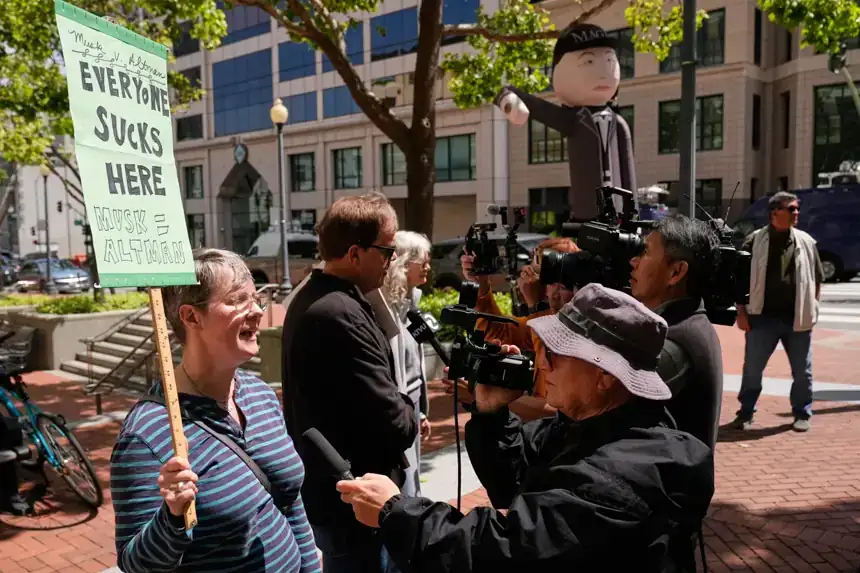
The legal confrontation between Elon Musk and Sam Altman has entered a critical phase, as a U.S. federal court begins hearing a case that could influence the governance and commercial trajectory of the artificial intelligence sector. The dispute centers on allegations that OpenAI departed from its founding nonprofit mission, with potential financial and strategic implications for one of the industry’s most valuable organizations.
Jury selection began this week in California, marking the start of a trial expected to examine claims of fraud, governance disputes, and the evolution of AI business models. The case comes at a time when OpenAI is reportedly valued in the hundreds of billions of dollars, underscoring the high economic stakes tied to its structure and partnerships.
Strategic Dispute Over OpenAI’s Structure
At the center of the case is Musk’s assertion that OpenAI’s leadership shifted the organization away from its original nonprofit purpose toward a profit-driven model. According to reporting by Reuters, Musk argues that this transition undermined the founding agreement and misused early financial contributions and influence.

OpenAI, however, disputes these claims, stating that Musk had previously supported structural changes and that the organization’s current hybrid model remains consistent with its mission to develop artificial intelligence responsibly. The company has also argued that the lawsuit reflects competitive tensions, particularly as Musk now leads a rival AI venture.
Financial and Industry Implications
The trial carries significant implications for the broader AI industry, particularly regarding governance frameworks and investor participation. OpenAI’s partnerships, including multibillion-dollar collaborations with major technology firms, have helped accelerate commercialization of generative AI technologies.
Analysts note that the outcome could influence how future AI ventures balance nonprofit objectives with commercial funding requirements. The case may also shape regulatory discussions around transparency, accountability, and control in rapidly scaling AI companies.
Witnesses and Corporate Oversight Questions
The proceedings are expected to include testimony from prominent technology executives and insiders, highlighting the extent of internal disagreements over OpenAI’s direction. Industry figures, including senior executives from partner organizations, are anticipated to provide insight into governance decisions and strategic shifts.
Court filings indicate that Musk is seeking substantial damages and governance changes, including leadership restructuring at OpenAI. In contrast, the company maintains that its current leadership structure is aligned with its long-term technological and ethical objectives.
■ Related News




Market Context and Competitive Pressures
The case unfolds amid intensifying competition in artificial intelligence, with companies racing to deploy advanced models across enterprise and consumer applications. OpenAI’s rapid expansion and potential future public offering have increased scrutiny over its governance and commercial strategy.
From a market perspective, the dispute reflects broader tensions between innovation, capital investment, and organizational control in high-growth technology sectors. Industry observers suggest that the trial’s outcome could set precedents for how intellectual property, funding structures, and leadership accountability are handled in emerging technology companies.
Strategic Outlook
The Musk–Altman trial represents more than a legal dispute between two high-profile figures; it is a test case for the evolving business models underpinning artificial intelligence. As proceedings continue, investors, regulators, and technology firms are expected to closely monitor developments for signals on how governance and profit structures in AI may be shaped in the years ahead.