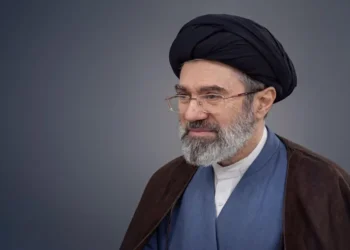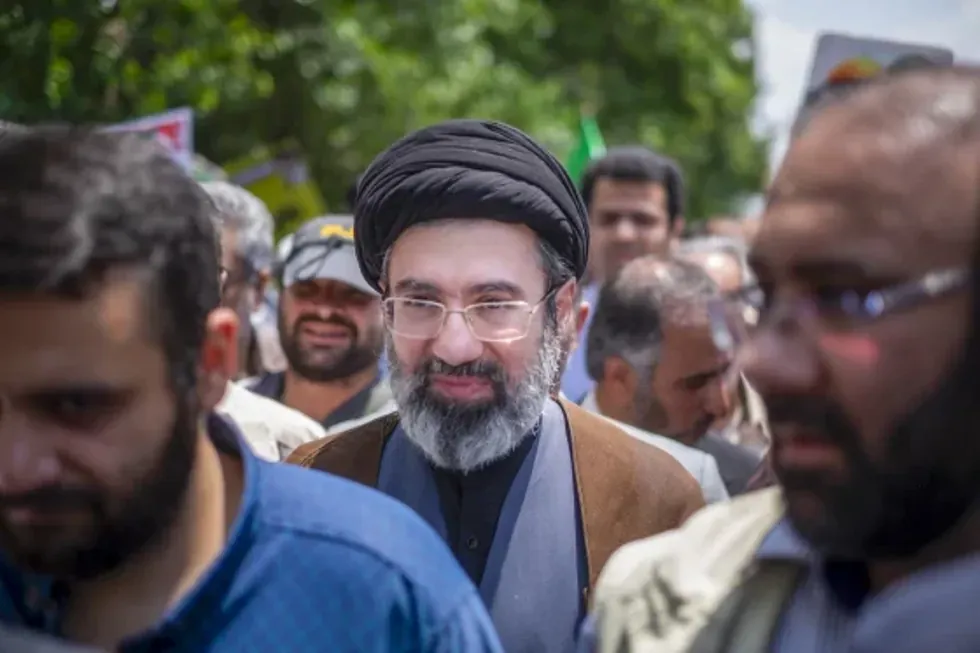
Mojtaba Khamenei has long been viewed as one of the most influential yet least publicly visible figures within the leadership structure of Iran. As the son of Supreme Leader Ali Khamenei, his rise within clerical and political networks has drawn sustained attention from analysts of the Islamic Republic. Understanding his role requires examining Iran’s institutional framework, the historical evolution of its leadership system, and the broader political dynamics that shape succession in the country.
Introduction
For decades, Mojtaba Khamenei operated largely outside public political office while maintaining a reputation for influence within the inner circle of Iran’s leadership. As a cleric educated in the country’s religious institutions, he developed connections across political, religious, and security structures that underpin the Islamic Republic.
His prominence stems primarily from his relationship to Ali Khamenei, who has served as Iran’s supreme leader since 1989. The supreme leader is the highest authority within Iran’s political system, overseeing key institutions including the military, judiciary, and state broadcasting.

Because Iran’s constitution grants extensive authority to the supreme leader, questions about leadership succession have long been a subject of international attention. Mojtaba Khamenei’s position within elite networks, combined with his religious training and ties to security institutions, has placed him at the center of discussions about power dynamics inside the Islamic Republic.
Understanding his role therefore requires examining not only his personal background but also the institutional structures and historical developments that shape Iran’s political system.
Historical evolution of leadership in the Islamic Republic
The leadership structure of modern Iran emerged after the Iranian Revolution, which overthrew the monarchy and established a system combining republican institutions with clerical authority. The revolutionary leader Ruhollah Khomeini became the first supreme leader, holding ultimate political and religious authority.
After Khomeini’s death in 1989, the position passed to Ali Khamenei. His leadership marked the consolidation of power within a network of clerics, security institutions, and political factions that developed during the revolution and the subsequent Iran–Iraq War.
Over time, the office of the supreme leader evolved into the central node of the political system. The position oversees strategic decision-making on national security, foreign policy, and ideological direction. Because of these responsibilities, succession has always been a sensitive issue within Iran’s governing institutions.
■ Related News


In this context, the emergence of figures connected to the leadership family—such as Mojtaba Khamenei—has drawn attention from analysts seeking to understand how influence operates within Iran’s political elite.
Religious education and clerical background
Mojtaba Khamenei was born in the northeastern Iranian city of Mashhad in 1969, into a family already deeply involved in the revolutionary movement. Mashhad is one of the most important religious centers in Shiite Islam and has long been associated with clerical scholarship.
Like many members of Iran’s religious establishment, Mojtaba pursued advanced theological education in Qom, the country’s primary center of Shiite seminary training. Qom’s seminaries play a central role in producing clerics who later participate in political or religious leadership.
His studies focused on Islamic jurisprudence and theology, disciplines that form the intellectual foundation of the Islamic Republic’s system of governance. Within that framework, clerical legitimacy remains an important component of political authority.
Religious education also creates networks of influence. Students often maintain lifelong connections with fellow clerics, teachers, and institutions that can later shape political alignments and decision-making within the state.
Institutional framework of supreme leadership
To understand Mojtaba Khamenei’s political relevance, it is necessary to examine how leadership authority functions in Iran.
The supreme leader occupies the apex of the state hierarchy. The role includes command of the armed forces, supervision of the judiciary, appointment of key officials, and influence over foreign and security policy. While Iran also has elected institutions such as the presidency and parliament, the supreme leader holds ultimate authority over strategic decisions.
Selection of the supreme leader is carried out by the Assembly of Experts, an elected body of Islamic scholars tasked with supervising and appointing the country’s highest religious authority. In theory, the assembly evaluates religious qualifications and political suitability when selecting a leader.
In practice, the process involves consultation among political factions, clerical networks, and security institutions. The opaque nature of these deliberations means that analysts often rely on institutional signals and elite relationships to assess potential influence within the system.
This structure helps explain why figures who operate behind the scenes—rather than through public office—can still play significant roles in shaping political outcomes.
Structural drivers of political influence
Mojtaba Khamenei’s perceived influence stems from several structural factors within Iran’s governance system.
First is proximity to the office of the supreme leader. The leadership office functions not only as a symbolic authority but also as an administrative hub coordinating policy, security, and religious oversight. Individuals working within or close to this institution often gain access to decision-making networks.
Second is the role of security institutions in Iranian politics. The Islamic Revolutionary Guard Corps, commonly known as the IRGC, holds significant influence across military, economic, and regional policy domains. Relationships between clerical leadership and the IRGC have shaped many strategic decisions since the 1980s.
Observers have frequently noted Mojtaba Khamenei’s connections within this security establishment. While the exact nature of those ties remains difficult to verify publicly, such relationships are widely considered an important factor in Iran’s internal power dynamics.
A third structural factor is factional politics. Iran’s political landscape includes conservative, reformist, and pragmatic factions that compete for influence within the boundaries of the Islamic Republic’s political system. Alliances within these networks often determine the balance of power in elections and policy debates.
Political dynamics and public controversies
Despite his reputation for influence, Mojtaba Khamenei has rarely appeared in the public political arena. His name became more widely known during political tensions surrounding Iran’s presidential elections in the 2000s.
During those periods, reformist politicians and some analysts suggested that he played a role in supporting conservative political figures. These claims were often debated in media coverage and political commentary but were rarely confirmed through official channels.
The contested presidential election of 2009, which triggered mass demonstrations known as the Green Movement protests, further intensified scrutiny of the country’s leadership structure. Critics of the government alleged that individuals close to the supreme leader’s office helped coordinate the response to the unrest.
Iranian authorities rejected many of these accusations and maintained that the state’s actions were necessary to maintain order. The lack of transparent information about internal decision-making has left aspects of these events subject to ongoing debate among analysts.
Regional and international implications
The influence of individuals within Iran’s leadership structure has broader implications beyond domestic politics.
Iran plays a central role in Middle Eastern geopolitics through its regional alliances, security policies, and economic relationships. Decisions made within the country’s leadership circle can therefore shape developments across multiple conflict zones and diplomatic negotiations.
For international observers, understanding figures such as Mojtaba Khamenei helps illuminate how authority operates within the Islamic Republic. Because policy decisions often emerge from consensus among clerical leaders, security institutions, and political elites, influence inside these networks can affect the direction of Iran’s domestic and foreign policies.
International institutions and governments therefore monitor leadership dynamics in Tehran closely, particularly when assessing long-term stability or potential policy shifts.
Long-term implications for succession politics
Succession in Iran has historically been a complex process shaped by religious authority, political consensus, and institutional stability.
The transition from Ruhollah Khomeini to Ali Khamenei in 1989 demonstrated how leadership decisions can emerge from negotiation among clerics and political elites. That precedent continues to inform debates about how future transitions might unfold.
Mojtaba Khamenei’s position within the clerical establishment and his proximity to existing leadership structures have made him a frequent subject of discussion in this context. However, the internal deliberations of Iran’s governing institutions remain largely confidential.
As a result, analysts often rely on institutional patterns rather than definitive evidence when assessing potential succession scenarios.
Conclusion
Mojtaba Khamenei occupies a distinctive place within the political landscape of the Islamic Republic of Iran. His background as the son of Supreme Leader Ali Khamenei, combined with religious education in Iran’s clerical institutions and reported connections within political and security networks, has contributed to his reputation as a behind-the-scenes figure of influence.
The broader significance of his role lies in what it reveals about Iran’s governance system. Authority within the Islamic Republic is shaped by a combination of religious legitimacy, institutional structures, and elite relationships that extend beyond formal public offices. While much about internal decision-making remains opaque, these dynamics continue to shape debates about leadership and succession in Iran.
Understanding figures such as Mojtaba Khamenei therefore offers insight into the mechanisms through which political power operates in one of the Middle East’s most influential states.