Israeli forces have carried out their deepest military advance into Lebanon in more than 25 years, seizing the historic Beaufort fortress in southern Lebanon despite a U.S.-brokered ceasefire and ongoing diplomatic efforts aimed at extending a broader truce linked to the conflict involving Iran. The development has introduced new uncertainty into regional negotiations as multiple parties seek to prevent a wider escalation.
The Israeli advance comes as diplomats continue efforts to sustain a ceasefire connected to the recent Iran conflict. Tehran has indicated that any broader agreement should also address fighting in Lebanon, making developments along the Israel-Lebanon border increasingly significant to regional diplomacy.
Historic Fortress Becomes Strategic Flashpoint
Israeli forces captured Beaufort, also known as Al-Shaqif, a fortress overlooking large areas of southern Lebanon and northern Israel. The site has served as a military stronghold for numerous powers over nearly a millennium, including Crusaders, the forces of Saladin, the Ottomans, the French Mandate authorities, the Palestine Liberation Organization and Israel itself before its withdrawal from southern Lebanon in 2000.

Israeli Prime Minister Benjamin Netanyahu described Beaufort as both a symbol of military sacrifice and a site with deep historical significance for Israel. The fortress carries strong symbolic weight because Israeli forces held it during their presence in southern Lebanon from 1982 until 2000.
Military officials say the position provides commanding views over surrounding terrain and offers strategic advantages in operations targeting Hezbollah positions in southern Lebanon. Israel has stated that Hezbollah used the surrounding ridge areas to launch attacks against Israeli territory.
Ceasefire Under Increasing Strain
The operation took place despite a ceasefire brokered by the United States and amid the first direct military talks between Israel and Lebanon in decades. The renewed fighting has raised concerns that diplomatic efforts could be undermined by developments on the ground.
Israel says its military campaign is aimed at weakening Hezbollah, the Iran-backed armed group that maintains significant political and military influence in Lebanon. Israeli officials have argued that Hezbollah continues to pose a threat through rocket, drone and other attacks directed at northern Israel.
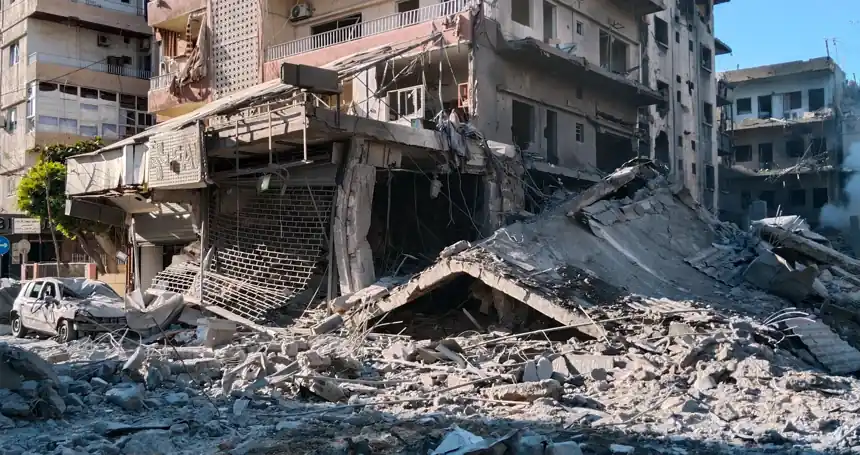
Lebanese officials, meanwhile, have accused Israel of causing widespread destruction in southern parts of the country and violating Lebanese sovereignty. Prime Minister Nawaf Salam criticized the expanding military operations and called for international pressure to halt the advance.




Humanitarian and Security Concerns Grow
The conflict has displaced approximately one million people in Lebanon, according to reporting cited by The Associated Press. Lebanese authorities report more than 3,300 deaths since the latest phase of fighting began, while Israeli authorities say at least 25 soldiers, a defense contractor and two civilians have been killed. The casualty figures come from the respective sides and reflect the ongoing human cost of the conflict.
France has called for an emergency meeting of the United Nations Security Council, while Qatar described the Israeli advance as a dangerous escalation. Germany also expressed concern about the latest developments.
Hezbollah Remains Outside Negotiations
Diplomatic efforts continue despite the worsening security situation. Direct talks between Israel and Lebanon are underway, but Hezbollah has rejected participation in the negotiations and said it will not accept agreements reached without Iranian involvement. The group has argued that Lebanon’s government lacks sufficient authority to negotiate on its behalf.
Analysts and former Israeli security officials cited by The Associated Press noted that Beaufort carries considerable symbolic value but questioned whether its capture would significantly alter the broader military balance. Some described the operation as highlighting unresolved questions about how the conflict will ultimately be concluded.
As military operations continue and diplomatic negotiations remain fragile, the situation in southern Lebanon has become increasingly intertwined with efforts to maintain a wider regional ceasefire. Whether negotiators can prevent further escalation may influence not only relations between Israel and Lebanon but also the broader stability of the Middle East.