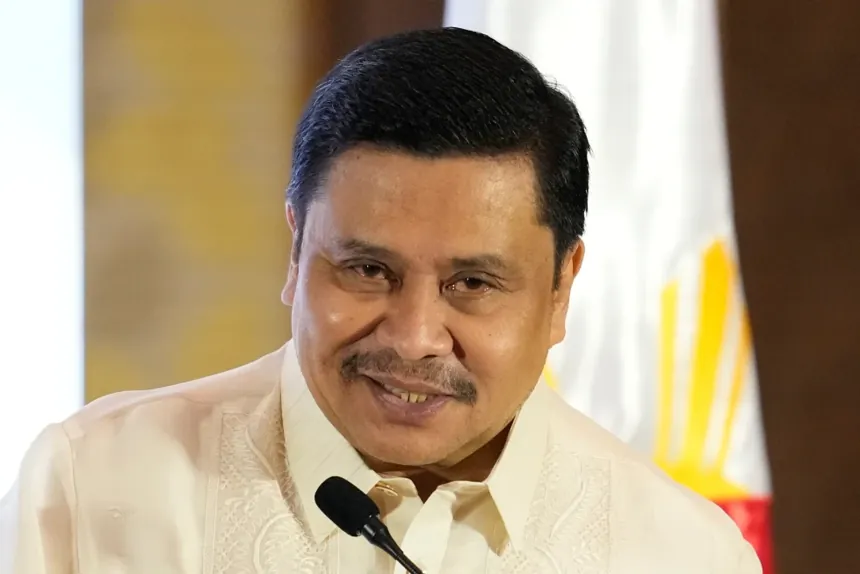
A Philippine senator was arrested on a non-bailable plunder charge Monday after anti-graft authorities accused him of receiving hundreds of millions of pesos in kickbacks linked to government flood-control projects, adding to mounting political tensions in the country’s Senate.
Senator Jinggoy Estrada was taken into custody after the special Sandiganbayan anti-graft court issued a new arrest order tied to allegations that he received more than 570 million pesos ($9.3 million) from flood-control contracts, according to court actions and reporting by the Associated Press. The arrest comes at a politically sensitive moment as rival factions compete for influence in the upper chamber of Congress.
The latest charge carries no right to bail under Philippine law. Estrada had previously surrendered after an earlier arrest warrant linked to a graft case and was temporarily released after posting bail.

Estrada, 63, has denied wrongdoing. Allegations against him stem largely from claims made by a former public works engineer who accused him of receiving kickbacks connected to flood-control projects. Independent findings on the accusations have not yet been made by the court.
Corruption Allegations Expand
Interior Secretary Jonvic Remulla confirmed that authorities took Estrada into custody at the Senate complex and stated that neither the senator nor other defendants would receive special treatment.
Former Public Works Secretary Manuel Bonoan was also arrested separately in connection with the case, according to officials cited during the proceedings. The broader investigation has implicated several lawmakers and government officials in alleged irregularities involving flood-control projects across the country.
The allegations have drawn particular attention because the Philippines remains highly vulnerable to severe flooding and typhoons, making infrastructure spending a politically sensitive issue.
Political Divisions Deepen
Estrada suggested the legal actions against him were politically motivated and linked to his alignment with former President Rodrigo Duterte and Vice President Sara Duterte.
■ Related News

The senator told reporters before his arrest that he would not allow political pressure to influence his decisions and said he intended to defend himself through legal channels. His claims have not been independently verified, and government authorities have not publicly confirmed any political motivation behind the prosecution.
The case unfolds as relations remain strained between President Ferdinand Marcos Jr. and Vice President Sara Duterte, whose alliance fractured after the 2022 election. The political rivalry has increasingly shaped debates inside the Senate and broader national politics.
Senate Balance Faces New Pressure
Estrada’s detention could have broader consequences for the Senate’s internal balance of power.
According to the Associated Press, another senator, Ronald dela Rosa, has also been sidelined by legal troubles after the International Criminal Court issued an arrest warrant linked to alleged crimes against humanity connected to the Duterte administration’s anti-drug campaign. Dela Rosa has denied wrongdoing.
With two members of the 24-seat Senate facing major legal challenges, the developments could affect legislative dynamics during a period of heightened political uncertainty.
Long Shadow of Corruption Cases
Estrada’s arrest also revives attention on the political legacy of his family.
The senator is the son of former Philippine President Joseph Estrada, who was previously detained and later convicted in a separate corruption case before receiving a presidential pardon. Jinggoy Estrada has also faced corruption-related investigations in the past and has consistently denied criminal conduct.
Court proceedings in the latest case are expected to continue as prosecutors pursue the plunder allegations and related corruption charges.
Details surrounding the full scope of the evidence and the eventual trial schedule remain unclear.