NEW DELHI (Journos News) – The Iranian warship sinking in the Indian Ocean has triggered a sharp diplomatic dispute between the United States and Iran, as both sides present conflicting accounts of whether the vessel was armed when it was destroyed during the widening regional conflict.
The Iranian destroyer IRIS Dena was struck by a torpedo launched from a U.S. submarine on March 4 in waters near Sri Lanka, according to statements from both governments. The incident has become one of the most visible naval flashpoints linked to the broader confrontation involving Israel, raising questions about the circumstances of the attack and the vessel’s operational role at the time.
Officials in Washington have rejected Tehran’s claim that the ship was unarmed, while Iranian authorities insist the vessel was participating in a noncombat international naval event and was returning home when it was targeted.

Diplomatic Pressure Builds
The disagreement escalated after the U.S. military’s United States Indo-Pacific Command publicly dismissed Iran’s assertion that the ship carried no weapons.
In a statement posted online, the command described Tehran’s claim as “false,” indicating that the vessel was not defenseless when it was struck. The command did not provide detailed evidence about the ship’s armament but emphasized that the circumstances surrounding the attack were consistent with military engagement rules.
The dispute comes as naval activity across the Indian Ocean and surrounding waterways has intensified amid the broader war involving Israel and Iran. The incident highlights how maritime routes far from the Middle East have increasingly become arenas for strategic confrontation.
Conflicting Accounts of the Vessel’s Status
Iranian officials have consistently argued that the warship was engaged in a ceremonial or noncombat role while participating in multinational naval exercises hosted by India.
Speaking in New Delhi, Iran’s Deputy Foreign Minister Saeed Khatibzadeh said the ship had been invited to take part in the exercise and was not carrying weapons at the time.




“The vessel was attending an international exercise as a guest and was unloaded,” he said, describing the attack as an unjustified strike against a noncombat ship.
Iran’s Foreign Minister Abbas Araghchi went further, characterizing the incident as “an atrocity at sea” and stressing that the ship had been operating under the auspices of India’s navy during the multinational event.
Questions Over Exercise Protocols
Regional naval officials and defense analysts say ships participating in international maritime exercises often operate under restrictions regarding live weapons.
An Indian navy official familiar with the exercises told reporters the vessel was not “entirely unarmed,” though details about the munitions on board remain unclear.
Defense analyst Rahul Bedi said international fleet reviews and ceremonial naval events typically require visiting ships to limit or remove combat-ready weapons systems. According to Bedi, ships may still carry controlled ammunition used for specific drills but are generally expected to avoid full combat loads during such engagements.
Statements from India’s defense ministry after the exercises confirmed that some participating vessels conducted live-fire drills, including surface gun and anti-aircraft exercises, although it did not specify which ships took part.
Regional Stability Tested
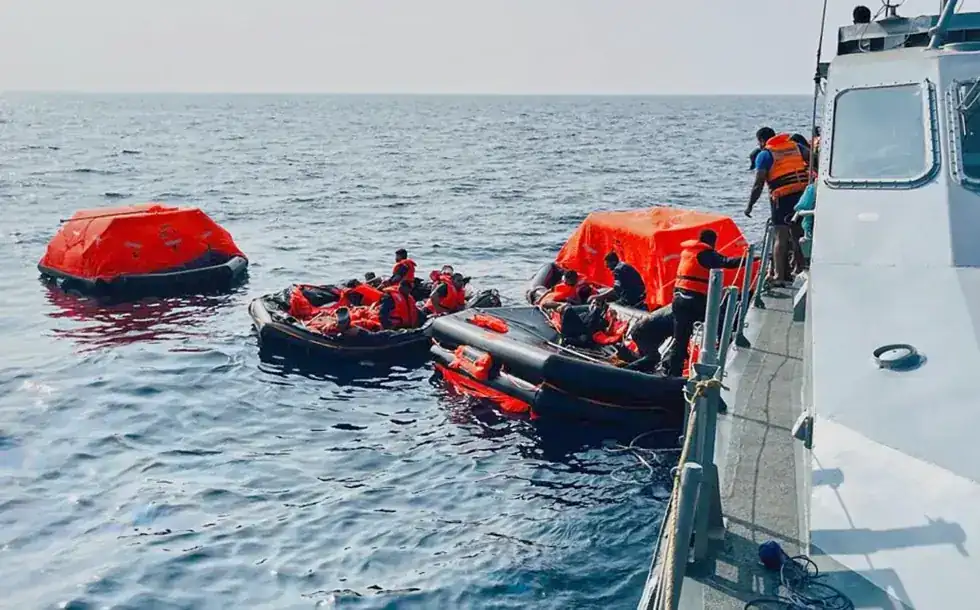
The destruction of the IRIS Dena resulted in significant casualties. The navy of Sri Lanka rescued 32 sailors from the water and recovered the bodies of 87 crew members following the attack, according to officials involved in the rescue operation.
Meanwhile, two other Iranian vessels — IRIS Bushehr and IRIS Lavan — have remained docked in Sri Lanka and India after seeking assistance following the incident.
Military officials and analysts say the presence of Iranian ships in South Asian ports reflects how the conflict between Iran and Israel, supported by the United States, is expanding beyond its traditional geographic boundaries.
Strategic Stakes Rise
The dispute over the warship’s status carries implications beyond the immediate loss of the vessel. If the ship was participating in a multinational exercise without active weapons, the incident could raise questions about maritime safety protocols and diplomatic assurances for visiting naval forces.
If the vessel retained operational armaments, however, the United States could argue that it remained a legitimate military target within the wider conflict.
Either way, the incident underscores the growing strategic importance of the Indian Ocean as global powers maneuver to protect shipping routes and assert influence across critical maritime corridors linking the Middle East, Asia, and Africa.
As the war between Iran and Israel continues to reverberate internationally, naval encounters far from the original theater of conflict may increasingly test diplomatic relations and regional stability.