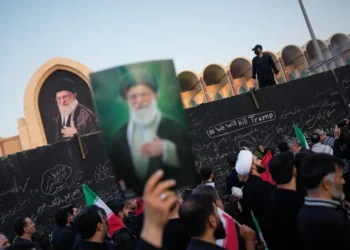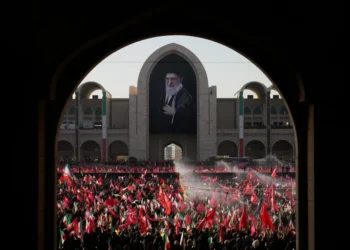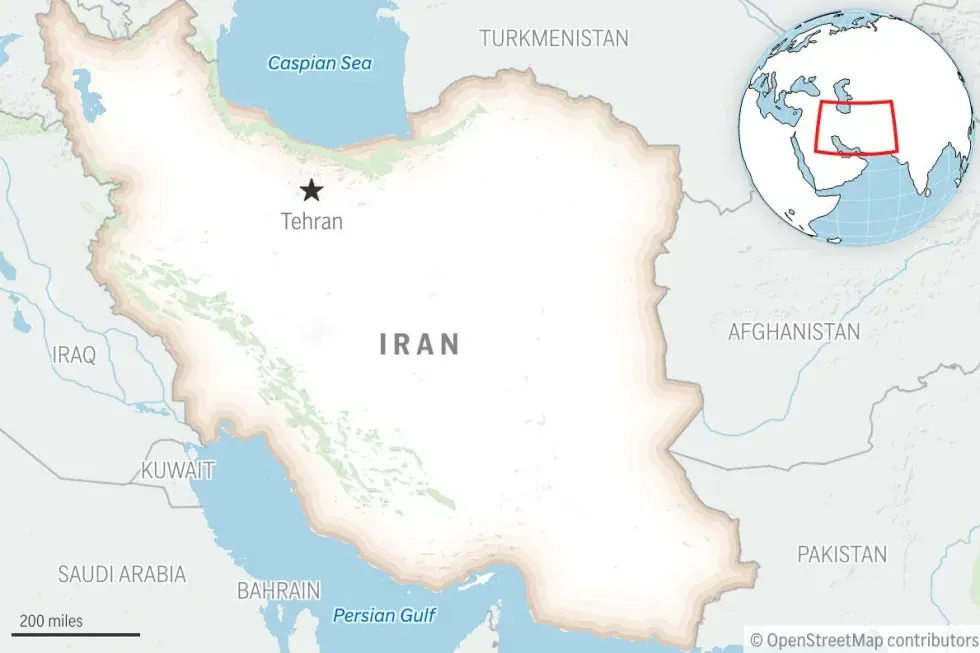
CAIRO (Journos News) – Students at several universities in Iran’s capital staged anti-government protests this week, according to witnesses and verified video, underscoring renewed domestic unrest as U.S. forces reposition in the Middle East ahead of potential military action.
The demonstrations, which began over the weekend and expanded on Monday, come at a sensitive moment for Tehran. American and Iranian negotiators are preparing for another round of indirect talks in Geneva over Iran’s nuclear program, while the USS Gerald R. Ford aircraft carrier heads toward the region to join another U.S. carrier strike group.
The renewed protests suggest that internal political tensions are rising even as diplomatic efforts continue abroad, adding complexity to an already volatile regional landscape.

Campus protests spread across Tehran
Protests were reported at several universities in Tehran, including Sharif University and the University of Tehran. Witnesses said students gathered midday, some wearing face coverings, and chanted slogans criticizing the government. In some instances, they voiced support for Reza Pahlavi, the exiled son of Iran’s last shah.
At Sharif University, students assembled outside a cafeteria before chanting during the Muslim call to prayer broadcast over loudspeakers. One protester raised a lion-and-sun flag associated with Iran’s former monarchy. Scuffles reportedly broke out between demonstrators and members of the Basij paramilitary force, which has historically played a central role in suppressing dissent. University security guards intervened to separate the groups, according to a student who spoke on condition of anonymity due to security concerns.
At the University of Tehran, a demonstration occurred during a memorial for a student killed in earlier protests. Participants chanted “Women, Life, Freedom” — a slogan that became globally recognized during protests that erupted in 2022 following the death of Mahsa Amini. Students also called for the resignation of Supreme Leader Ayatollah Ali Khamenei. A witness said university guards did not interfere.
Videos verified by The Associated Press showed additional gatherings at Al Zahra University, where female students chanted slogans in support of Pahlavi.
Background of unrest
Iran has faced repeated waves of protest in recent years, driven by economic hardship, political repression, and broader frustrations with the ruling system established after the 1979 Islamic Revolution.
Late last year, demonstrations intensified after a sharp collapse in Iran’s currency, which remains under pressure from longstanding U.S. sanctions tied to the nuclear dispute. Protesters in several cities called for systemic political change. Authorities responded with a sweeping crackdown in January, arresting tens of thousands and using force to disperse gatherings.
The U.S.-based Human Rights Activists News Agency (HRANA), which has documented previous episodes of unrest in Iran, says at least 7,015 people were killed in recent months of protests and the subsequent crackdown, including 214 members of government forces. HRANA relies on a network of activists inside Iran to verify deaths and has previously provided casualty figures that were later corroborated in part by independent reporting.
Iranian authorities released their own toll on Jan. 21, stating that 3,117 people were killed during earlier protests. Independent verification of either figure has been difficult due to restrictions on media access and periodic disruptions to communication networks inside the country.
The Associated Press and other international news organizations have said they are unable to independently confirm the casualty totals.
Nuclear talks and military posture
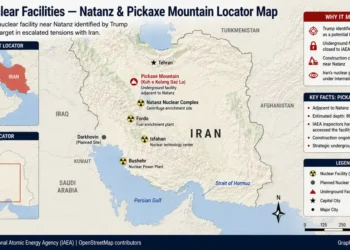
The protests are unfolding as diplomatic negotiations over Iran’s nuclear program continue. U.S. and Iranian officials are set to meet indirectly in Geneva this week, where Tehran is expected to present a detailed proposal outlining potential limits on its nuclear activities.
Iran maintains that its nuclear program is entirely peaceful. Officials say the country has not enriched uranium since a series of Israeli and U.S. strikes last June targeted nuclear facilities. Those strikes followed heightened regional tensions and accusations from Washington and its allies that Tehran was edging closer to weapons-grade enrichment.
The United States and several European governments have long suspected Iran of seeking nuclear weapons capability — a charge Tehran denies. International inspectors have faced restricted access to certain Iranian nuclear sites since they were damaged in last year’s strikes.
Meanwhile, the USS Gerald R. Ford, described by the U.S. Navy as the world’s largest aircraft carrier, is moving toward the Middle East. Its deployment adds to an already significant U.S. naval presence in the region, reinforcing Washington’s warning that military options remain on the table should diplomacy fail.
Political symbolism and uncertain momentum
Public expressions of support for Reza Pahlavi inside Iran have drawn attention in recent months, particularly among segments of the diaspora. It remains difficult to measure the extent of his support within the country itself. Iran’s tightly controlled political environment and limits on independent polling make reliable assessments challenging.
Still, the appearance of monarchist symbols at university protests reflects the breadth of dissatisfaction among some demonstrators. Iranian universities have historically served as focal points for political activism, from the years preceding the 1979 revolution to more recent protest cycles.
Whether the current campus protests will spread beyond academic institutions remains unclear. Previous waves of unrest have at times grown rapidly, while others have subsided under security pressure.
For now, the convergence of student activism, high-stakes nuclear diplomacy, and a visible U.S. military buildup underscores a period of heightened uncertainty for Iran — one shaped by both domestic grievances and international confrontation.
Source: AP News – Students in Iran hold anti-government protests as US forces gather for possible strikes