Four years after Russia launched its full-scale invasion, the war in Ukraine has evolved from a lightning offensive aimed at Kyiv into a protracted conflict defined by attrition, territorial entrenchment, and sustained missile and drone campaigns. The anniversary underscores not only the human and economic toll but also the war’s enduring strategic consequences for Europe and the global order.
Despite repeated offensives, counteroffensives, and diplomatic initiatives, the conflict remains unresolved. Russia controls significant portions of Ukrainian territory, while Ukraine continues to depend heavily on Western military and financial support. The war’s persistence reflects entrenched political objectives, military recalibration on both sides, and shifting international dynamics.
The invasion, launched on February 24, 2022, marked the largest military assault in Europe since World War II. Russian forces attacked from multiple directions, including from Belarus toward Kyiv, from Russia into eastern Ukraine, and from Crimea in the south. Initial Russian advances captured territory quickly, but logistical failures and strong Ukrainian resistance prevented the swift collapse that many analysts had anticipated.

Within weeks, Ukrainian forces halted Russia’s push toward the capital. By late March 2022, Moscow shifted its focus to eastern and southern Ukraine, particularly the Donbas region. The discovery of civilian bodies in towns such as Bucha following Russian withdrawals intensified international condemnation and triggered expanded sanctions by Western governments.
From Shock Offensive to War of Attrition
The early months of the war were marked by fluid frontlines and rapid territorial changes. Russia seized the southern port city of Mariupol in May 2022 after prolonged fighting, consolidating a land corridor between Russia and Crimea. In the autumn of that year, Ukrainian counteroffensives retook significant territory in the Kharkiv region and forced Russian troops to withdraw from the city of Kherson.
However, by 2023 the conflict had largely stabilized into static trench warfare reminiscent of earlier 20th-century conflicts. Both sides constructed extensive defensive fortifications. The war increasingly relied on artillery duels, long-range missile strikes, and drone warfare.
According to the Washington-based Center for Strategic and International Studies, Russian casualties between February 2022 and December 2025 reached approximately 1.2 million, including around 325,000 deaths. Ukrainian losses are estimated at between 500,000 and 600,000 casualties, including roughly 140,000 deaths. Independent verification remains difficult, and figures vary across sources.
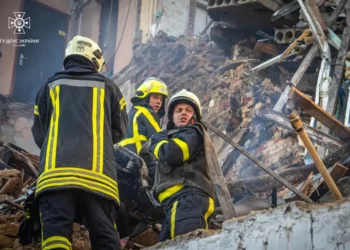
Civilian suffering has also been severe. The United Nations Human Rights Monitoring Mission has documented nearly 15,000 civilian deaths and more than 40,000 injuries, cautioning that actual numbers are likely higher. Hundreds of children have been killed. Millions have been displaced internally or have fled abroad, with the majority seeking refuge elsewhere in Europe.

Territorial Control and Strategic Calculations
At the four-year mark, Russia controls roughly 19% of Ukraine’s internationally recognized territory, including most of Luhansk and parts of Donetsk, Zaporizhzhia, and Kherson regions, as well as Crimea, which it annexed in 2014. In September 2022, Moscow formally declared the annexation of four Ukrainian regions despite not fully controlling them — a move widely rejected by the international community as illegal under international law.
Yet territorial changes over the past year have been incremental. Analysts at the Institute for the Study of War estimate that Russian forces gained less than 1% of additional Ukrainian territory in 2025, reflecting the grinding nature of the fighting.
The strategic balance has increasingly depended on external support. Western countries, led by the United States and European allies, have supplied Ukraine with advanced weapons systems, financial aid, and intelligence support. However, aid flows have fluctuated. Data indicate that foreign assistance declined by roughly 13% last year compared with the average levels between 2022 and 2024.
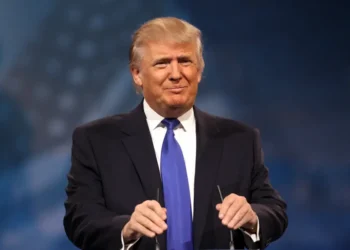
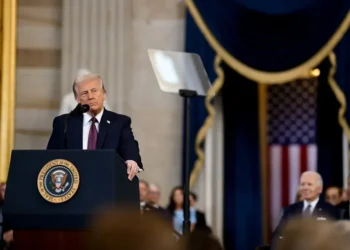
Debates over military support have intensified in Washington and European capitals, particularly as domestic political dynamics evolve. The return of Donald Trump to the White House in early 2025 introduced renewed uncertainty over U.S. policy, as discussions about potential peace frameworks and territorial compromises gained prominence.
Europe’s Political and Security Response
The war has fundamentally reshaped European security policy. The European Union, historically cautious on defense matters, coordinated multiple sanctions packages against Russia and increased military and humanitarian assistance to Ukraine. NATO expanded its eastern flank presence and admitted new members, reflecting heightened concerns about regional security.
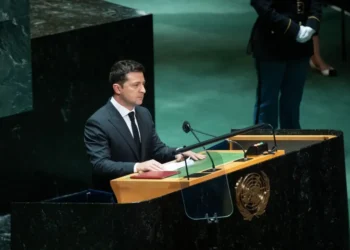
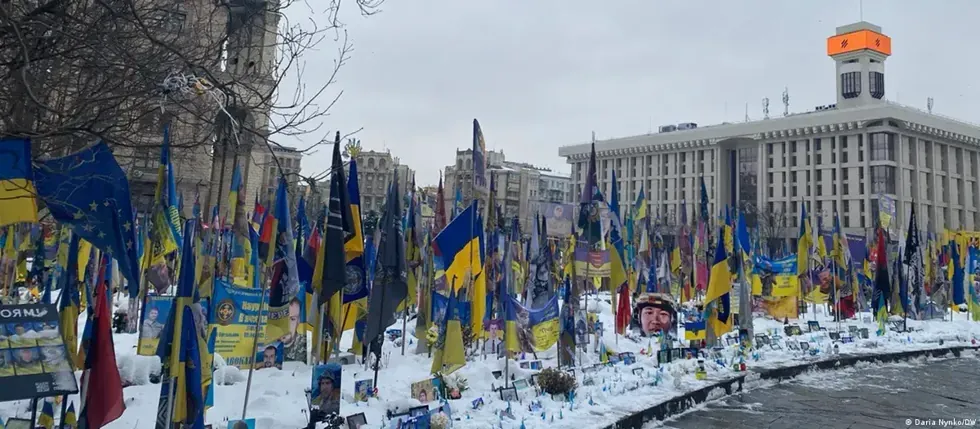
On the fourth anniversary, European leaders reiterated support for Kyiv. European Commission President Ursula von der Leyen and European Council President Antonio Costa traveled to Kyiv to participate in commemorations and meetings with Ukrainian President Volodymyr Zelenskyy. European institutions illuminated buildings in the blue and yellow of Ukraine’s flag, symbolizing continued political backing.
Yet the long-term sustainability of European support remains a subject of debate. Rising defense expenditures, energy market adjustments following reduced Russian gas imports, and domestic political pressures across EU member states have tested cohesion. While Europe possesses significant economic capacity, translating that capacity into sustained military production and unified policy has proven complex.
The Evolving Military Landscape
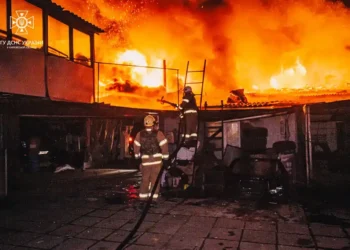
Technological adaptation has become a defining feature of the conflict. Russia has intensified the use of drones and missile strikes targeting Ukrainian infrastructure, particularly energy facilities. Ukraine has similarly expanded its use of domestically produced and Western-supplied drones to strike Russian positions and, in some instances, targets inside Russian territory.
The war has also revealed the importance of industrial capacity. Ammunition shortages periodically constrained Ukrainian operations, while Russia reoriented its economy toward defense production, increasing output of artillery shells and drones.
In August 2024, Ukrainian forces launched a limited cross-border incursion into Russia’s Kursk region, demonstrating Kyiv’s willingness to expand the theater of operations. At the same time, Russia continued incremental advances in eastern Ukraine, seeking to consolidate control over remaining contested areas of Donetsk and Luhansk.
Humanitarian and Economic Consequences
Beyond the battlefield, the war’s humanitarian consequences remain profound. Approximately 5.9 million Ukrainians have fled the country, while another 3.7 million are internally displaced. The strain on social services, housing, and labor markets in host countries has required sustained coordination at the European level.
Ukraine’s economy has contracted sharply since 2022, though international financial assistance from institutions such as the International Monetary Fund and the World Bank has helped stabilize macroeconomic conditions. Reconstruction costs are projected in the hundreds of billions of dollars, even as active fighting continues.
Russia, meanwhile, has faced sweeping Western sanctions targeting banking, energy exports, and technology imports. While sanctions have constrained long-term growth prospects, Russia has adapted by redirecting trade flows toward Asia and increasing state control over key industries. The long-term effectiveness of sanctions remains contested among economists.
Diplomatic Efforts and Uncertain Prospects
Multiple diplomatic initiatives have attempted to outline pathways toward ceasefire or settlement. Proposals have ranged from territorial freezes to broader security guarantees. However, fundamental disagreements over sovereignty, territorial integrity, and security architecture have prevented substantive progress.
In late 2025, U.S. officials reportedly presented a peace framework that would have involved territorial concessions by Ukraine in exchange for security assurances. Details remain limited, and no agreement has been reached. Kyiv has consistently emphasized that any settlement must respect Ukraine’s internationally recognized borders, while Moscow has maintained its claims over annexed regions.
The absence of a mutually acceptable framework reflects the war’s underlying drivers: Russia’s strategic objective of preventing Ukraine’s integration into Western institutions and Ukraine’s determination to preserve sovereignty and territorial integrity. These positions remain far apart.
Global Implications
The war’s impact extends beyond Europe. It has disrupted global food supply chains, particularly grain exports from the Black Sea region. Energy markets experienced volatility following sanctions on Russian oil and gas. The conflict has also influenced defense planning in Asia and debates over deterrence and alliance commitments.
International organizations, including the United Nations, have repeatedly called for adherence to international humanitarian law. Allegations of war crimes have been investigated by Ukrainian authorities and international bodies, though accountability processes are ongoing and complex.
At four years, the war in Ukraine stands as a defining geopolitical crisis of the 21st century. What began as a rapid invasion has become a sustained confrontation reshaping military doctrine, energy systems, and global alignments.
Conclusion
Four years into the conflict, the war in Ukraine remains entrenched, costly, and unresolved. Russia maintains control over significant territory, while Ukraine continues to resist with sustained international backing. Casualty figures, humanitarian displacement, and economic damage underscore the scale of the crisis, even as precise data remain difficult to verify. Diplomatic efforts have yet to bridge fundamental political divides. As the conflict enters its fifth year, its outcome remains uncertain, but its consequences for European security and the international order are already profound and enduring.
Source: DW – Ukraine updates: Russian invasion reaches 4-year anniversary