Iran has dismissed a U.S.-backed ceasefire framework and instead advanced its own conditions, a move that is intensifying military escalation risk across an already volatile Middle East theater.
As first reported by the The Associated Press, the rejection coincided with a fresh wave of Iranian strikes targeting Israel and Gulf states, alongside Israeli air operations inside Iran—signaling that both sides are deepening rather than containing the confrontation.
The divergence between public rhetoric and reported diplomatic channels underscores a widening gap between battlefield dynamics and negotiation efforts, raising questions about whether escalation is becoming structurally embedded in the conflict.

Command Decisions Harden as Negotiation Signals Collapse
Iranian Foreign Minister Abbas Araghchi publicly ruled out immediate negotiations, stating that Tehran neither engaged in nor plans to pursue talks under current conditions.
That stance contrasts with assertions by Donald Trump, who said Washington remains in active discussions and suggested Iran is seeking an agreement but constrained internally. The disconnect reflects competing narratives that complicate mediation efforts and obscure the true state of backchannel diplomacy.
According to officials cited by The Associated Press, a U.S. proposal transmitted via Pakistan included sanctions relief, nuclear rollback provisions, and maritime guarantees. Iran’s reported counteroffer, however, demands reparations, security guarantees, and continued authority over the Strait of Hormuz—conditions unlikely to align with U.S. strategic priorities.
This divergence suggests that negotiation frameworks are not merely stalled but structurally incompatible at present.
Strategic Depth Shrinks as Regional Strike Patterns Expand
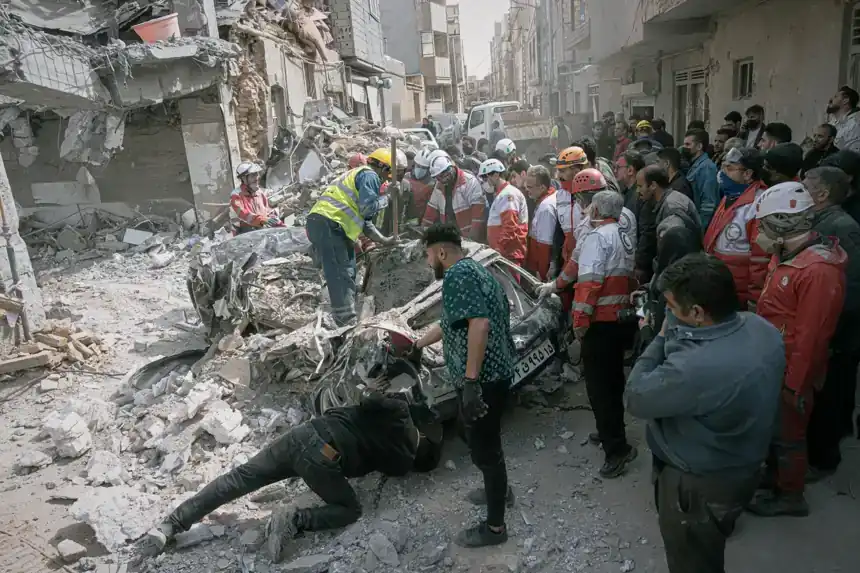
Simultaneous military activity across multiple fronts indicates a widening operational scope. Israeli airstrikes in Tehran and prior attacks on strategic infrastructure in Isfahan reflect an effort to degrade Iran’s military capabilities deep داخل its territory.
■ Related News

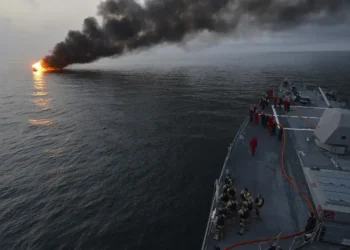
In response, Iran has expanded its strike radius beyond Israel, targeting Gulf infrastructure and triggering air defense responses in countries including Saudi Arabia, Bahrain, and Kuwait.
The strike on a fuel tank at Kuwait International Airport illustrates how energy and transport nodes are increasingly drawn into the conflict space, elevating risks to civilian infrastructure and regional economic stability.
Meanwhile, Hezbollah continues sustained rocket fire from Lebanon, reinforcing a multi-front pressure strategy aligned with Iran’s broader regional posture.
Force Posture Intensifies as U.S. Expands Military Footprint
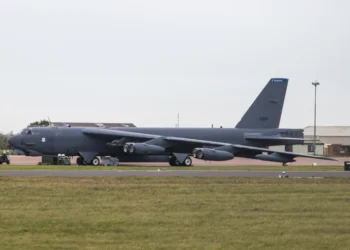
The United States is reinforcing its regional presence, deploying approximately 1,000 troops from the 82nd Airborne Division alongside thousands of Marines and naval personnel.
These units—particularly airborne forces trained to secure contested zones—signal preparation for rapid-response contingencies rather than symbolic deterrence alone.
The scale and composition of deployments suggest Washington is positioning for potential escalation scenarios, including the need to secure strategic assets or respond to further regional destabilization.
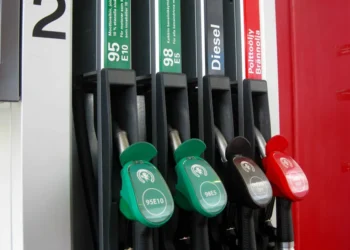
At the same time, domestic political pressure is building. An AP-NORC poll cited by The Associated Press indicates growing public concern over the scope of U.S. involvement and its economic consequences, particularly rising fuel costs.
Economic Pressure Builds as Energy Corridor Leverage Tightens
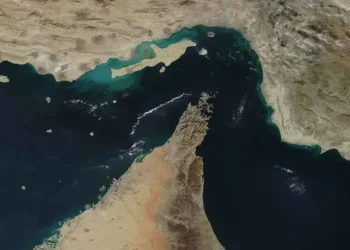
Iran’s partial restrictions on the Strait of Hormuz—a critical artery for global oil flows—have introduced sustained volatility into energy markets.
Although prices have retreated from recent peaks, Brent crude remains significantly elevated compared to pre-conflict levels, reflecting ongoing uncertainty around supply continuity.
Tehran’s willingness to selectively restrict maritime access underscores the strategic leverage it retains, even as it faces military pressure. The strait’s status as an international waterway further complicates enforcement and raises the stakes for any attempt to impose or challenge control.
The energy dimension is now tightly interwoven with military developments, amplifying the global economic impact of localized escalation.
Diplomatic Pathways Narrow as Preconditions Harden
Efforts to broker talks—potentially involving intermediaries such as Pakistan and Egypt—face mounting obstacles as both sides anchor their positions in maximalist demands.
Iran’s insistence on sovereignty over the Strait of Hormuz and reparations, combined with its refusal to discuss missile programs or regional alliances, limits the scope of feasible compromise.
At the same time, skepticism within Iran’s leadership toward U.S. intentions—shaped by prior disruptions to diplomatic engagements—adds another layer of constraint to any negotiation pathway.
The result is a diplomatic environment where procedural discussions may occur, but substantive convergence remains distant.
Forward Outlook: Escalation Risk Becomes Structural
With military operations expanding geographically, diplomatic channels constrained by incompatible demands, and economic pressure reinforcing strategic calculations, the conflict is entering a phase where escalation risk is no longer incidental but systemic.
Absent a recalibration of objectives on either side, the interplay between battlefield momentum and geopolitical leverage suggests a trajectory in which containment becomes increasingly difficult—and miscalculation more consequential.