TEHRAN – The two-week ceasefire meant to halt the U.S.-Iran war has rapidly entered a new phase of uncertainty, with Iran’s renewed closure of the Strait of Hormuz and Israel’s intensified strikes in Lebanon exposing the deal’s unresolved strategic contradictions. What emerged as an emergency de-escalation now risks becoming a wider regional destabilization event, where maritime trade, proxy warfare, and nuclear diplomacy are once again colliding.
As first reported by the Associated Press, Tehran’s move followed one of the deadliest days of Israeli attacks in Lebanon, where strikes in Beirut and surrounding areas killed at least 182 people, according to Lebanese health authorities. Iranian officials immediately framed the attacks as incompatible with the understandings that underpinned the ceasefire, while Washington and Jerusalem maintained that Lebanon was never covered by the truce.
That gap in interpretation has transformed what was initially presented as a war pause into a dispute over the very geographic limits of the agreement. The result is a ceasefire architecture that appears intact on paper but increasingly unstable in practice.

Regional Deterrence Tested
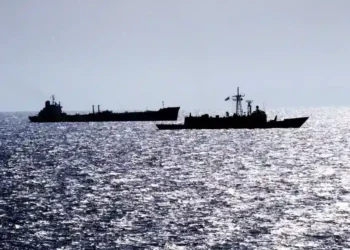
The most immediate escalation point lies in the Strait of Hormuz, where Iran’s decision to halt or restrict tanker passage reintroduced a strategic lever that affects roughly one-fifth of globally traded oil and gas flows during normal periods. By reasserting control over maritime access, Tehran has shifted pressure from the battlefield to the global economy, forcing the White House to respond not only as a wartime negotiator but as a guarantor of energy stability.
Washington called the renewed closure “completely unacceptable,” underscoring how central freedom of navigation remains to the U.S. position. Yet Tehran’s simultaneous insistence on transit fees and regulated passage suggests the strait is now being used as post-ceasefire leverage rather than a simple retaliatory tool.
This development materially raises the cost of diplomatic failure. Every hour of uncertainty in Hormuz compounds pressure on oil markets, Gulf reconstruction efforts, and Western negotiators attempting to move talks toward Islamabad.
Strategic Depth Shrinks
Israel’s decision to intensify operations against Hezbollah has added a second layer of risk: the erosion of the diplomatic buffer created by the ceasefire. The Israeli military said it struck more than 100 targets in 10 minutes across Lebanon, marking the largest concentrated wave of attacks in weeks.
From Tehran’s perspective, continued strikes on Hezbollah directly affect Iran’s regional deterrence network. Hezbollah remains one of the Islamic Republic’s most significant strategic depth assets, and sustained pressure on the group narrows Tehran’s non-state options at a moment when its direct confrontation with the U.S. and Israel is supposedly paused.




That contraction in proxy depth explains why Iranian officials have linked Lebanon so explicitly to the ceasefire’s viability. Rather than a side theater, Lebanon has become the practical test case for whether the agreement can contain allied conflicts.
Diplomacy Faces New Risk
The next round of talks, expected in Pakistan under the leadership of U.S. Vice President JD Vance, now begins under conditions of mutual distrust. Tehran says Washington has already violated key terms tied to sanctions, regional military posture, and its right to maintain some level of uranium enrichment. The White House, meanwhile, continues to press for concessions on buried enriched uranium and missile capabilities.
This divergence transforms negotiations from peace talks into a strategic consequence management exercise. The ceasefire’s survival may now depend less on formal signatures and more on whether each side can tolerate military actions occurring outside its own interpretation of the deal.
The diplomatic risk is therefore not simply collapse, but fragmentation — where separate actors operate under incompatible versions of the same agreement.
Nuclear Leverage Remains Intact
Despite repeated U.S. and Israeli claims of battlefield success, the deeper strategic objectives of the war remain unresolved. Iran’s missile stockpiles, uranium reserves, and regional partner networks all continue to shape deterrence calculations.
That leaves negotiators confronting the central paradox of the ceasefire: hostilities have slowed, but the instruments that drove the war remain largely in place.
The forward-looking risk is clear. If Hormuz remains contested and Lebanon continues to burn, the ceasefire may survive diplomatically while failing strategically — creating the conditions for a faster, broader relapse into conflict.