Indoor Microplastics Exposure Rises as Home Textiles Drive Airborne Health Concerns
Household fabrics, dust and ventilation choices shape inhalation risks and policy debate
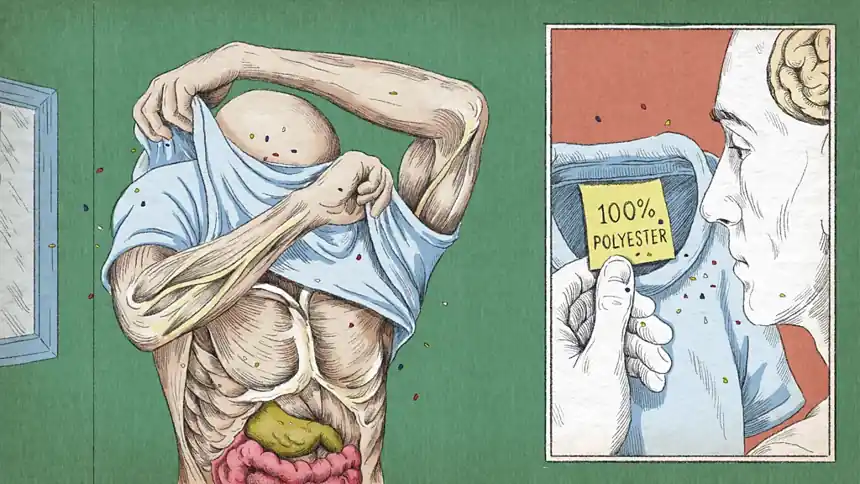
Indoor microplastics exposure is emerging as a significant public-health concern as researchers increasingly identify inhalation—not ingestion—as a major route through which plastic particles enter the body. According to BBC Future reporting, synthetic clothing, upholstery, carpets and household dust are key contributors, with some studies estimating that adults may inhale tens of thousands of particles each day inside homes.

The issue matters beyond consumer behavior because people in developed economies spend roughly 90% of their time indoors, amplifying the cumulative burden of airborne particles. Public-health researchers say the evidence base remains incomplete, but the convergence of environmental exposure science and respiratory toxicology is pushing indoor air quality into a broader health-policy conversation. According to the World Health Organization, indoor environmental risks remain an under-addressed determinant of long-term health.
Indoor Exposure Data Points to Household Textile Sources
According to BBC Future, the dominant editorial concern is population behavior and health trends, particularly how routine household choices intensify exposure. Synthetic garments shed microscopic fibers during wear, washing, drying and even routine movement, while upholstered furniture, curtains and rugs continuously release fragments under friction.
Recent indoor-air sampling cited in the report found concentrations exceeding 500 microplastic fragments per cubic meter in apartments and more than 2,200 fragments inside vehicle cabins. Researchers from France’s CNRS noted that these figures were likely conservative because stagnant-air measurements do not fully capture the particle spikes caused by walking, cleaning or disturbing dust.
The analytical implication for public health is that exposure is not driven by rare contamination events but by normal residential living patterns, making mitigation dependent on behavior, product design and housing standards rather than medical intervention alone.
Dust Resuspension Increases Respiratory Burden Indoors
Household dust appears to be a major secondary reservoir. Once plastic fibers settle onto floors and furniture, vacuuming, sweeping, foot traffic and children playing on carpets can reintroduce particles into breathing zones. Infants may face disproportionate exposure because of their proximity to floor-level dust, with reported inhalation estimates ranging from 19,000 to 75,000 particles daily in one cited assessment.
■ Related News




Health-system relevance lies in the uncertainty around chronic low-dose respiratory exposure. The U.S. CDC continues to emphasize the importance of particulate indoor air control for long-term respiratory protection, though no clinical guideline yet specifically addresses microplastics inhalation thresholds.
This gap highlights a regulatory blind spot: indoor particulate standards are generally calibrated around combustion pollutants, allergens and mold rather than synthetic polymer fibers.
Home Cleaning and Filtration Strategies Lower Risk
BBC’s reporting indicates that practical exposure reduction remains possible through source control and particulate filtration. High-efficiency particulate air (HEPA) vacuums and multi-stage air purifiers can significantly reduce airborne particles, while damp dusting before vacuuming limits resuspension. Opening windows during cleaning can also dilute short-term particle spikes, though it shifts rather than eliminates environmental plastic load.
Laundry behavior also plays an outsized role. Larger wash loads reduce garment friction, external line drying lowers indoor release, and washing-machine microfiber filters can reportedly cut wastewater fiber discharge by up to 90%. Switching from polyester-heavy wardrobes to cotton, wool or linen further reduces airborne synthetic shedding in the home environment.
The policy implication is that consumer-product labeling, textile standards and appliance filtration rules may become future regulatory levers as evidence strengthens.
Early Toxicology Signals Raise Long-Term Health Questions
The medical evidence remains early-stage, but several findings are beginning to shape concern. Studies cited in the BBC report suggest smaller particles below 20 micrometers may provoke inflammation, while particles below five micrometers may penetrate cells and distribute beyond the lungs. Previous human tissue analyses have identified some of the highest microplastic concentrations in lung samples.
Importantly, these findings remain largely observational and mechanistic, not causal clinical proof. Sample sizes in tissue studies remain limited, measurement methods are not yet standardized, and researchers continue to debate how polymer flexibility compares with the toxicity profiles of rigid fibers such as asbestos analogues.
The strongest analytical takeaway is that current science supports exposure concern, not definitive disease attribution, underscoring the need for larger longitudinal respiratory studies.
Regulatory Pressure May Shift Toward Indoor Material Standards
The broader public-health challenge extends beyond household habits. With global plastic production still exceeding hundreds of millions of tonnes annually, individual mitigation has structural limits. The growing focus on indoor airborne microplastics may eventually push governments toward textile manufacturing standards, appliance filtration requirements, building ventilation codes and broader polymer reduction policies.
That systemic lens is increasingly important as health researchers, toxicologists and policymakers weigh whether microplastics should move from an environmental contamination issue into the domain of formal indoor air quality regulation.