Four U.S. Navy crew members safely ejected after two military jets collided and crashed during an air show at Mountain Home Air Force Base in Idaho, prompting an immediate lockdown of the facility and the cancellation of the event.
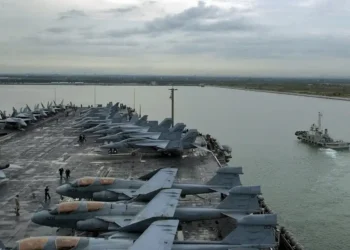
The collision occurred during the Gunfighter Skies air show near Boise while two EA-18G Growler aircraft from the U.S. Navy’s Electronic Attack Squadron 129 were performing an aerial demonstration. Military officials said all four crew members parachuted safely to the ground and were later reported in stable condition.
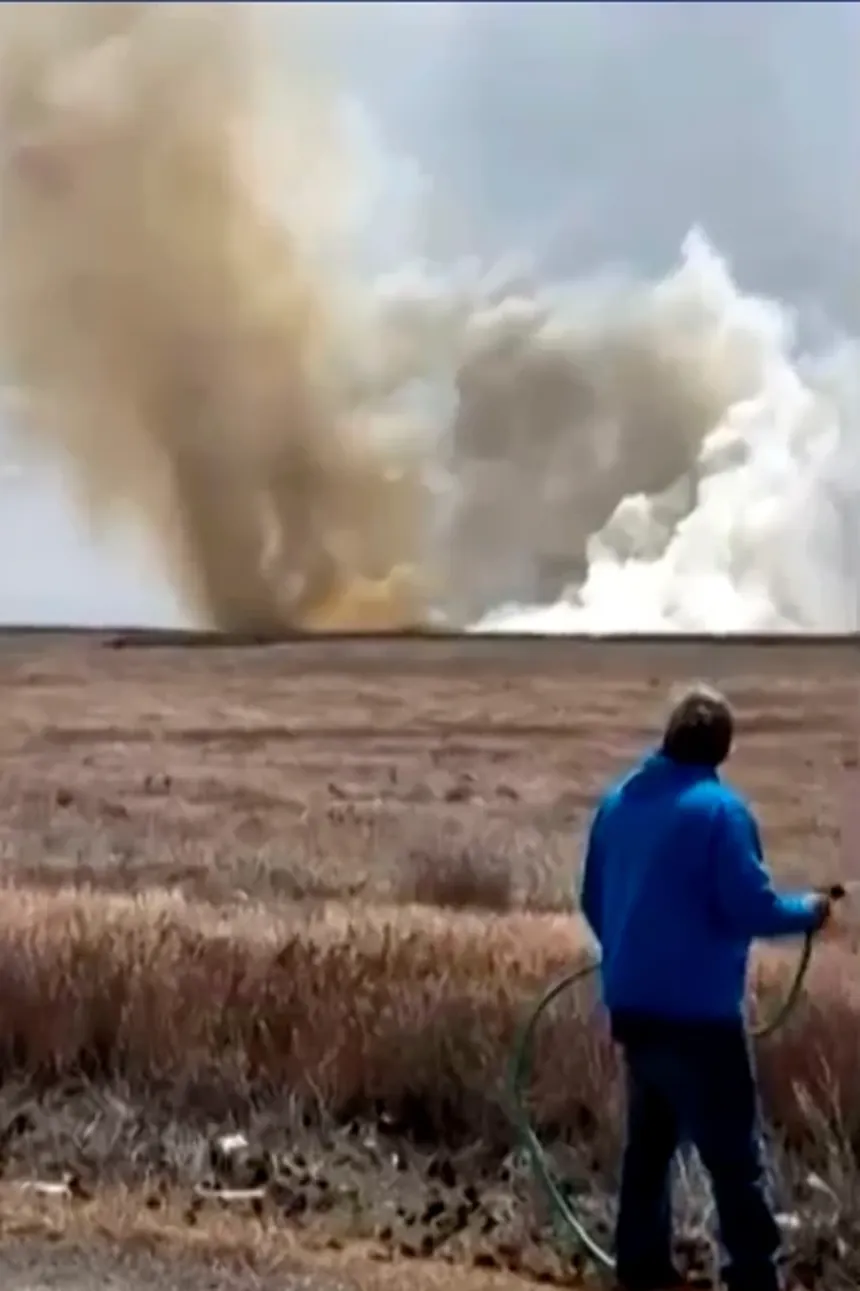
According to witnesses and videos circulating online, the two aircraft appeared to make contact midair before spinning downward and exploding in a fireball upon impact near the base. Spectators reported seeing four parachutes deploy moments before the crash.

Military Investigation Underway
Cmdr. Amelia Umayam, spokesperson for Naval Air Forces Pacific, confirmed the aircraft involved were EA-18G Growlers based at Naval Air Station Whidbey Island in Washington state. The Navy said the crash remains under investigation.
Base officials said no injuries were reported among spectators or personnel on the ground. Emergency crews responded immediately after the incident, while authorities temporarily locked down the installation as a precaution.
The Gunfighter Skies event marked the first major air show at Mountain Home Air Force Base since 2018. Organizers described the show as a celebration of aviation history and U.S. military capabilities, featuring aerial demonstrations and parachute performances. The U.S. Air Force Thunderbirds were among the headline performers scheduled for the weekend event.
Air Show Safety Concerns Return
The dramatic collision has renewed attention on the risks associated with precision military flight demonstrations, even as aviation safety standards have improved in recent years.
Aviation safety expert John Cox told Associated Press-affiliated media outlets that air show pilots are among the military’s most skilled aviators but operate with extremely limited margins for error during complex maneuvers.

The National Weather Service reported clear visibility at the time of the crash, though wind gusts reportedly reached nearly 29 mph. Investigators are expected to review weather conditions, flight coordination procedures and cockpit data as part of the inquiry.
Air show organizers and military officials emphasized that the successful ejection of all four crew members likely prevented a far deadlier outcome. Analysts noted that survival rates in midair military jet collisions remain relatively rare because of the high speeds and low-altitude maneuvers involved.
Broader Questions Over Military Demonstrations
The incident comes amid broader debate over the role and safety of military air shows across the United States.
According to the International Council of Air Shows, fatal incidents at U.S. air shows have declined significantly over the past decade due to stricter operational standards and pilot training protocols. However, several high-profile crashes in recent years — including the deadly 2022 collision of vintage aircraft during a Dallas air show — have continued to raise concerns over public safety and operational risk.
Investigators are expected to interview the surviving crew members in the coming days, a factor experts say could accelerate efforts to determine what caused the collision.