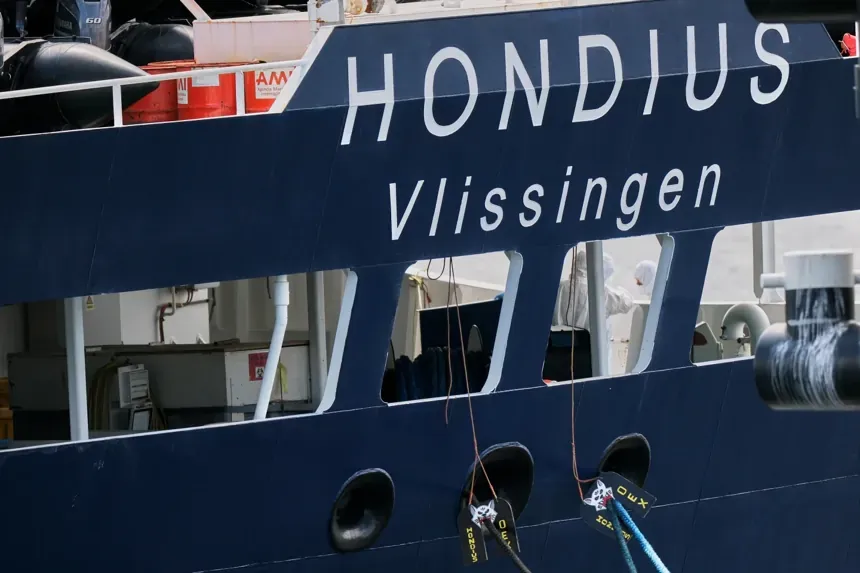
THE HAGUE — A cruise ship tied to a deadly hantavirus outbreak is undergoing additional cleaning and disinfection procedures before it can resume operations, according to the Dutch company operating the vessel.
Oceanwide Expeditions said the extra sanitation work aboard the MV Hondius was ordered following inspections by the GGD public health authority in Rotterdam, where the ship returned earlier this month after a voyage linked to multiple hantavirus infections and deaths.
The company stated that the vessel will remain docked until local health officials complete a final inspection. Authorities have not publicly detailed why further cleaning was deemed necessary.

The outbreak has drawn international attention because it involved the Andes strain of hantavirus, a rare variant capable of limited person-to-person transmission. Public health officials said the broader risk to the public remains low.
Global Monitoring Continues
World Health Organization Director-General Tedros Adhanom Ghebreyesus said 12 hantavirus cases and three deaths connected to the outbreak had been reported globally as of Sunday, with no additional fatalities recorded since May 2.
The outbreak began after passengers aboard the Dutch expedition cruise ship traveled through parts of South America, including Argentina, where Andes hantavirus circulates among rodent populations. Health investigators later linked the infections to exposure during the voyage.
South African scientists played a key role in identifying the virus after a critically ill British passenger was evacuated to Johannesburg for treatment. Initial testing ruled out other respiratory illnesses before specialists confirmed hantavirus infection.
International Quarantine Measures
Passengers and crew from more than 20 countries have been placed under monitoring or quarantine following the outbreak. In the United States, 18 Americans exposed aboard the ship remain under observation at the University of Nebraska Medical Center because the Andes strain can have an incubation period lasting up to 42 days.
■ Related News



Spanish health authorities also confirmed at least two infections among quarantined passengers evacuated from the vessel to Spain. Officials said those cases do not currently increase the risk to the general public because the individuals were already isolated.
Hantaviruses are typically transmitted through contact with rodent urine, droppings or saliva, often when contaminated particles become airborne. Human-to-human spread is considered extremely uncommon and has primarily been associated with the Andes strain found in parts of South America.
Oceanwide Expeditions said future voyages scheduled from mid-June are expected to proceed normally once health authorities approve the ship’s return to service.