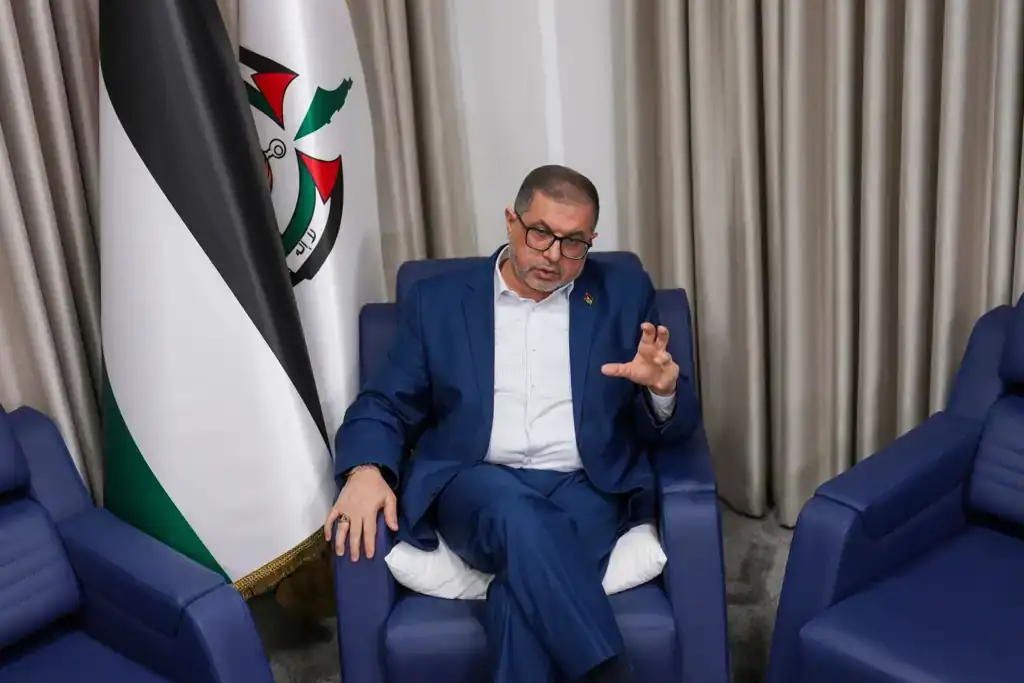
The political leadership of Hamas says it is willing to discuss options for “freezing or storing” its weapons as part of negotiations around the next phase of the U.S.-brokered ceasefire with Israel. The comments, made in Doha by senior official Bassem Naim, hint at a potential opening in one of the most contentious issues slowing progress in the wider Gaza agreement.
Naim’s remarks come as mediators prepare for a more complex stage of the deal, which aims to outline Gaza’s postwar governance, determine the role of an international stabilization force, and address Israel’s longstanding demand for Hamas to relinquish its arms. His statements also reflect the internal debate within the group as it balances military identity with political survival after more than two years of war.
Progress and pressure as second phase begins
The truce, in place since October, halted Israel’s two-year offensive in Gaza that followed the Oct. 7, 2023, Hamas attack. The first phase centered on exchanges of hostages and prisoners. With only the remains of one Israeli hostage still in Gaza, the parties are now shifting to a stage widely seen as far more challenging: tackling issues of security, governance, and reconstruction in a territory devastated by prolonged conflict.
The framework for this phase draws from a 20-point plan supported by an international coalition of guarantor countries, including Qatar, Egypt, and Turkey, and endorsed by the U.N. Security Council. The plan calls for the creation of a technocratic Palestinian committee to manage Gaza’s civil affairs, withdrawal of Israeli troops, and deployment of an international security force. Oversight is expected to come from an international board chaired by former U.S. President Donald Trump, reflecting Washington’s central role in the negotiations.
Yet many elements remain undefined. Nations have indicated a willingness to contribute personnel to a stabilization force, but questions persist over its mandate, command structure, and how it might interact with armed groups in Gaza.
Hamas signals conditional openness to weapon arrangements
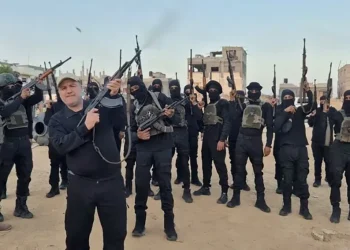
Against this backdrop, Israel continues to press for full Hamas disarmament—an expectation that has consistently stalled negotiations. Hamas’ identity is rooted in armed resistance, and although its leadership has hinted at strategic recalculations, the organization has never publicly accepted permanent disarmament.
Speaking with the Associated Press, Naim said Hamas would consider steps involving its weapons if part of a broader political process aimed at establishing a Palestinian state. He did not specify conditions but indicated that arrangements could be discussed within a long-term truce of five or ten years.
“We can talk about freezing or storing or laying down [weapons], with Palestinian guarantees, not to use it during this truce,” he said. The phrasing suggests Hamas is positioning its proposal as a confidence-building measure rather than capitulation.
Whether Israel views such language as movement toward genuine disarmament remains uncertain. Naim acknowledged that talks will require “serious and comprehensive” engagement and stressed that the group’s “right to resist” remains a core principle, even as it explores alternatives under international pressure.
Unresolved questions on Gaza’s future
Much of the plan’s ambiguity reflects the absence of consensus among mediators on the long-term governance of Gaza. Diplomats say the stabilization force is one of the most urgent issues. Several governments—including Indonesia—have signaled willingness to participate, but no formal structure exists.
Hamas has indicated it welcomes a U.N.-mandated force positioned near Gaza’s borders to monitor the ceasefire and report violations, but rejects any foreign power operating inside Palestinian territory with authority to enforce disarmament.
“We don’t accept any mandates allowing external forces to implement decisions inside Palestinian land,” Naim said.
He added that Hamas and the Palestinian Authority have made progress on the selection of a committee to administer civil services. According to officials familiar with the talks, Health Minister Majed Abu Ramadan, a West Bank-based technocrat from Gaza, is expected to lead the committee.
Disputes overshadow first-phase implementation
Even as the second phase begins, disagreements persist over the implementation of the initial truce. Israel accuses Hamas of delaying hostage releases, while Palestinian health officials say more than 370 Palestinians have been killed in Israeli strikes since the ceasefire took effect.
Israeli officials say the strikes targeted militants who violated the terms of the truce by moving into Israeli-controlled areas of Gaza. Three Israeli soldiers have been killed in related clashes. Naim said Hamas was unaware of the militants involved, claiming communications were cut and negotiations over their surrender had stalled due to shifting Israeli conditions.
Humanitarian access remains another source of tension. Naim said Israel has not met its commitment to allow sufficient aid into Gaza and criticized the partial reopening of the Rafah crossing, where entry remains restricted. Israel says it is prepared to allow people to exit Gaza but not enter, a position Egypt and Palestinian authorities fear could facilitate forced displacement.
Oct. 7 remains a defining fault line
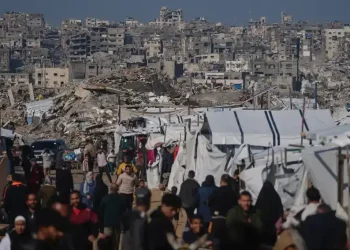
The Oct. 7 Hamas attack, which killed more than 1,200 people in Israel and resulted in the abduction of over 250 others, remains a defining trauma for Israelis and a central element of the political debate within Israel and abroad. The ensuing Israeli campaign has killed more than 70,000 Palestinians, according to Gaza’s Health Ministry, and displaced nearly all of the enclave’s population.
Palestinian officials say roughly half of those killed were women and children, though the figures do not distinguish between civilians and militants. Reconstruction will require resources and political will that far exceed existing pledges.
Asked whether Hamas regrets the attack, Naim said Palestinians have paid a heavy price but argued the events must be seen in the context of decades of occupation and conflict.
“History didn’t start on Oct. 7,” he said. “For us, it was an act of defense.”
As negotiations advance, both sides face pressure from international partners to maintain the truce and move toward a political settlement. Whether those efforts can overcome fundamental disagreements—particularly on weapons, governance, and the role of international forces—will determine the durability of the ceasefire and the prospects for Gaza’s recovery.
This article was rewritten by JournosNews.com based on verified reporting from trusted sources. The content has been independently reviewed, fact-checked, and edited for accuracy, neutrality, tone, and global readability in accordance with Google News and AdSense standards.
All opinions, quotes, or statements from contributors, experts, or sourced organizations do not necessarily reflect the views of JournosNews.com. JournosNews.com maintains full editorial independence from any external funders, sponsors, or organizations.
Stay informed with JournosNews.com — your trusted source for verified global reporting and in-depth analysis. Follow us on Google News, BlueSky, and X for real-time updates.