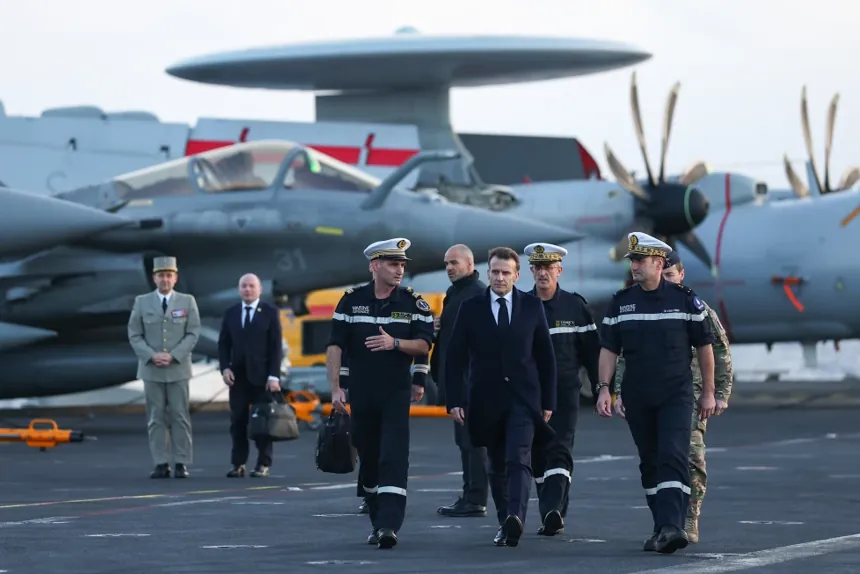
France has moved its aircraft carrier strike group toward the Red Sea in preparation for a possible multinational defensive mission near the Strait of Hormuz, signaling a broader European effort to stabilize one of the world’s most strategically critical shipping corridors.
French President Emmanuel Macron said the deployment of the nuclear-powered aircraft carrier Charles de Gaulle and its escort vessels is intended to support a potential French-British maritime security initiative aimed at restoring confidence in commercial shipping through the Gulf region.
The move comes as the ongoing confrontation surrounding Iran and the Strait of Hormuz continues to disrupt global energy supplies and commercial trade routes. International shipping firms, insurers and governments have been closely monitoring developments as instability in the waterway fuels volatility in oil markets and raises fears of broader regional escalation.

European Maritime Coordination Gains Momentum
French officials stressed that the planned mission would remain defensive and separate from the recently paused US-led “Project Freedom” initiative announced by President Donald Trump. Paris and London are instead advocating a coalition focused on maritime protection and international navigation rights rather than direct military confrontation.
According to reporting from Reuters and The Associated Press, the deployment places Europe’s most powerful warship within operational reach of the Strait of Hormuz while avoiding direct entry into the Persian Gulf itself. French military officials indicated that any convoy or escort operation would only proceed once security conditions improve and commercial carriers are prepared to resume transit through the strait.
The Strait of Hormuz remains a vital artery for global oil exports, linking Gulf producers with international markets. Prolonged disruption there has already triggered what energy analysts describe as one of the most severe supply interruptions in recent years.
Strategic Stakes Rise for Europe and Gulf Allies
European governments have increasingly faced pressure to protect commercial shipping interests without becoming directly drawn into the wider regional conflict. Analysts say France’s latest deployment reflects growing concern within Europe over the economic consequences of prolonged instability in the Gulf.
French military spokespersons said the proposed coalition would operate under international law and focus on restoring maritime confidence among insurers and shipping companies. War-risk insurance premiums for vessels operating near the Strait have risen sharply since tensions escalated earlier this year.
■ Related News


The carrier group reportedly includes additional European naval assets from allied states, underscoring expanding multinational coordination on Gulf security. Reuters reported that Italian and Dutch vessels are also participating in the broader operational planning effort.
International Diplomacy Intensifies Alongside Naval Deployments
French officials have simultaneously pursued diplomatic engagement aimed at reducing the risk of wider confrontation. Macron has held discussions with regional leaders, including Iranian President Masoud Pezeshkian, while continuing consultations with Washington and European allies over maritime security and potential de-escalation measures.
The evolving European initiative reflects a broader shift toward coordinated multinational crisis management rather than unilateral intervention. Observers note that several governments previously reluctant to participate in direct military operations are now considering defensive maritime roles because of the growing impact on energy markets and global trade.
With commercial shipping still heavily affected and diplomatic negotiations ongoing, the deployment of the Charles de Gaulle highlights the increasing internationalization of the Hormuz crisis. The coming weeks are expected to test whether European-led security coordination can ease tensions without triggering a wider regional conflict.