BOGOTÁ, Colombia – Colombia’s largest remaining rebel organization has announced a unilateral ceasefire ahead of the country’s presidential runoff election, saying it intends to allow citizens to vote without interference as political tensions rise before Sunday’s decisive ballot.
In a statement published Monday, the National Liberation Army (ELN) said it had instructed its fighters to suspend offensive operations against Colombia’s armed forces from June 20 through June 23. The ceasefire will cover the period surrounding the presidential election scheduled for June 21.
The ELN said it respects Colombians’ right to vote freely and stated that it does not intend to threaten candidates or obstruct voter participation during the election process. The group also warned against foreign involvement in Colombia’s domestic political affairs.

Polarized Election Raises Security Concerns
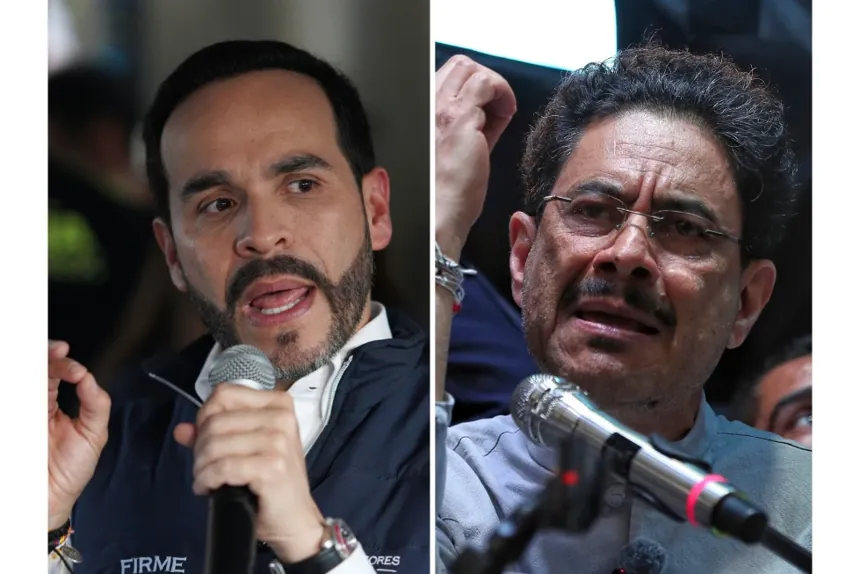
The announcement comes as Colombia prepares for a highly contested runoff between presidential candidates Iván Cepeda and Abelardo de la Espriella.
Cepeda, a senator allied with Colombian President Gustavo Petro, is seeking to extend many of the current administration’s policies. His opponent, conservative lawyer De la Espriella, has campaigned on a tougher security platform and has pledged to end negotiations with armed groups that began under Petro’s government.
The election has drawn international attention following De la Espriella’s endorsement earlier this month by Donald Trump, a development that has become a point of debate within Colombia’s political campaign.
In the first round of voting held on May 31, De la Espriella secured 43.7% of the vote, while Cepeda received 40.9%, setting up a closely watched runoff contest.
Peace Process Remains a Divisive Issue
The ceasefire announcement highlights the continuing role armed groups play in Colombia’s political and security landscape.
■ Related News



The Petro administration launched peace negotiations with the ELN in 2023, but those talks were suspended in 2025 following a series of rebel attacks in northeastern Colombia that authorities said displaced more than 56,000 people.
Despite the collapse of negotiations with the ELN, the government continues discussions with other armed organizations, including the Gulf Clan, which authorities have linked to drug trafficking and illegal mining activities.
Critics of the government’s peace strategy argue that previous ceasefires have enabled armed groups to strengthen their territorial control, recruit fighters and expand criminal operations in rural regions where state authority remains limited.
Allegations Surface During Campaign
The election campaign has also been marked by accusations regarding the influence of armed groups on local voting patterns.
Last week, De la Espriella’s campaign called on prosecutors to investigate whether rebel organizations pressured voters in more than 100 remote municipalities where Cepeda received overwhelming support during the first round. Cepeda has denied any involvement by armed groups in his campaign activities.
According to Colombia’s Defense Ministry, the ELN maintains more than 6,000 fighters operating across Colombia and neighboring Venezuela. Authorities say the organization finances its activities through illegal gold mining, extortion and narcotics trafficking.
Founded during the 1960s and inspired by revolutionary movements in Latin America, the ELN has evolved into one of Colombia’s most influential armed groups. In recent years, government officials have increasingly accused the organization of functioning as a criminal network while continuing to present itself as a political insurgency.
The temporary ceasefire is expected to reduce the immediate risk of violence during the election period, although security forces remain on alert as Colombians prepare to choose the country’s next president.
Tags: Colombia, ELN, Presidential Election, Gustavo Petro, Latin America