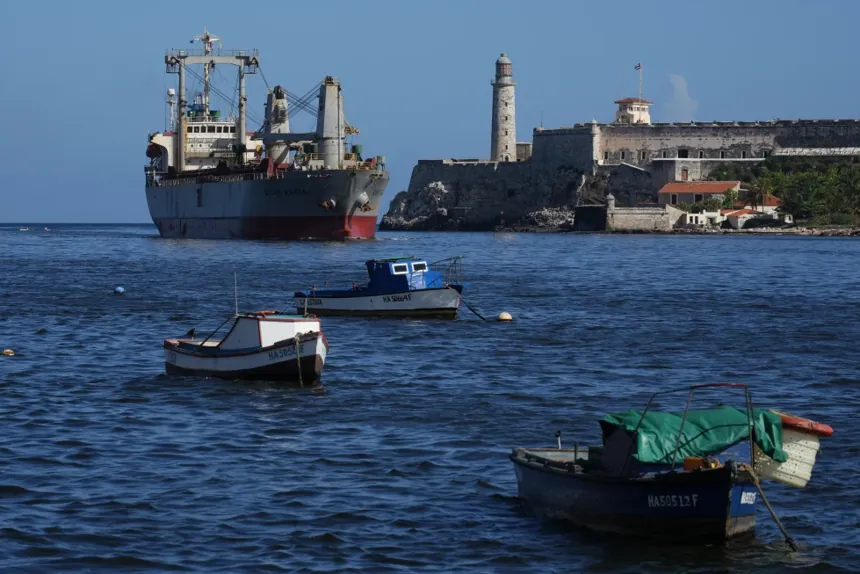
A humanitarian aid ship carrying food and hygiene supplies from Mexico and Uruguay docked in Havana on Monday as Cuba faces worsening economic hardship and escalating tensions with the United States. The arrival comes amid growing regional concern over the island’s fuel shortages, blackouts, and deteriorating living conditions.
The cargo vessel delivered roughly 1,700 tons of grains, powdered milk, and personal hygiene products intended for vulnerable Cuban communities, according to Cuban officials. Authorities said the supplies would prioritize children, elderly residents, and families most affected by the country’s ongoing shortages.
Cuban Food Industry Minister Alberto López Díaz said the shipment arrived during “great economic hardship” worsened by tighter U.S. restrictions on the island. Havana has repeatedly blamed Washington’s sanctions and fuel pressure campaign for intensifying the country’s energy and humanitarian crises.

Regional Support Emerges Amid Economic Collapse
The aid shipment underscores growing efforts by some Latin American governments to support Cuba as the island struggles with severe fuel scarcity and repeated electricity blackouts. Mexico and Uruguay have maintained diplomatic engagement with Havana despite increasing pressure from Washington on countries assisting the Cuban government.
Cuba’s economic situation has worsened significantly in recent months following disruptions to Venezuelan oil exports, historically one of Havana’s most important energy lifelines. Analysts say the island’s fragile energy infrastructure and declining import capacity have combined to create one of Cuba’s most difficult economic periods in decades.
Recent nationwide power outages have triggered protests in parts of Havana and other cities, with residents demanding electricity, food, and fuel supplies. Reuters reported that some neighborhoods have endured blackouts lasting more than 20 hours per day amid the deepening crisis.
US-Cuba Relations Continue to Deteriorate
The humanitarian shipment arrives during a period of heightened diplomatic confrontation between Washington and Havana. The administration of U.S. President Donald Trump has intensified pressure on Cuba through expanded sanctions, fuel restrictions, and broader efforts aimed at isolating the Cuban government economically.
Tensions have further escalated following reports that U.S. authorities are seeking potential legal action against former Cuban leader Raúl Castro related to the 1996 downing of planes operated by the Miami-based exile organization Brothers to the Rescue. Cuban officials have condemned the move as politically motivated.
■ Related News


At the same time, Washington has publicly renewed an offer of humanitarian assistance to Cuba while accusing Havana of restricting access to international aid operations. U.S. officials say any support would require cooperation from Cuban authorities.
Humanitarian Concerns Expand Across the Region
Observers say the aid delivery reflects broader regional anxiety about the humanitarian impact of Cuba’s economic collapse and the possibility of increased migration pressures across the Caribbean and Latin America. International organizations have warned that prolonged shortages could deepen instability and worsen living conditions for millions of Cubans.
While the Mexican government has previously publicized assistance shipments to Cuba as acts of regional solidarity, officials remained largely silent about Monday’s delivery, highlighting the diplomatic sensitivity surrounding support for Havana during escalating U.S. pressure.
The arrival of the aid ship in Havana has become a symbol of the broader geopolitical struggle surrounding Cuba’s future as the island navigates mounting economic collapse, international isolation, and growing humanitarian needs.