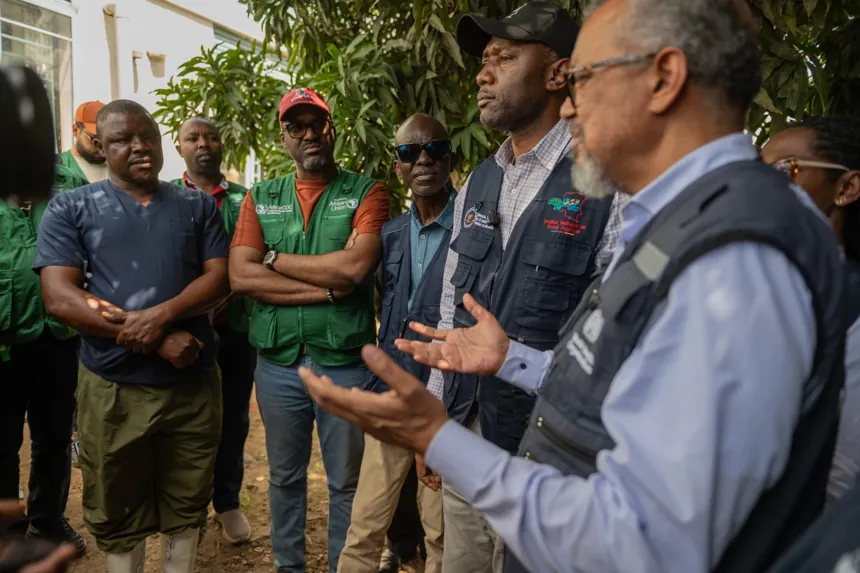
The World Health Organization (WHO) reported a significant development in the fight against the Ebola outbreak in eastern Democratic Republic of Congo after five patients recovered from the virus, as health authorities opened a new treatment center in the city of Bunia to strengthen response efforts. The announcement came during a visit by WHO Director-General Tedros Adhanom Ghebreyesus to the outbreak’s epicenter in Ituri province.
Tedros said four patients were discharged on Sunday, while another had been released earlier in the week, marking the first documented recoveries during the current outbreak of the Bundibugyo strain of Ebola. The strain has no approved vaccine or treatment, making the recoveries a notable milestone for health workers responding to the crisis.
The WHO chief made the announcement while inaugurating a new Ebola treatment center in Bunia, a city that has become a focal point of efforts to contain the outbreak. Health officials hope the facility will improve patient care, expand isolation capacity and strengthen surveillance operations in one of the hardest-hit areas.

Recovery Offers Hope Amid Challenging Outbreak
The current outbreak has infected at least 134 people and caused 18 confirmed deaths in Congo and neighboring Uganda, according to figures cited by WHO officials. While the recovery of five patients has raised hopes, health authorities continue to warn that the outbreak remains a serious public health challenge.
Tedros emphasized that recovery is possible even without an approved vaccine or treatment specifically designed for the Bundibugyo strain. Health workers have relied on supportive care and early medical intervention to improve patient outcomes while researchers continue efforts to develop targeted therapies and vaccines.
Recovered patients who spoke about their experiences described periods of isolation, uncertainty and severe illness before eventually being discharged. Their recovery stories have become part of broader efforts to encourage communities to seek medical assistance quickly when symptoms appear.
Community Trust Remains Critical
Health officials say the response has been complicated by misinformation, distrust of health authorities and insecurity in parts of eastern Congo.
The outbreak is unfolding in a region affected by armed group activity and population displacement, conditions that can make disease surveillance and treatment more difficult. WHO officials have repeatedly stressed that cooperation from local communities will be essential to slowing transmission.
■ Related News


Tedros urged residents to report symptoms early and work with health teams involved in contact tracing and treatment efforts. He also emphasized the importance of community participation in helping authorities identify cases before wider transmission occurs.
Previous attacks on health facilities and resistance to some public health measures have complicated containment efforts. Health workers say building trust remains as important as expanding medical infrastructure.
International Response Expands
The opening of the Bunia treatment center is part of a broader international effort to contain the outbreak.
WHO, African health agencies and international partners have increased support for response operations in eastern Congo, including the deployment of medical supplies, specialists and additional treatment facilities. Aid organizations have also announced plans to expand treatment capacity as the outbreak continues.
Health officials have warned that the outbreak spread undetected for several weeks before it was identified, contributing to the number of suspected infections. Authorities continue to monitor cases in neighboring Uganda, where confirmed infections linked to the outbreak have also been reported.
Containment Efforts Continue
The Democratic Republic of Congo has experienced multiple Ebola outbreaks since the virus was first identified in the country in 1976. The current outbreak is the country’s 17th recorded Ebola epidemic and is being closely monitored by international health agencies.
While the recovery of five patients has provided a measure of optimism, WHO officials caution that sustained efforts will be required to contain transmission. Authorities continue to expand treatment, surveillance and public-awareness campaigns as they seek to prevent further spread of the virus across the region.