Emergency medical supplies have begun arriving in eastern Democratic Republic of Congo as health authorities struggle to contain a fast-growing Ebola outbreak complicated by armed conflict, public distrust and severe shortages of protective equipment. The World Health Organization’s director-general, Tedros Adhanom Ghebreyesus, traveled to Kinshasa this week as international agencies intensified efforts to prevent further regional spread.
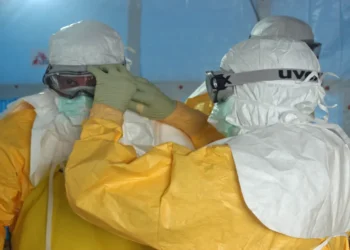
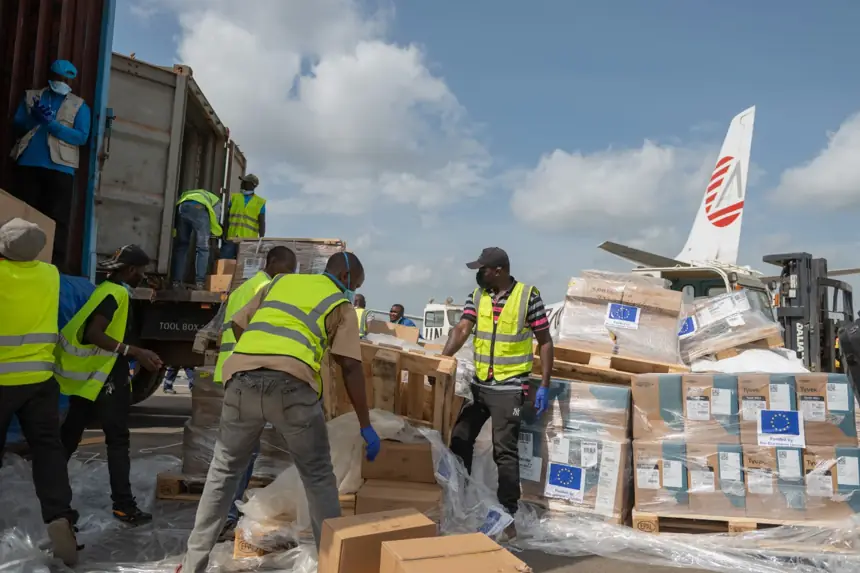
A cargo aircraft carrying European Union-donated medical aid landed Thursday in Bunia, the capital of Ituri province and the center of the outbreak. Associated Press reporting showed shipments included protective masks, gloves, boots and medications urgently needed by frontline health workers treating patients infected with the Bundibugyo strain of Ebola, a rare variant that currently has no approved vaccine or treatment.
The WHO has declared the outbreak a public health emergency of international concern following a rapid rise in infections across eastern Congo and neighboring Uganda. Health authorities reported more than 1,000 suspected cases and at least 220 suspected deaths, although officials acknowledged the actual spread may be significantly wider due to limited testing capacity and insecurity in affected areas.

Conflict and Distrust Hamper Response Efforts
Health workers operating in Ituri province have faced growing difficulties reaching infected communities because of attacks by armed groups and resistance from some residents opposed to strict Ebola containment measures.
Associated Press reporting stated that several health centers in Ituri have been attacked amid tensions over burial procedures and quarantine rules that conflict with local traditions. Congolese Health Minister Samuel Roger Kamba said mistrust during outbreaks remains a recurring challenge in remote communities facing large-scale emergency interventions.
The outbreak is unfolding in a volatile region already destabilized by violence involving armed militias including the Allied Democratic Forces and the Rwanda-backed M23 rebel group. Humanitarian agencies warned that continued insecurity has complicated contact tracing, delayed medical deliveries and limited access to some infected communities.
WHO Director-General Tedros called for a ceasefire in eastern Congo earlier this week, arguing that violence was undermining efforts to isolate cases and build public trust. “We cannot build community trust or isolate the sick while bombs are falling,” Tedros said in remarks reported by international media.
International Aid Response Expands
Aid agencies and foreign governments have increased emergency assistance as concerns grow over possible cross-border transmission.
■ Related News


The United States announced an additional $80 million in support for Congo and Uganda, bringing total American assistance linked to the outbreak to more than $112 million, according to official statements cited by AP reporting. The funding is expected to support airport screening systems, contact tracing operations, testing supplies and protective equipment for medical personnel.
WHO Africa stated earlier this month that emergency teams had already delivered more than 11 tonnes of medical supplies to affected areas within days of the outbreak’s declaration on May 15. Additional teams from WHO and Congo’s Ministry of Health were deployed to reinforce disease surveillance, laboratory testing and community engagement operations.
Reuters reporting said WHO is also working with Congo’s national biomedical research institute to expand laboratory testing capacity in order to identify infections more rapidly and improve real-time monitoring of the outbreak.
Rare Ebola Strain Raises Concerns
The Bundibugyo strain involved in the current outbreak has appeared only twice previously, once in Uganda in 2007 and later in Congo in 2012. Unlike the more common Zaire strain of Ebola, no licensed vaccine or targeted treatment currently exists for Bundibugyo infections.
Health experts and aid organizations have warned that the outbreak spread undetected for weeks after early samples initially tested negative for more common Ebola variants. Delays in confirmation, combined with reduced international aid funding and overwhelmed health infrastructure, contributed to the rapid expansion of infections across eastern Congo.
The outbreak has already spread into Uganda, where authorities confirmed several cases and at least one death linked to travelers arriving from Congo. Regional governments have introduced border monitoring and emergency preparedness measures amid fears of wider transmission.
Authorities have not publicly confirmed when the outbreak may be brought under control. International health agencies warned that containment efforts are likely to continue for months as medical teams race to prevent further spread in one of central Africa’s most unstable regions.