WASHINGTON — New filings for unemployment benefits in the United States increased modestly last week, though layoffs remained historically low despite mounting economic uncertainty linked to the Iran war and rising energy costs.
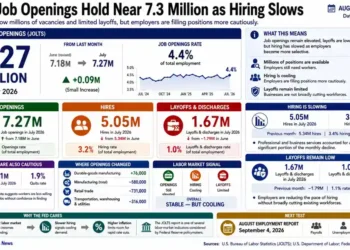
Labor Department figures released Thursday showed initial jobless claims rose to 215,000 for the week ending May 23, up from a revised 210,000 a week earlier. The four-week moving average, which smooths short-term volatility, climbed to 209,000.
The latest data suggested the U.S. labor market continues to show resilience even as inflation pressures and geopolitical instability weigh on broader economic confidence.

Economists noted that unemployment claims remain within the relatively narrow range that has persisted since the economy emerged from the pandemic downturn. Carl Weinberg, chief economist at High Frequency Economics, said the latest increase remained small relative to the overall size of the labor market.
Hiring Slows Despite Limited Layoffs
While companies have largely avoided broad workforce reductions, hiring activity has remained subdued.
Labor market data showed employers added fewer than 10,000 jobs per month on average last year, marking the weakest pace outside recession periods since 2002. Hiring has improved somewhat in 2026, averaging roughly 76,000 new jobs monthly between January and April, according to labor market figures cited in the report.
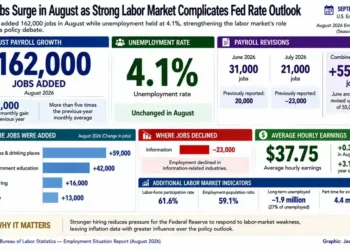
The unemployment rate remained at 4.3% in April, continuing to hover near historically low levels. Economists have noted that demographic changes, including Baby Boomer retirements and reduced immigration flows, have lowered the pace of job creation needed to keep unemployment stable.
The number of Americans continuing to receive unemployment assistance increased by 15,000 to 1.79 million during the previous reporting week, Labor Department data showed.



Iran Conflict Adds Economic Pressure
The ongoing conflict involving Iran has added uncertainty to the U.S. economic outlook, particularly through higher energy prices and inflationary risks.
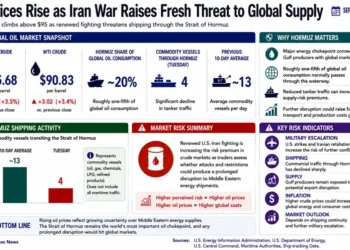
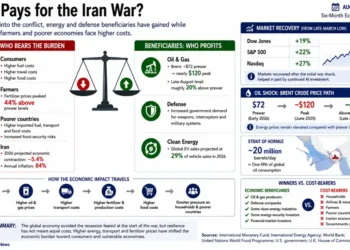
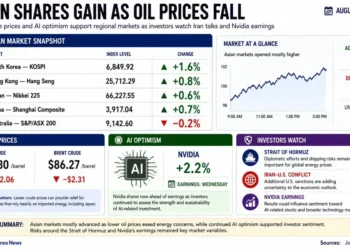
Reports indicated the closure of the Strait of Hormuz — a major global oil transit route — disrupted energy markets and contributed to a sharp rise in gasoline prices across the United States. Average gasoline prices climbed above $4 per gallon after the conflict escalated, according to figures cited in the reports.
Rising fuel costs have added pressure to household budgets while also increasing operational costs for businesses, factors that could eventually weigh on hiring decisions and consumer spending.
Government inflation data released this week showed consumer prices rose 3.8% in April from a year earlier, the fastest increase in three years. Producer prices also posted their strongest annual increase in more than three years, according to Labor Department figures.
Federal Reserve Faces Tougher Policy Outlook
Persistent inflation and geopolitical instability have complicated the Federal Reserve’s policy outlook.
The central bank recently left interest rates unchanged, citing continued inflation pressures and uncertainty tied to developments in the Middle East. Some policymakers have indicated they may consider additional rate increases if inflation remains elevated.
Higher borrowing costs have already slowed portions of the economy, while companies continue balancing labor needs against rising operational expenses and uncertainty surrounding global supply chains.
At the same time, concerns surrounding artificial intelligence and automation have continued influencing employment trends, particularly in technology and logistics sectors. Several major corporations, including Amazon, UPS, Walmart, Disney and Verizon, have announced job reductions in recent months.
Although layoffs remain limited overall, economists continue monitoring whether elevated inflation, weaker hiring and geopolitical tensions could further cool labor market conditions in the months ahead.